
Florida to Wisconsin Car Shipping
The original instant car shipping calculator — trusted since 2004. Door-to-door Florida to Wisconsin transport with no surprises, no hidden fees, and three options to ship your vehicle on your schedule.


Florida to Wisconsin Car Shipping Rates by City
Every Florida to Wisconsin vehicle shipment is available at three service levels:
Standard, Expedited, & Rush Options
Choose the one that fits your timeline and budget. All three include full door-to-door service and carrier insurance.
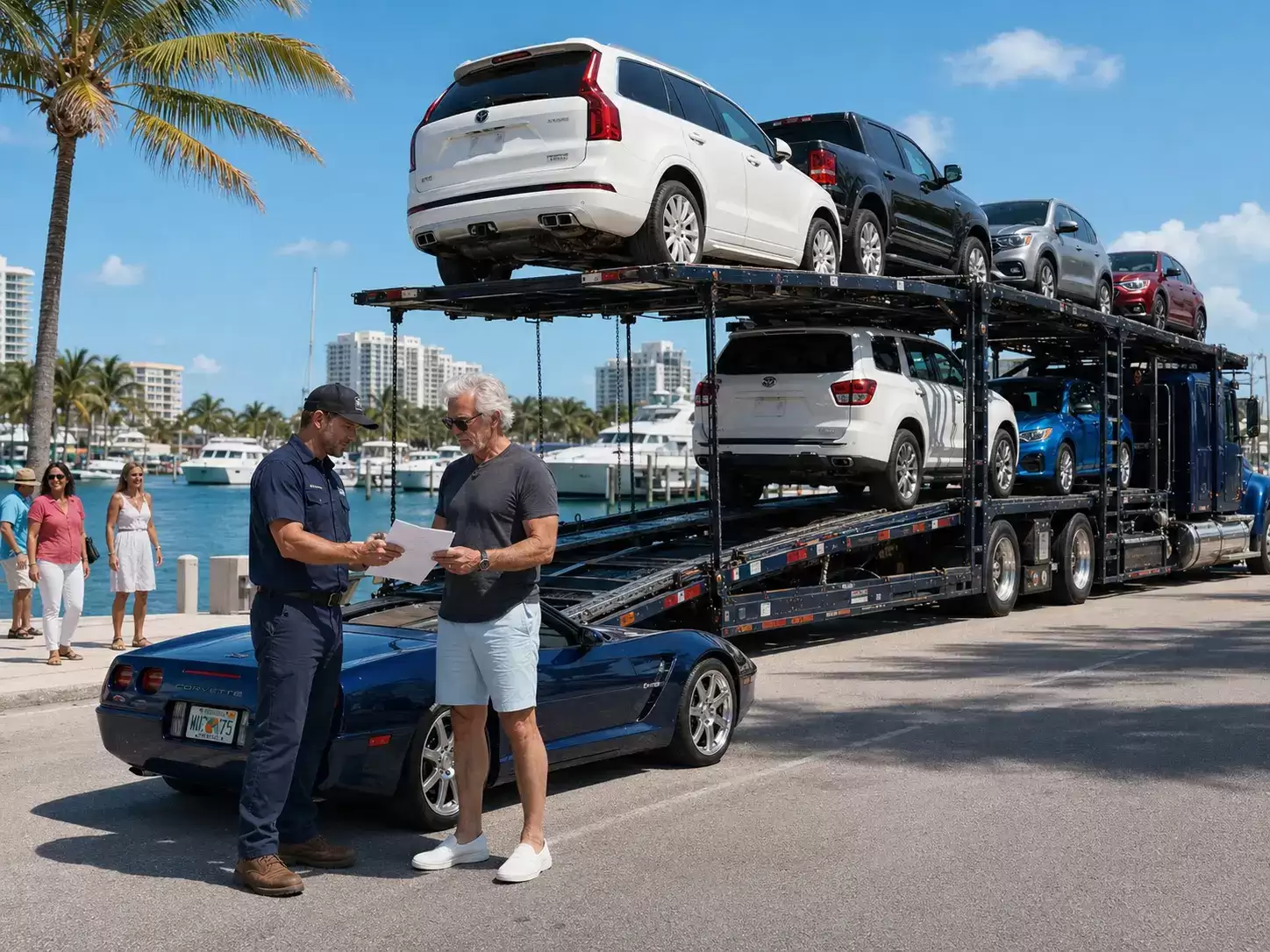
The Company That Invented Instant Auto Transport Pricing
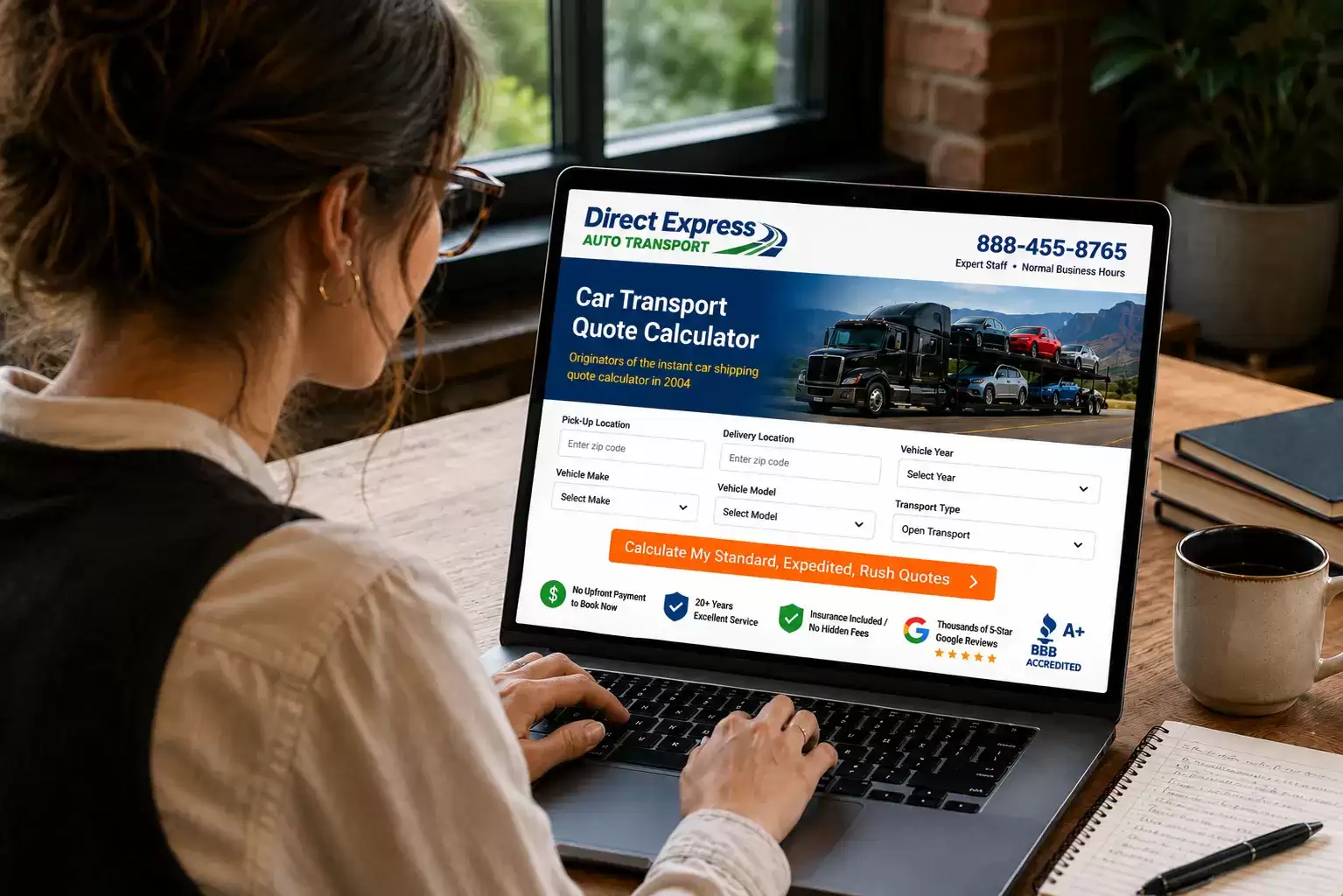
Direct Express Auto Transport pioneered online instant pricing for the auto transport industry in 2004. Before we built the first car shipping cost calculator, getting a quote from a broker meant phone calls, callbacks, and waiting — sometimes days. We changed that. Today you know your exact cost in 30 seconds, before committing to anything. No phone tag, no hassle. Just a real number, instantly.
Three Service Tiers for Every Florida to Wisconsin Shipment
Every shipment on this Florida to Wisconsin route is available at three service tiers so you can match your budget to your timeline. Standard delivers at the best available rate — ideal when your schedule has a few days of flexibility. Expedited moves your vehicle to the front of the dispatch queue for faster pickup. Rush gets your car picked up as fast as humanly possible — for spring snowbird returns with a firm arrival date, medical appointment schedules, military report dates, and any move where every day counts. All three tiers include full door-to-door service and carrier insurance.
What customers say about shipping a car from Florida to Wisconsin with Direct Express Auto Transport


Seasonal Pricing Guide: Florida to Wisconsin
Florida to Wisconsin is the northbound half of a marquee snowbird corridor — Wisconsin has one of the largest snowbird populations in the Great Lakes region, and the spring return home is the defining event of the year on this direction. Demand peaks March through June as Wisconsin seasonal residents head north after the winter, with the Gulf Coast supplying the heaviest outbound volume. Best value comes in the fall, when carriers are running south into Florida ahead of the snowbird arrival and northbound legs need loads.

Who Ships a Car from Florida to Wisconsin — and Why
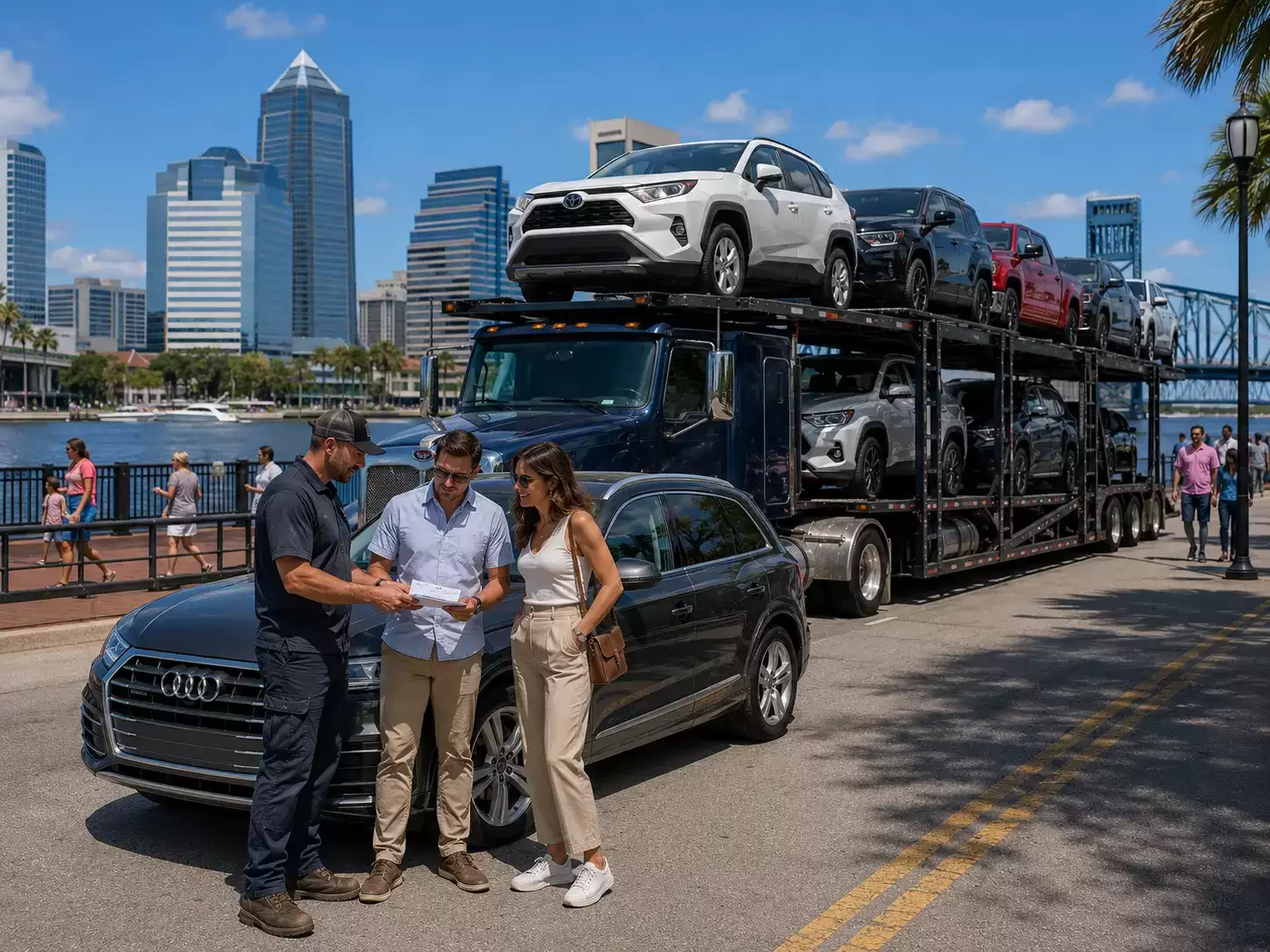
The Florida to Wisconsin corridor runs year-round, but a few consistent groups of shippers drive its heavy spring snowbird return.
What Makes the Florida–Wisconsin Auto Shipping Run Different
A few geographic quirks shape pricing and timing on the Florida to Wisconsin corridor.
Other Florida to Wisconsin Cities We Serve
Direct Express ships vehicles between hundreds of city pairs on this route. Below is a broader look at additional Florida origins and Wisconsin destinations we regularly serve.
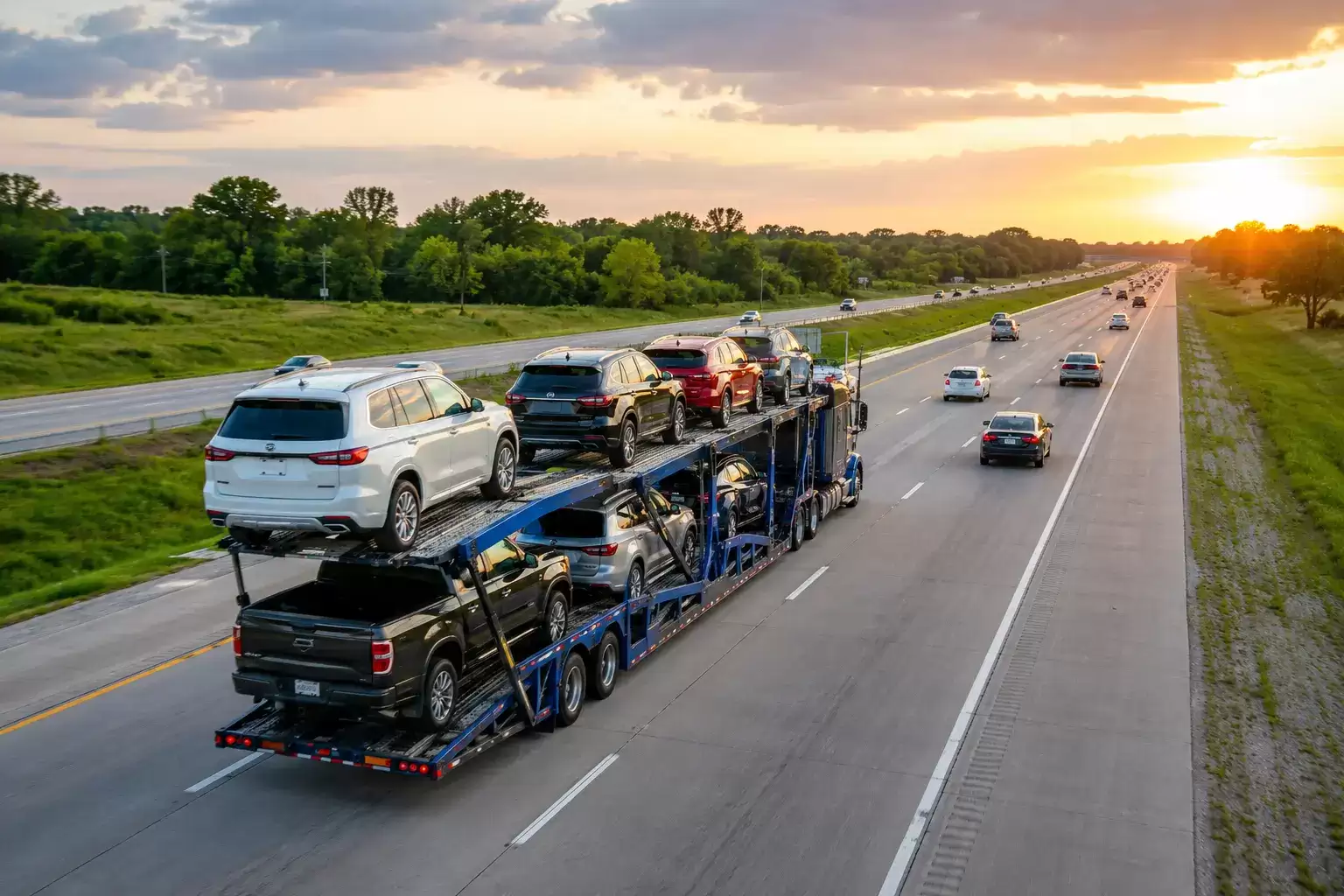
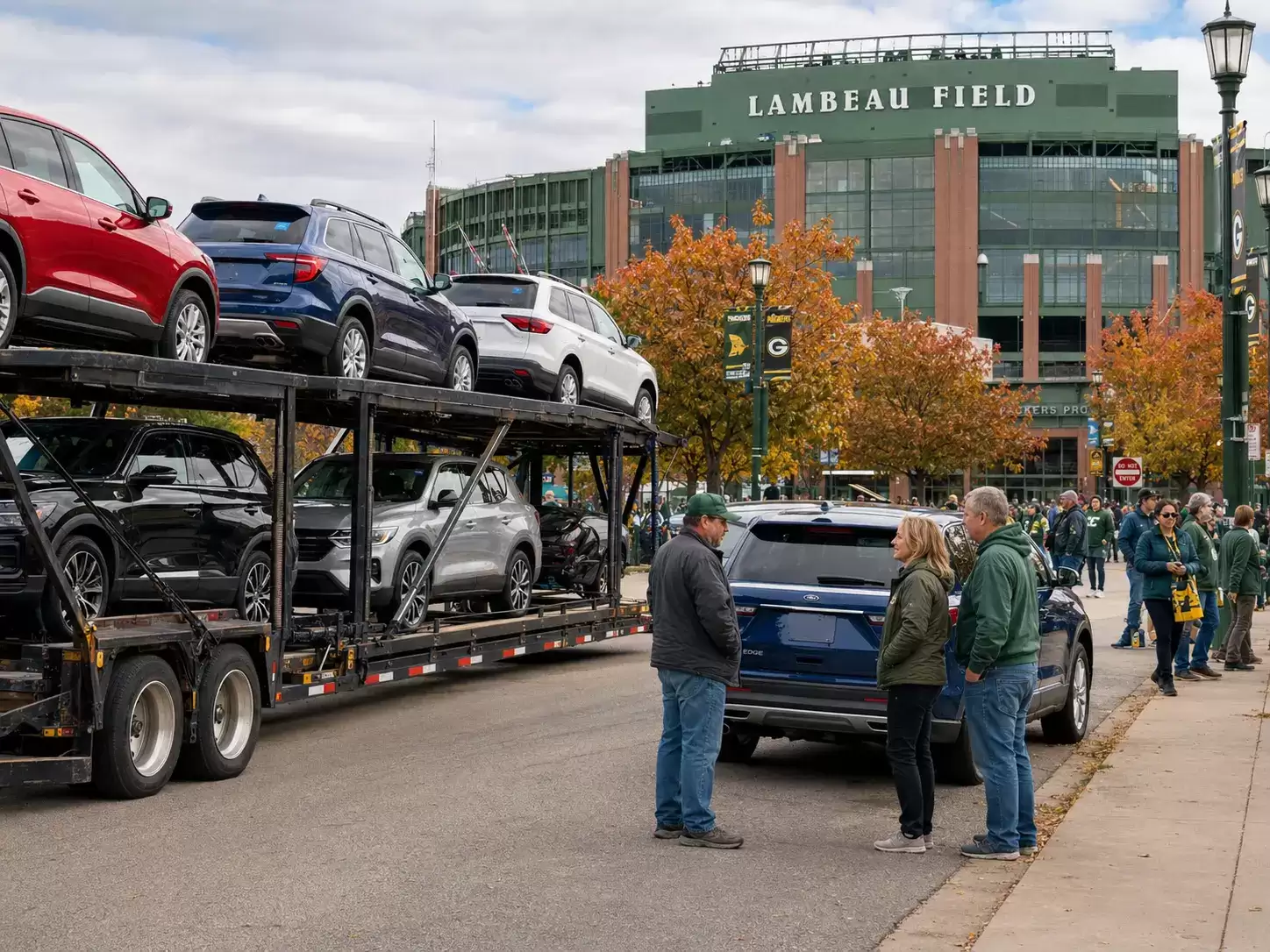
Florida and Wisconsin Auto Shipping Zones Along the I-75, I-65, and I-94 Corridors
Florida-to-Wisconsin auto transport runs roughly 1,050–1,650 miles depending on the Florida origin and Wisconsin destination. The shortest runs come from the Panhandle and North Florida to Southeast Wisconsin and the Milwaukee metro. The longest come from South Florida’s Atlantic coast to northern and western Wisconsin — Superior, Wausau, La Crosse. Florida origin zones are dominated by the Gulf Coast, where Wisconsin snowbirds spend the winter, with strong secondary volume out of Central and South Florida and a smaller share from North Florida and the Panhandle.
Florida to Wisconsin Auto Transport Video Guide
Jump to the chapter most relevant to your Florida to Wisconsin shipment
9 Chapters — Under 6 Minutes
Each chapter covers a specific part of the Florida to Wisconsin shipping process. Click any card to open that chapter directly in YouTube.
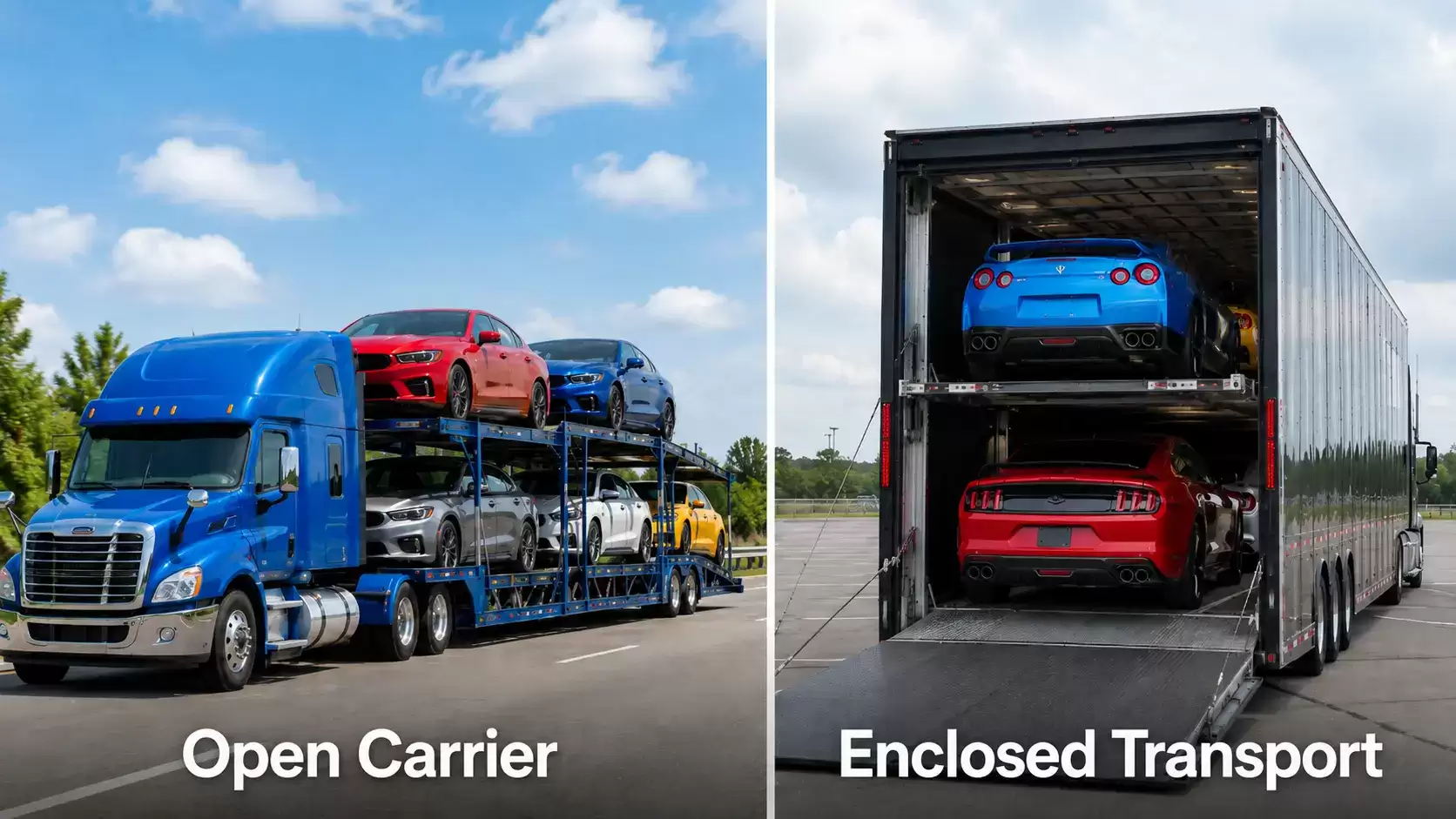
Open vs. Enclosed Car Transport on the Florida–Wisconsin Route
Both methods are available on virtually every Florida to Wisconsin lane. The right choice comes down to your vehicle’s value and the season.
Our honest recommendation: open transport for daily drivers worth under $60,000 — the I-75/I-65/I-94 northbound corridor is well-maintained, well-traveled, and carrier-rich. The enclosed premium is worth it for a classic, an exotic, a sentimental vehicle, or a winter arrival into salted Wisconsin roads, particularly during the spring return and fall departure windows when enclosed demand concentrates.
Door-to-Door Car Shipping: What to Expect in Florida and Wisconsin
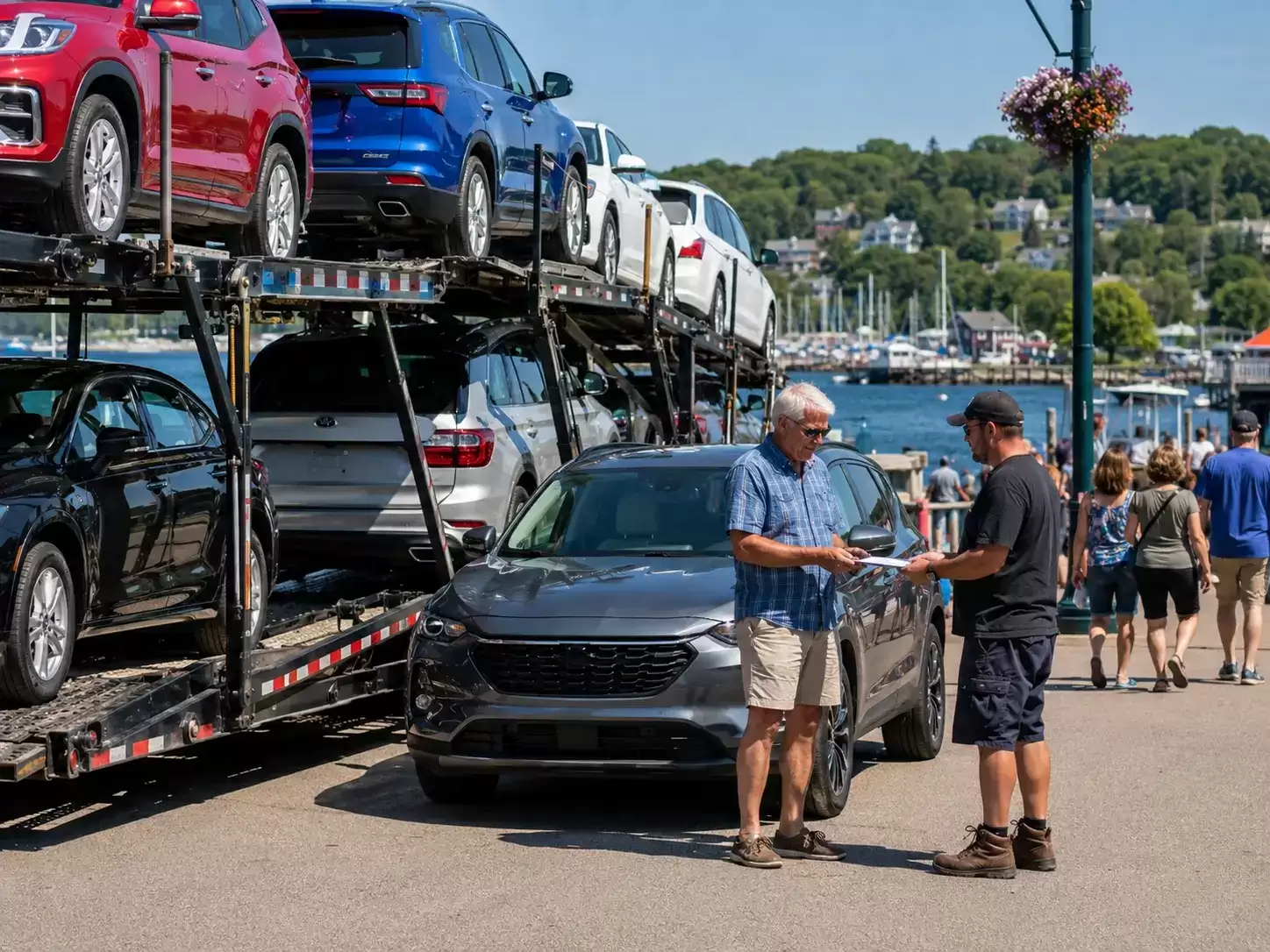
Every Florida to Wisconsin shipment is full door-to-door — we pick up at your Florida address and deliver to your Wisconsin door, with commercial staging only where dense city streets require it.
Pickup in Florida
Gulf Coast: Tampa Bay, Sarasota, Fort Myers, Cape Coral, and Naples
Standard door-to-door pickup throughout the Gulf Coast — the corridor’s busiest loading zone and the winter home of most Wisconsin snowbirds. Tampa, St. Petersburg, and Clearwater: standard residential throughout the Tampa Bay metro; no staging concerns. Sarasota, Bradenton, Fort Myers, Cape Coral, and Naples: standard residential, right on the I-75 northbound line. Many pickups here sit inside gated or age-restricted seasonal communities — confirm gate access and a contact name with your carrier 24 hours ahead, since haulers cannot always enter narrow community streets. April is the tightest booking month in this zone.
Central Florida and the Atlantic Coast: Orlando, Melbourne, and Daytona Beach
Standard door-to-door pickup throughout Central Florida and the Atlantic coast. Orlando and the I-4 corridor (Kissimmee, Lakeland, Deltona): standard residential throughout; strong carrier density driven by the metro’s volume. Melbourne, Palm Bay, Daytona Beach, Palm Coast, and Port St. Lucie: standard residential, I-95 and Florida Turnpike access to the northbound spine. No pickup weather concerns in any season apart from summer heat.
South Florida: Miami, Fort Lauderdale, and West Palm Beach
Standard door-to-door pickup throughout South Florida. Miami-Dade: standard residential throughout; very dense downtown Miami, Brickell, and Midtown high-rise buildings require carrier staging on a nearby wide commercial street — confirm your pickup address at booking. Fort Lauderdale, Hollywood, Hialeah, Pembroke Pines, Miramar, Coral Springs, Pompano Beach, and Boca Raton: standard residential, no staging concerns. West Palm Beach and Boynton Beach: standard residential throughout. South Florida has excellent carrier density in all three service tiers, though summer heat is extreme.
North Florida and the Panhandle: Jacksonville, Gainesville, and Tallahassee
Standard door-to-door pickup throughout North Florida and the Panhandle. Jacksonville: standard residential throughout; Florida’s primary I-95/I-10 freight hub and among the closest Florida zones to Wisconsin. Gainesville and Ocala: standard residential, I-75 access. Panhandle markets (Tallahassee, Pensacola, Panama City): standard residential, connecting north via I-65 through Birmingham and Nashville — the shortest Florida runs on the corridor.
Delivery in Wisconsin
The Milwaukee Metro and Southeast Wisconsin
Standard door-to-door delivery throughout Southeast Wisconsin. Downtown Milwaukee, the Third Ward, the East Side, and Bay View: carrier staging required — multi-car haulers cannot park on narrow city streets for unloading, so your carrier will stage at a nearby wide commercial street or accessible area. Wauwatosa, West Allis, Greenfield, Oak Creek, Franklin, New Berlin, Brookfield, Menomonee Falls, Waukesha, and Muskego: standard residential delivery on wider suburban blocks. Kenosha, Racine, Pleasant Prairie, and Mount Pleasant: standard residential and the first Wisconsin drops a northbound carrier reaches. The metro is the highest-volume Wisconsin delivery market on the corridor. Confirm your staging location with your carrier 24–48 hours before delivery.
Madison and South Central Wisconsin
Standard door-to-door delivery throughout south central Wisconsin. Madison: standard residential across the west side, east side, and outer neighborhoods, with staging needed for the isthmus, the downtown campus core, and tight lakeside streets. Sun Prairie, Fitchburg, Middleton, Verona, and Stoughton: standard residential on wide suburban blocks. Janesville, Beloit, and Watertown: standard residential and among the first south central drops on an I-90 or I-39 approach. Confirm staging for apartment and campus-area deliveries, and allow a winter buffer during a snow or extreme-cold event.
The Fox Valley, Green Bay, and the Lake Michigan Shore
Standard door-to-door delivery throughout northeastern Wisconsin. Green Bay, De Pere, Appleton, Neenah, Oshkosh, and Fond du Lac: standard residential with straightforward US-41 access north from the metro. Sheboygan and Manitowoc: standard residential along I-43 on the lakeshore. These destinations add roughly 60 to 115 miles past Milwaukee, and they carry the state’s heaviest lake-effect snow exposure — allow a 1-day delivery buffer November through March.
Western and Northern Wisconsin: Eau Claire, La Crosse, Wausau, and the North
Standard door-to-door delivery across the rest of the state. Eau Claire, La Crosse, Onalaska, Menomonie, Hudson, River Falls, and Chippewa Falls: standard residential, I-94 and I-90 access northwest past Madison. Wausau, Stevens Point, Marshfield, Rhinelander, Minocqua, Superior, and Ashland: standard residential, longer lead times and lighter carrier density. These are the most winter-exposed deliveries on the corridor — allow a 1-day buffer November through March, and two days during a blizzard or extreme-cold event.
Wisconsin Vehicle Registration for New Florida Arrivals
Wisconsin requires new residents to title and register their vehicle at the Wisconsin DMV (WisDOT) within 60 days of establishing residency, presenting the out-of-state title, proof of identity and a Wisconsin address, and payment of the applicable title and registration fees; Wisconsin has no state safety inspection, and emissions testing is required only in seven southeastern counties — Milwaukee, Waukesha, Washington, Ozaukee, Racine, Kenosha and Sheboygan.
Preparing Your Vehicle
Before pickup in Florida: remove all personal items from the interior, leave no more than a quarter tank of fuel, disable your car alarm, and remove any exterior accessories or bike racks. Photograph your vehicle thoroughly from all angles with date-stamped images before the carrier arrives — a quick wash first makes it easier to document existing condition, especially after a season of coastal salt air. Vehicles with roof racks, spoilers, or exterior modifications should note these on the Bill of Lading at pickup. At delivery in Wisconsin, inspect your vehicle carefully in daylight before signing the Bill of Lading — your signature without notation constitutes acceptance of the vehicle’s condition. Wisconsin winter daylight is short, so if delivery occurs after dark, note on the Bill of Lading that inspection is pending daylight review.
Florida & Wisconsin Auto Transport Resources
Florida Helpful Government Links
- Florida Department of Highway Safety and Motor Vehicles (FLHSMV) — Florida’s vehicle title and registration agency. Confirm your Florida title is clear and in your possession before shipping, and cancel your Florida registration when you register in Wisconsin.
- FLHSMV — Motor Vehicles, Tags, Titles & Registration — Title transfer and registration procedures, including releasing your Florida title for an out-of-state move to Wisconsin.
- FLHSMV — Registration Fees — Florida registration and title fees by vehicle weight and type. Florida has no state safety or emissions inspection.
Wisconsin Helpful Government Links
- Wisconsin DMV (WisDOT) — Wisconsin’s vehicle title and registration agency. Florida residents establishing Wisconsin residency must title and register within 60 days.
- Wisconsin DMV — Title & License Plates — Step-by-step guidance for titling and registering an out-of-state vehicle in Wisconsin, including title transfer from Florida and current fees.
- Wisconsin DMV — Vehicle Emissions Testing — Wisconsin has no state safety inspection; emissions testing is required only in seven southeastern counties. Check whether your new address falls inside the testing area.
Federal Auto Transport Resources
- FMCSA — Verify a Carrier’s License (SAFER System) — Verify that any auto transport company you consider is federally licensed and insured before booking.
- FMCSA — Protect Your Move — Federal consumer guidance about hiring vehicle shippers, including red flags for broker scams and your rights as a shipper.

Shipping from Wisconsin to Florida instead?
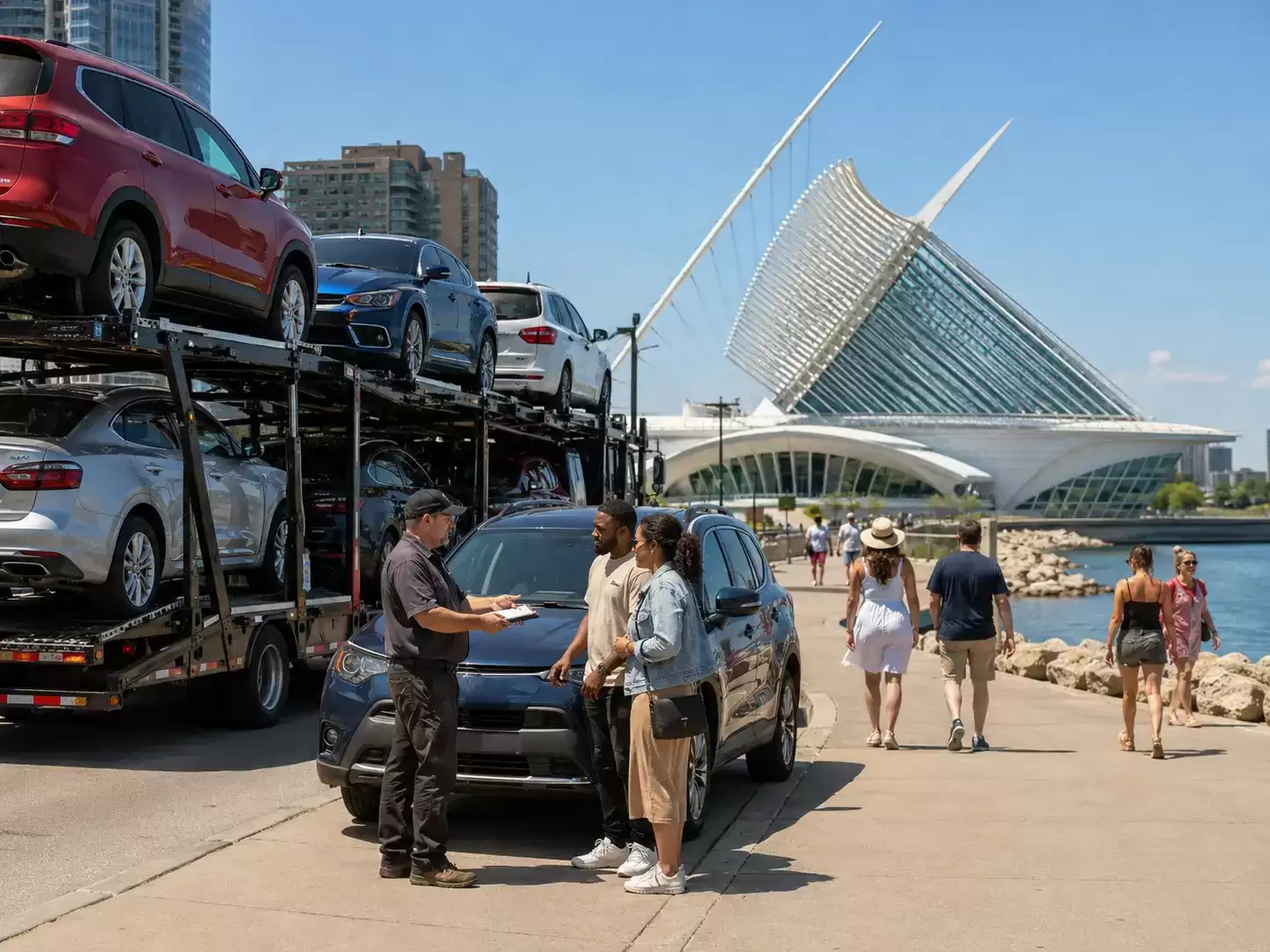
We cover both directions on this corridor. See city-by-city rates, transit times, and seasonal pricing for the reverse direction. View Wisconsin to Florida rates →
More Helpful Information
Other popular routes we serve.
How Auto Transport Works
How our car shipping cost calculator works its magic.