One quick step left · Free · No obligation
Three Pricing Tiers
$0 upfront – only pay when a carrier is dispatched
Door-to-door service with full carrier insurance
Most U.S. car shipments cost between $700 and $2,100 door-to-door, averaging around $1,100–$1,300 for a standard sedan on an open carrier.
Short local moves can run a few hundred dollars; long coast-to-coast moves for larger vehicles can top $2,000. Your exact price depends on distance, vehicle size, open vs. enclosed transport, season and service tier.
Car shipping is priced on an economy-of-scale model: the total cost rises with distance, but the price per mile drops the farther your vehicle travels. A short 300-mile move is the most expensive per mile because the carrier’s fixed loading and labor costs are spread over fewer miles, while a 2,500-mile cross-country move earns the lowest per-mile rate. As a rule of thumb, open transport runs from roughly $0.60 per mile on long routes up to about $1.75 per mile on short hauls. Enclosed transport adds about 35–50%.
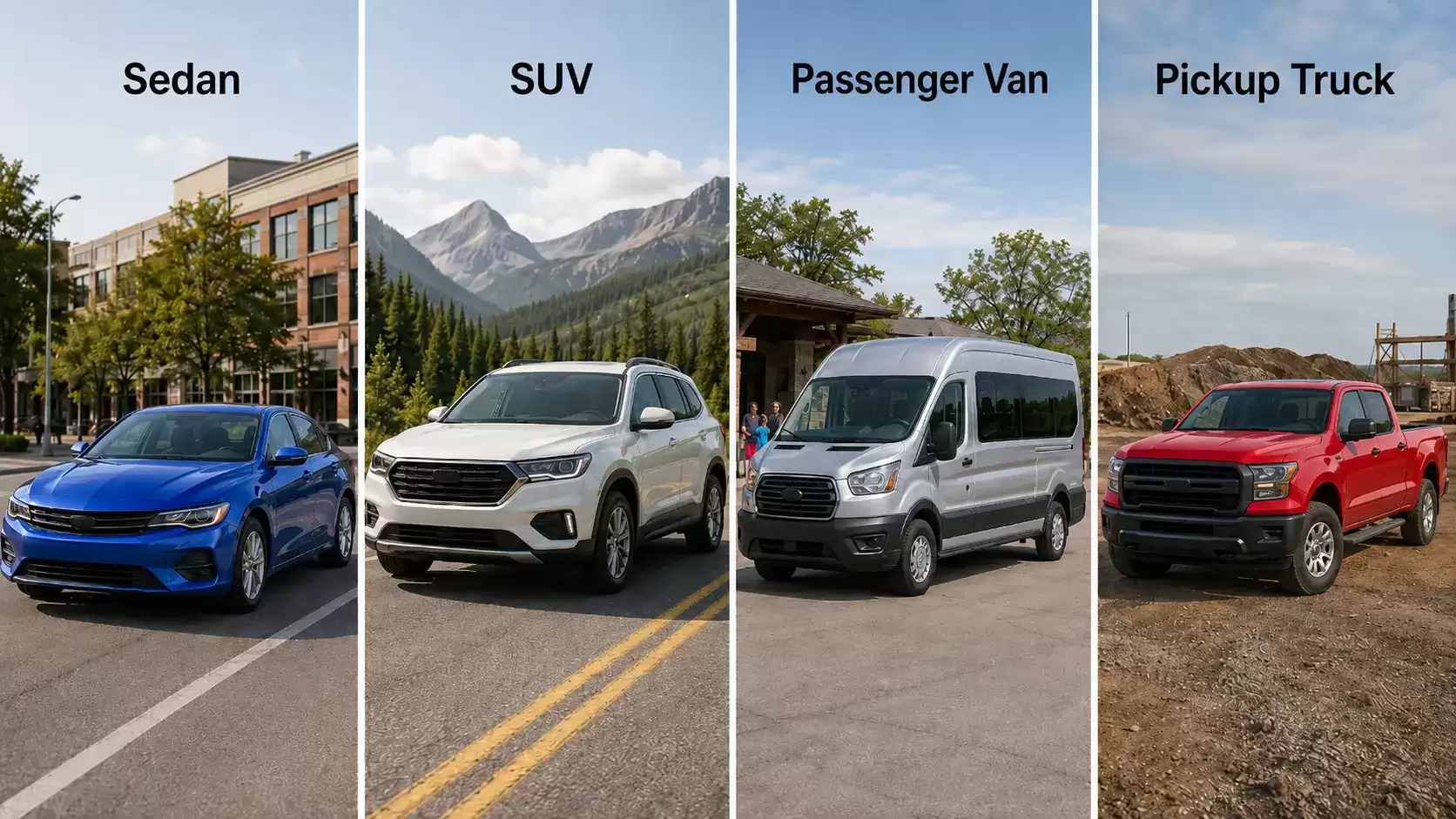
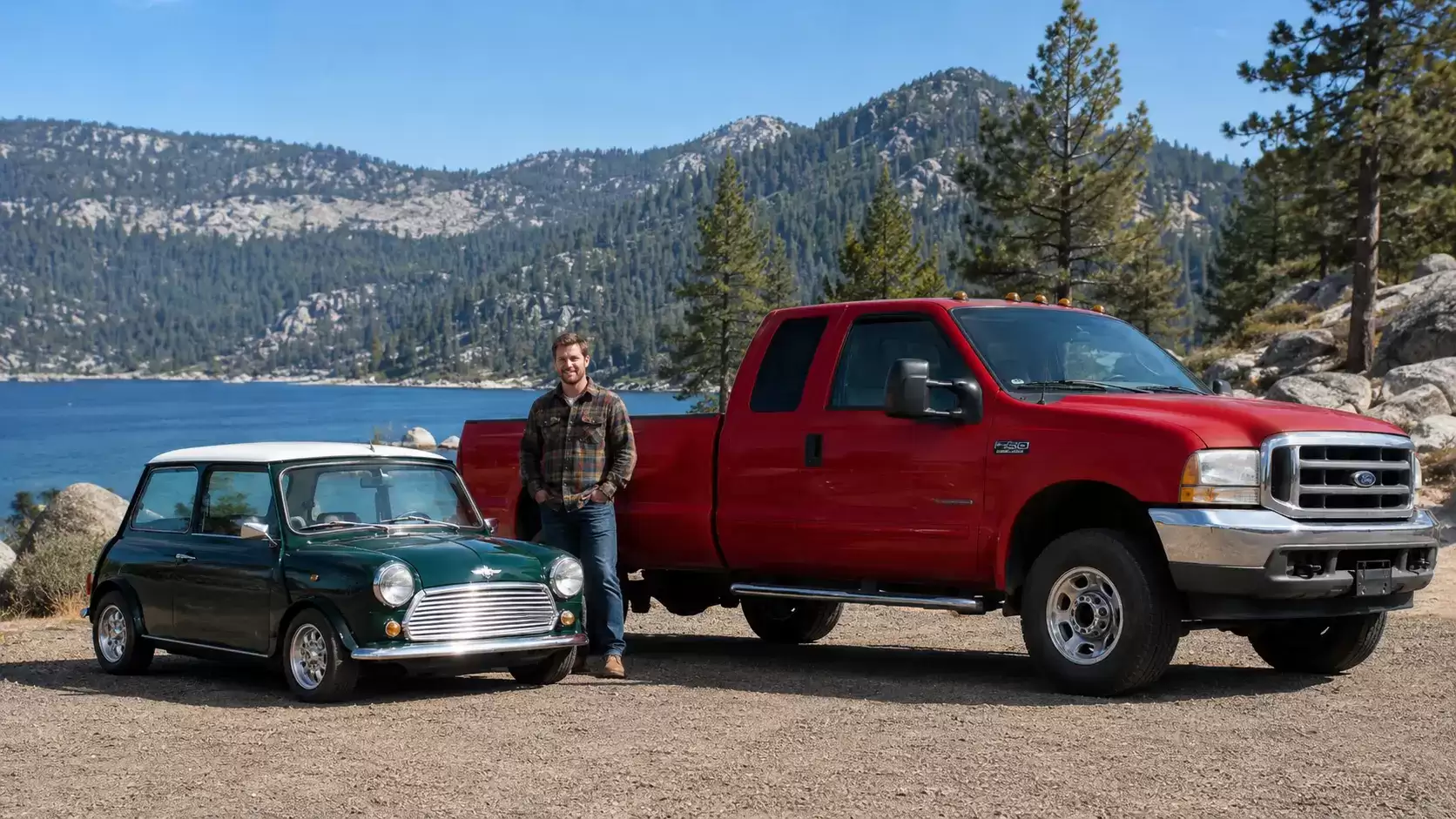
Vehicle size and weight are second only to distance in setting your auto transport rate. Larger vehicles take up more trailer space and add weight, so they cost more to ship than a standard sedan.
| Vehicle type | Cost vs. sedan | Why |
|---|---|---|
| Sedan / compact car | Baseline rate | The standard the calculator prices against — lightest and easiest to load. |
| Crossover / small SUV | +$100–$150 | Slightly larger footprint and weight. |
| Large SUV / pickup truck | +$200–$350 | More length, height and weight; takes more trailer space. |
| Minivan / cargo van | +$150–$250 | Taller and longer than a sedan, limiting what can load above it. |
| Non-running vehicle | +$150–$300 | Requires a winch and extra loading time on a specially equipped carrier. |
Estimated add-ons vs. a standard sedan on an open carrier. Run the calculator for your exact vehicle and route.
The longer the haul, the lower your cost per mile. The 1,000–2,000 mile range is the value sweet spot, and coast-to-coast moves earn the most efficient bulk pricing. Enclosed transport holds a roughly 35–50% premium across every bracket.
| Distance | Open transport | Enclosed transport |
|---|---|---|
| 1–500 miles | $1.75 / mi | $2.45 / mi |
| 501–1,000 miles | $1.05 / mi | $1.45 / mi |
| 1,001–1,500 miles | $0.85 / mi | $1.20 / mi |
| 1,501–2,000 miles | $0.76 / mi | $1.05 / mi |
| 2,001–2,500 miles | $0.68 / mi | $0.94 / mi |
| 2,501–3,000 miles | $0.63 / mi | $0.87 / mi |
| 3,001–3,500 miles | $0.58 / mi | $0.80 / mi |
Per-mile estimates for a standard sedan. Larger vehicles price higher — see the table above.
Estimated door-to-door open-transport pricing on high-volume lanes, by service tier. See the full breakdown on our Popular Car Shipping Routes page, or run the calculator above for your exact rate.
| Route | Distance | Standard | Expedited | Rush | Transit |
|---|---|---|---|---|---|
| California to New York | ~2,790 mi | $2,075 | $2,540 | $2,780 | 6–7 days |
| California to Florida | ~2,500 mi | $1,880 | $2,285 | $2,520 | 5–6 days |
| Texas to California | ~1,440 mi | $1,170 | $1,380 | $1,570 | 3–4 days |
| Florida to Texas | ~1,100 mi | $940 | $1,105 | $1,260 | 3–4 days |
| Florida to New York | ~1,075 mi | $925 | $1,085 | $1,240 | 3–4 days |
| Texas to Illinois | ~925 mi | $830 | $965 | $1,110 | 2–3 days |
Estimates are for open transport, a standard operable sedan; enclosed runs roughly 35–60% more. Trucks, SUVs and vans price higher.
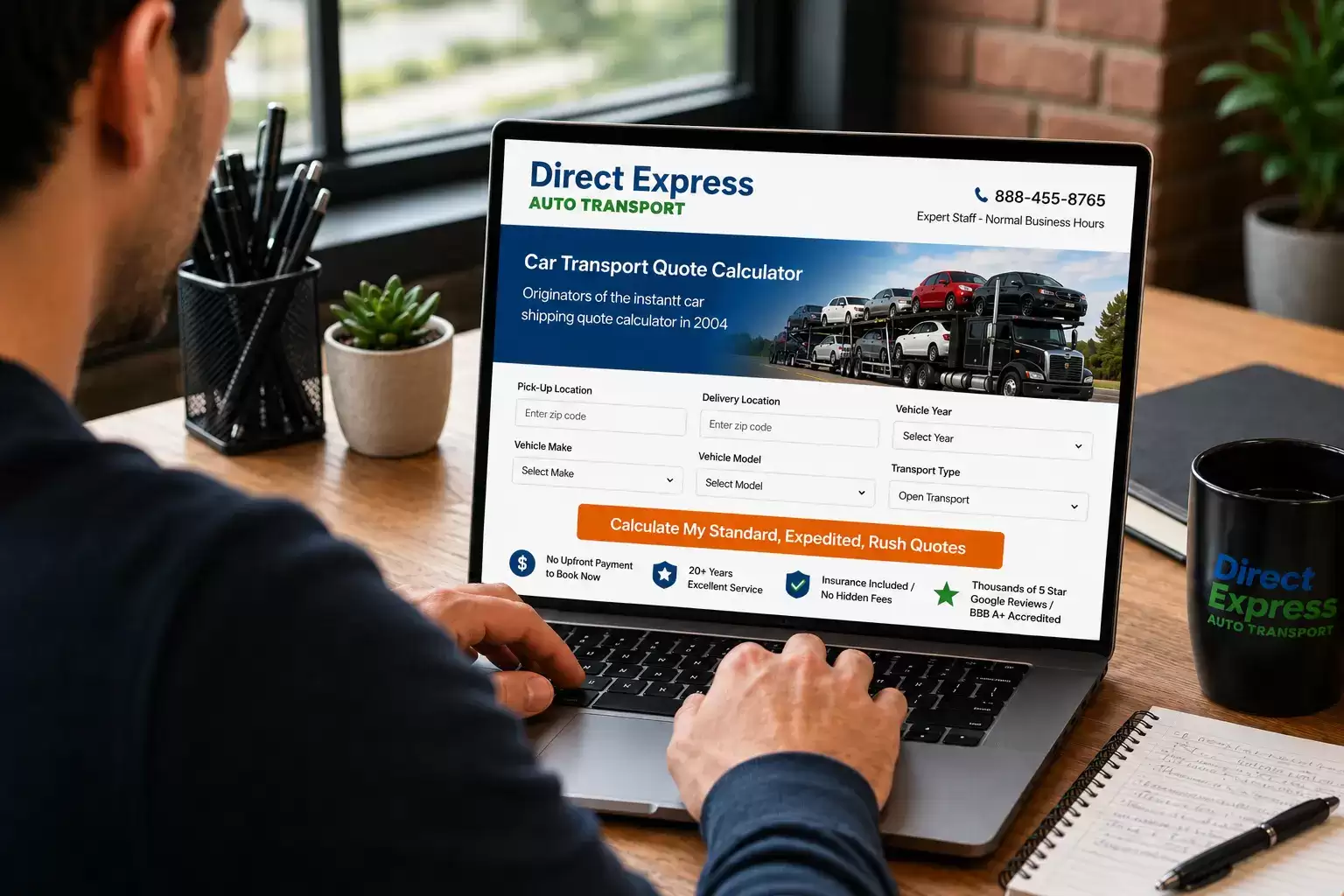
An accurate auto transport quote is a calculation of several real-world logistics variables. The calculator starts from a baseline — an average sedan, running condition, open carrier, between two well-populated cities — then adjusts for every deviation from that norm.
Both methods are available on virtually every route. The right choice comes down to your vehicle’s value and the season.
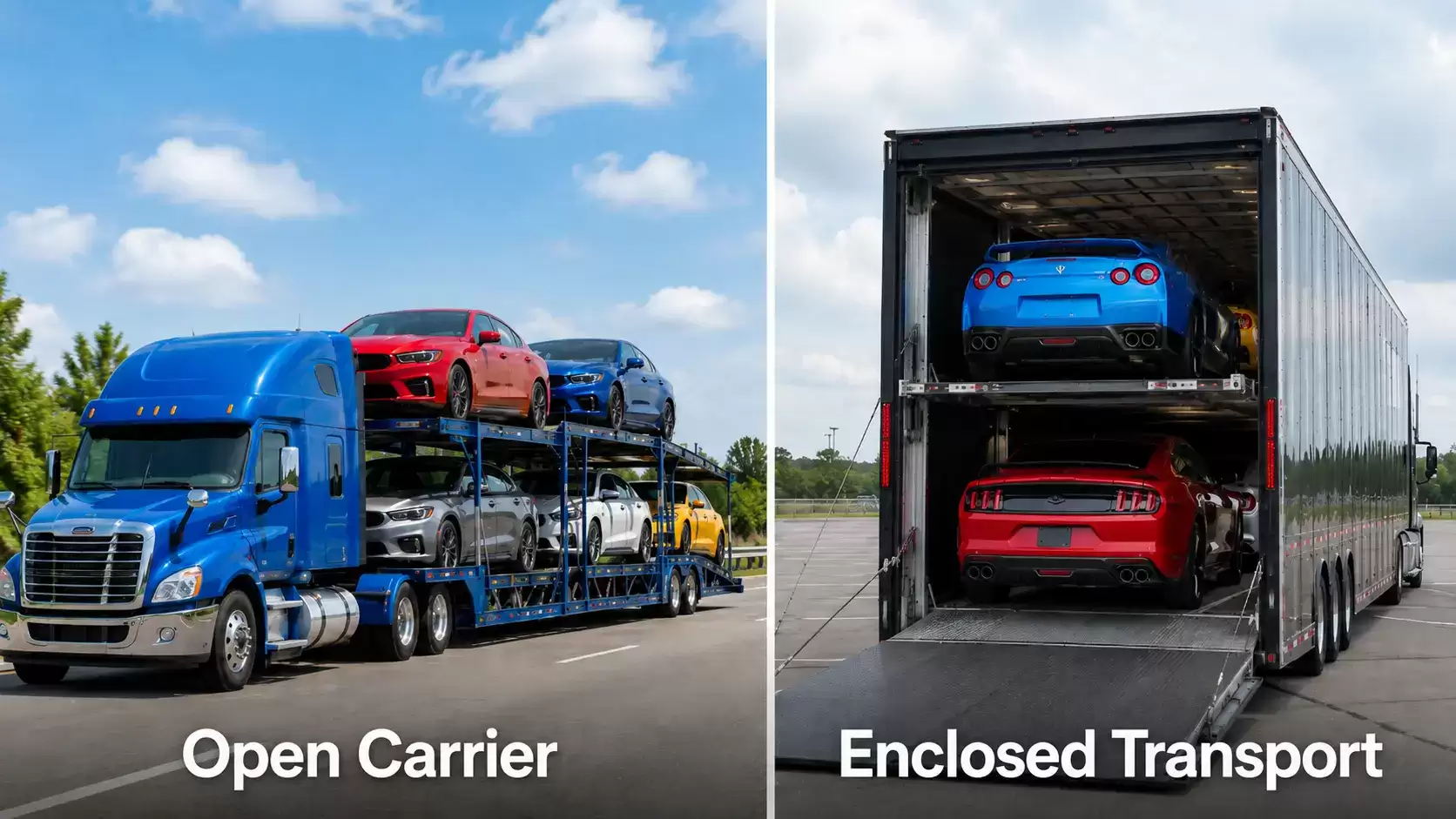
Our honest recommendation: for a daily driver or a vehicle worth under $60,000, open transport is the right call on virtually every route. For a classic, exotic or sentimental vehicle, the enclosed premium is worth the protection.
Every shipment is available at three service levels, so you control the balance of speed and price. All three include full door-to-door service and carrier insurance, with $0 due upfront — you only pay once a carrier is dispatched.
These tier prices are for a standard sedan via open carrier. Calculating your particular instant quote reflects your exact vehicle, ZIP codes and dates, which is even more precise.
Auto transport pricing moves with the season. Knowing when demand peaks — and when it cools — helps you time your shipment for the best combination of price and pickup speed.

| Season | Demand & Rates | What’s Driving It | Our Recommendation |
|---|---|---|---|
| Winter Dec–Feb |
HIGH on southbound lanes | Peak snowbird migration into Florida, Arizona and Texas. Northbound and cross-country lanes are quieter and more competitively priced. | Book Expedited 2–3 weeks out for southbound moves. Standard works well on most other routes. |
| Spring Mar–May |
MODERATE, rising | Snowbirds return north, lifting northbound demand. Overall a shoulder season with good carrier supply on most corridors. | One of the best-value windows. Standard tier is viable for flexible shippers; book Expedited for northbound lanes. |
| Summer Jun–Aug |
HIGHEST nationwide | Peak moving season — family relocations, military PCS orders and college moves push demand up in every direction at once. | Book as early as possible and choose Expedited or Rush for firm dates. Standard windows run longer. |
| Fall Sep–Nov |
MODERATE, then climbing | Demand cools after summer, then southbound snowbird traffic begins building again in late October and November. | Early fall is a value sweet spot. Lock in southbound moves before the late-season snowbird surge. |
Pricing tracks the live market, so a quote pulled close to your pickup date is the most accurate. Run the calculator when you’re ready to schedule.
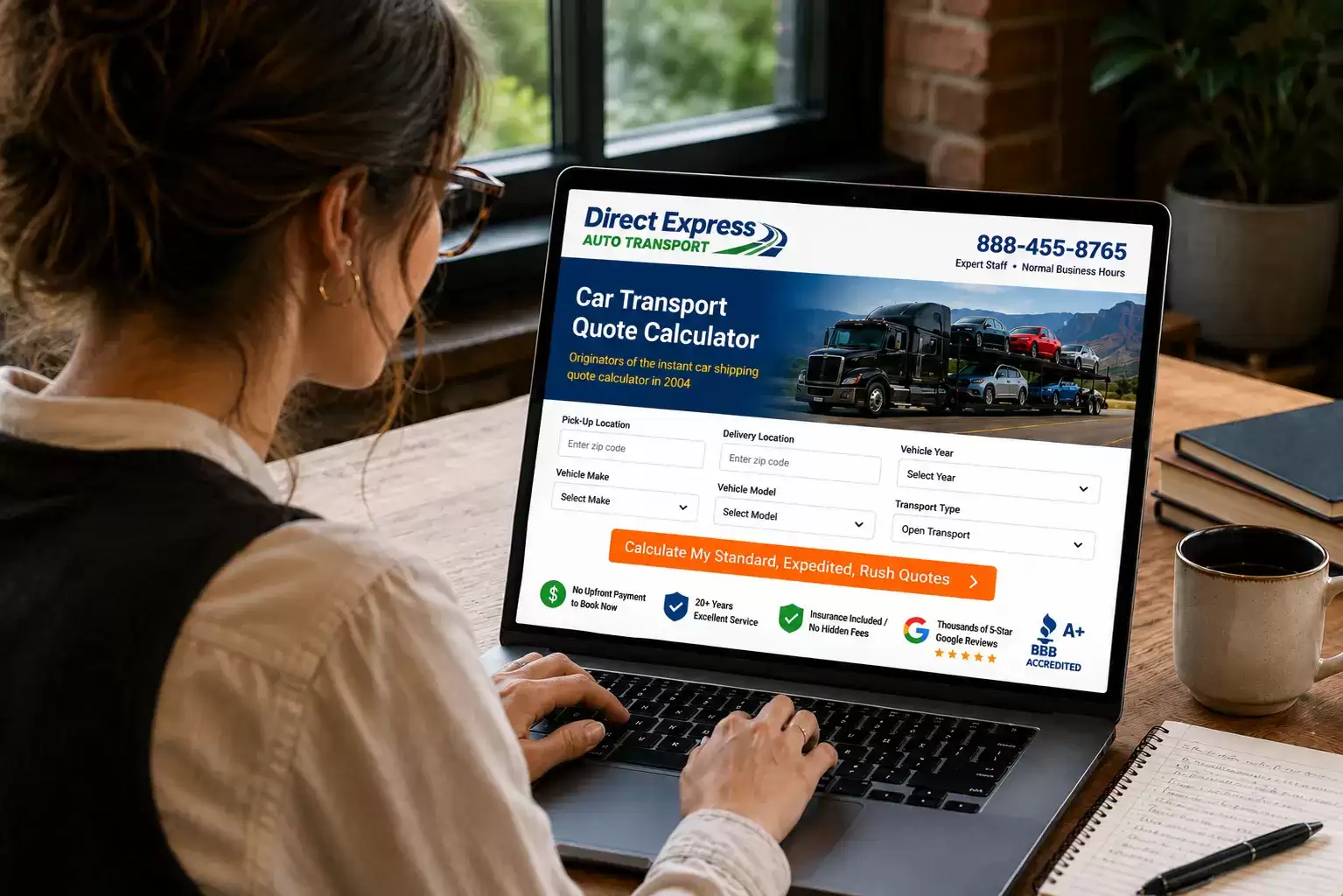
The tool is engineered for simplicity — you’ll have a quote in about 30 seconds.
From instant quote to door-to-door delivery, with no payment due until a carrier is assigned. Want the full walkthrough? Read How Auto Transport Works.
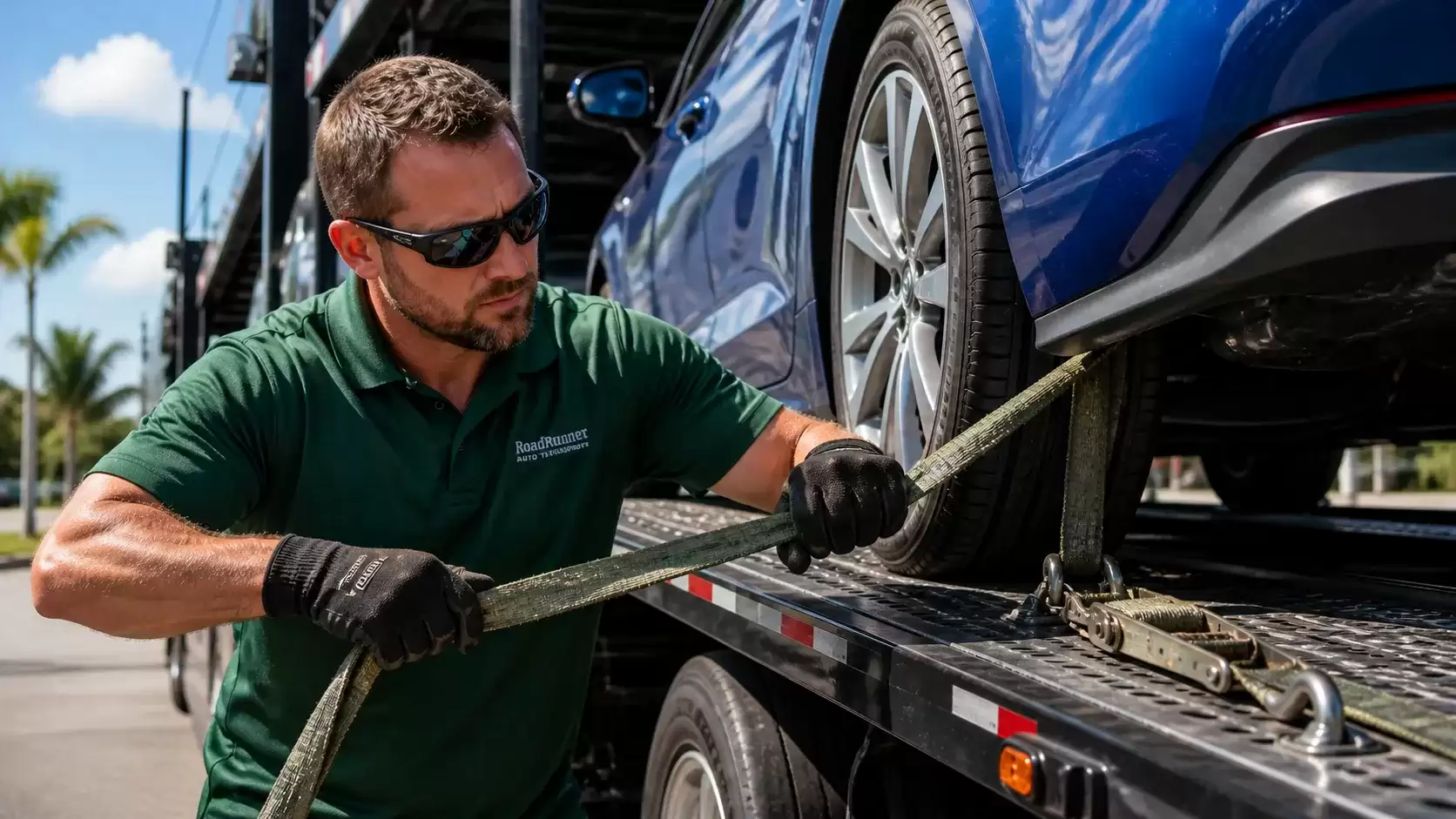
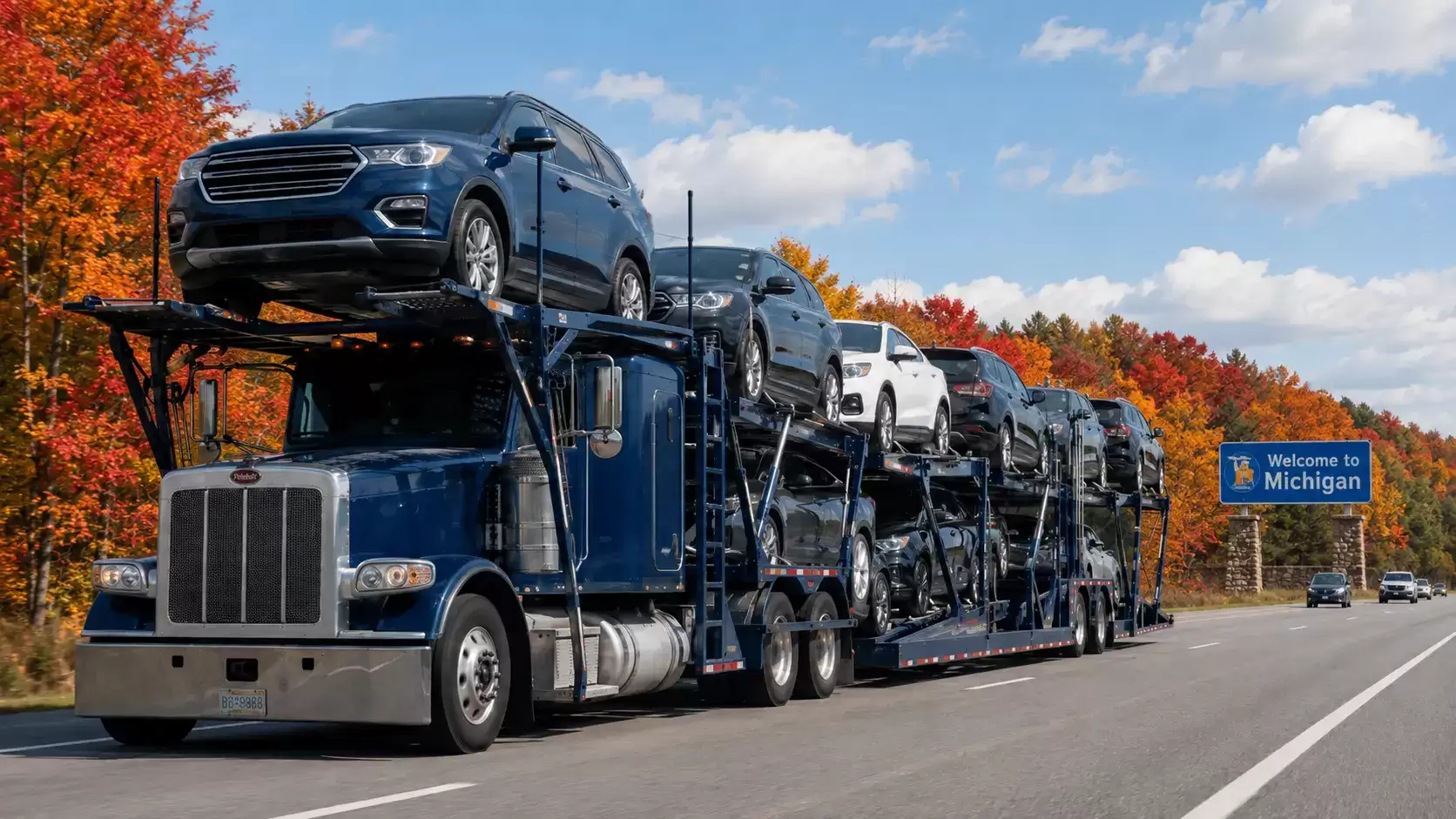
Moving a car to another state costs $700 to $2,100 for most vehicles, and the price is set by one thing above all others: the distance between the two addresses. There are no state-line fees, crossing permits or paperwork surcharges added to your quote — a carrier crossing from Ohio into Michigan pays nothing extra to do it, and neither do you.
| Type of Move | Typical Distance | Standard Open Carrier | Example |
|---|---|---|---|
| Neighbouring states | 200–500 miles | $500–$800 | Ohio to Michigan, New Jersey to Virginia |
| Regional | 700–1,000 miles | $800–$1,100 | Illinois to Georgia, Colorado to Texas |
| Long-haul | 1,500–1,800 miles | $1,100–$1,500 | Texas to New Jersey, Minnesota to Arizona |
| Coast to coast | 2,500–2,900 miles | $1,800–$2,800 | California to New York, Washington to Florida |
The process is identical whether you’re moving one state over or twenty. You book, a carrier is assigned, the driver collects from your address and delivers to the new one. Nothing about your registration, title or plates changes because the vehicle travelled on a truck — you handle DMV paperwork on your own timeline after it arrives.
Direct Express covers all 48 contiguous states, and we’ve been arranging interstate vehicle transport since 2004 under USDOT #2231879.
Coast-to-coast car shipping runs $1,300 to $2,800, and it is the best value per mile you will find anywhere. California to New York covers about 2,790 miles and prices at $2,075 Standard, $2,540 Expedited and $2,780 Rush for a standard sedan — roughly $0.74 per mile, against $1.75 per mile on a 400-mile hop. Long-haul carriers run established lanes and fill their trailers, and that efficiency comes back to you in the price.
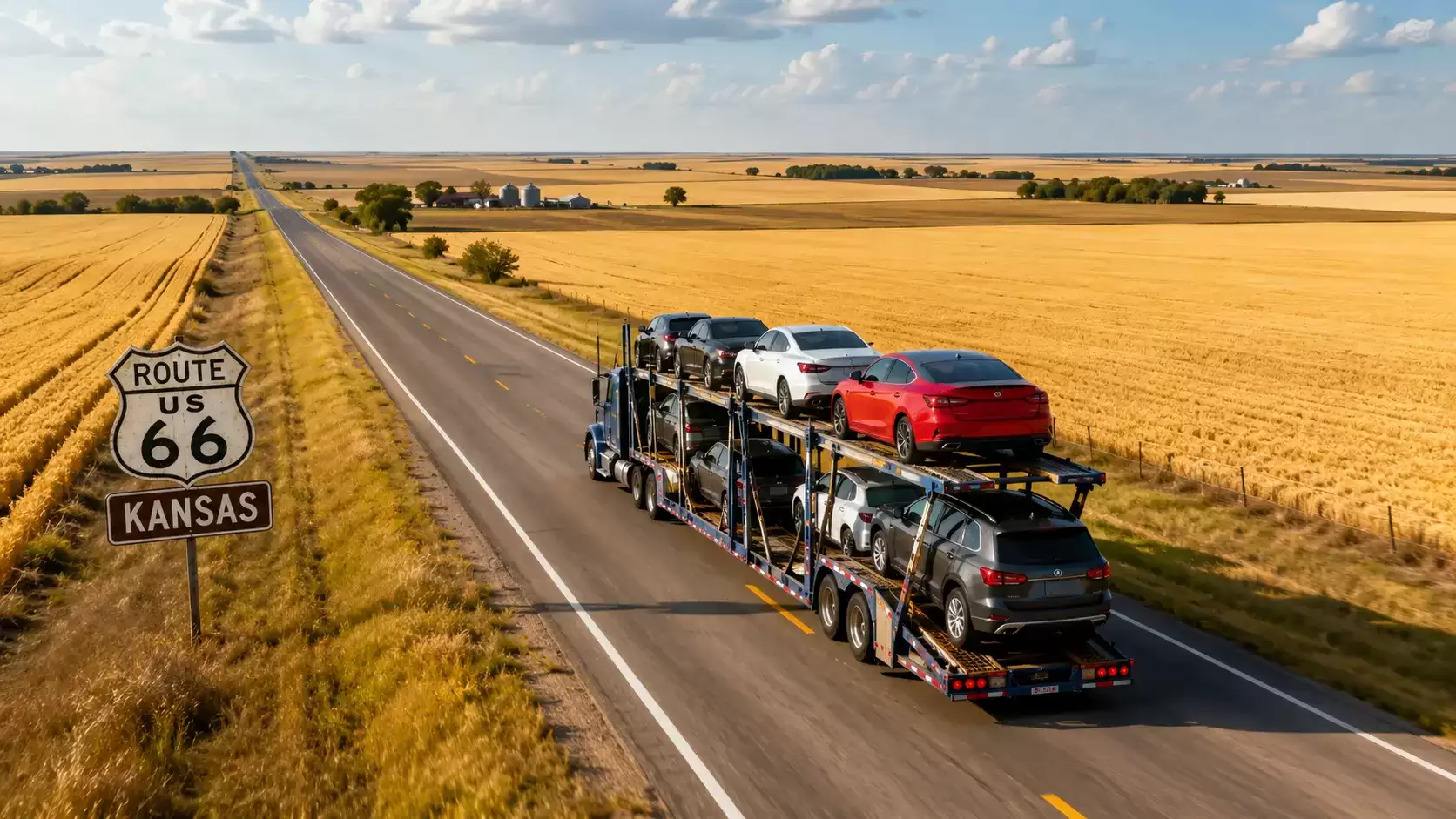
Plan on 7 to 10 days in transit once the vehicle is collected. Expedited and Rush compress the front of that window — how quickly a carrier is assigned and reaches you — rather than the drive itself. A truck still has to cross the country.
Every cross-country shipment includes door-to-door service and active cargo insurance with a minimum of $150,000 in coverage. Nothing is charged until a carrier is assigned to your vehicle.
Shipping a car takes four steps and about twenty minutes of your time in total. Get a quote, book a date, prepare the vehicle, then meet the driver at pickup and again at delivery. The preparation step is the one most people underestimate, so here is exactly what it involves.
At pickup the driver inspects the vehicle with you and you both sign the Bill of Lading. That document is what matters — read it and keep your copy. At delivery, inspect again in daylight before signing off, and note anything at all on the Bill of Lading before the driver leaves. Every claim rests on it.
If your street is narrow or has low branches, the driver will suggest a nearby meeting point, usually a large parking lot within a few miles. An 80-foot transporter cannot safely enter most residential streets, and this happens on the majority of shipments. It is normal, not a downgrade in service.
Open transport with flexible dates is the cheapest way to ship a car — roughly 35 to 40% less than enclosed. Beyond that choice, five levers move the price, and they stack. Use three of them and you will typically take $250 to $500 off a cross-country move.
Our honest recommendation: the first two levers cost you nothing but a little planning and account for most of the available saving. Trading protection for price on a valuable vehicle is the one trade we would not make.
We pioneered online instant pricing for the auto transport industry in 2004 — before the first car shipping cost calculator, getting a quote meant phone calls, callbacks and days of waiting. Today you know your exact cost in 30 seconds, before committing to anything. Standard, Expedited and Rush tiers put you in control of price versus speed, and your card is never charged until a carrier is assigned to your vehicle.
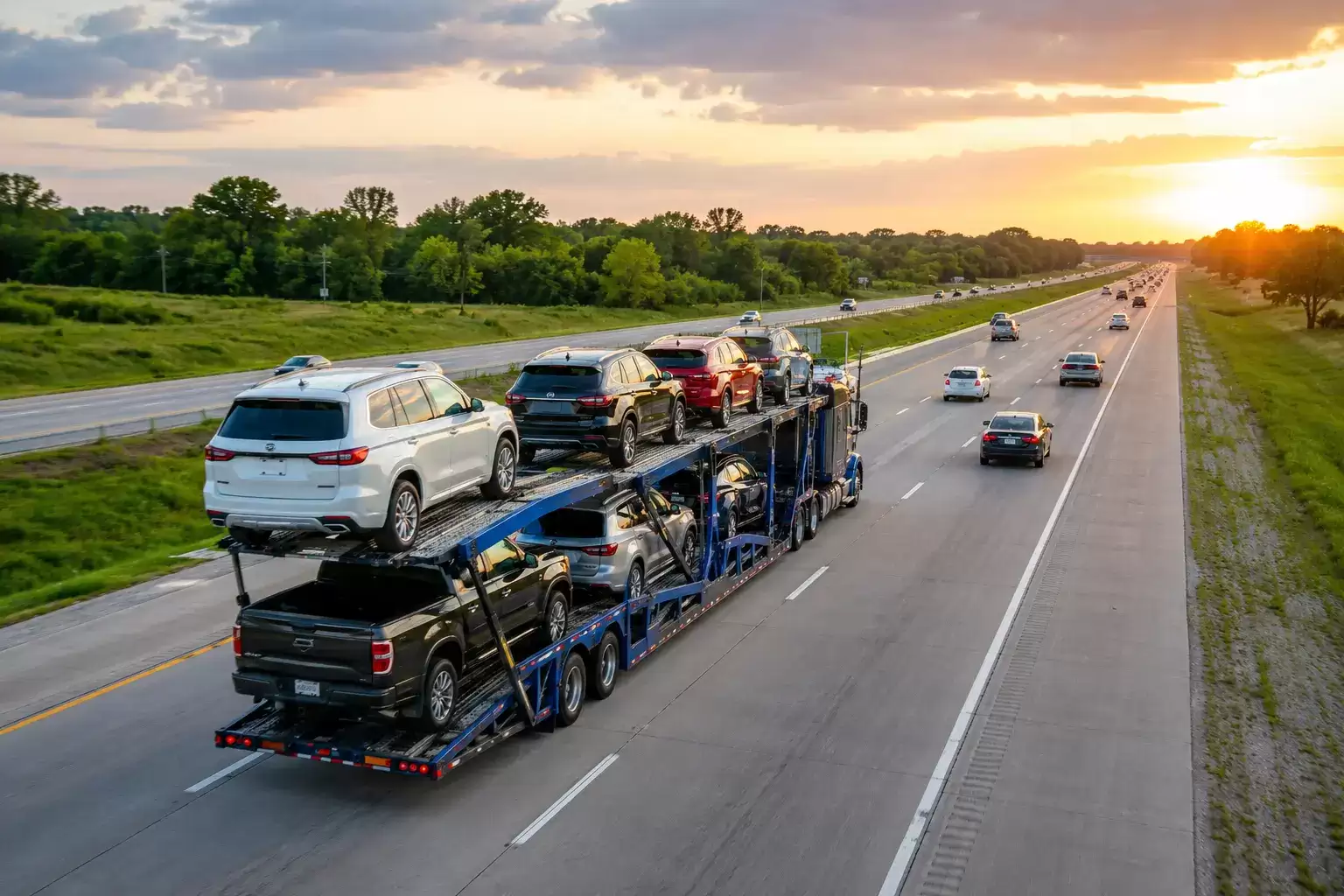
When you ship a car, it travels on a car carrier — a specialised truck hauling between two and nine vehicles at once. Your car is driven onto the trailer, secured at the wheels rather than the frame, and stays put until it reaches the delivery address. It is not driven any part of the route, so no miles go on the odometer.
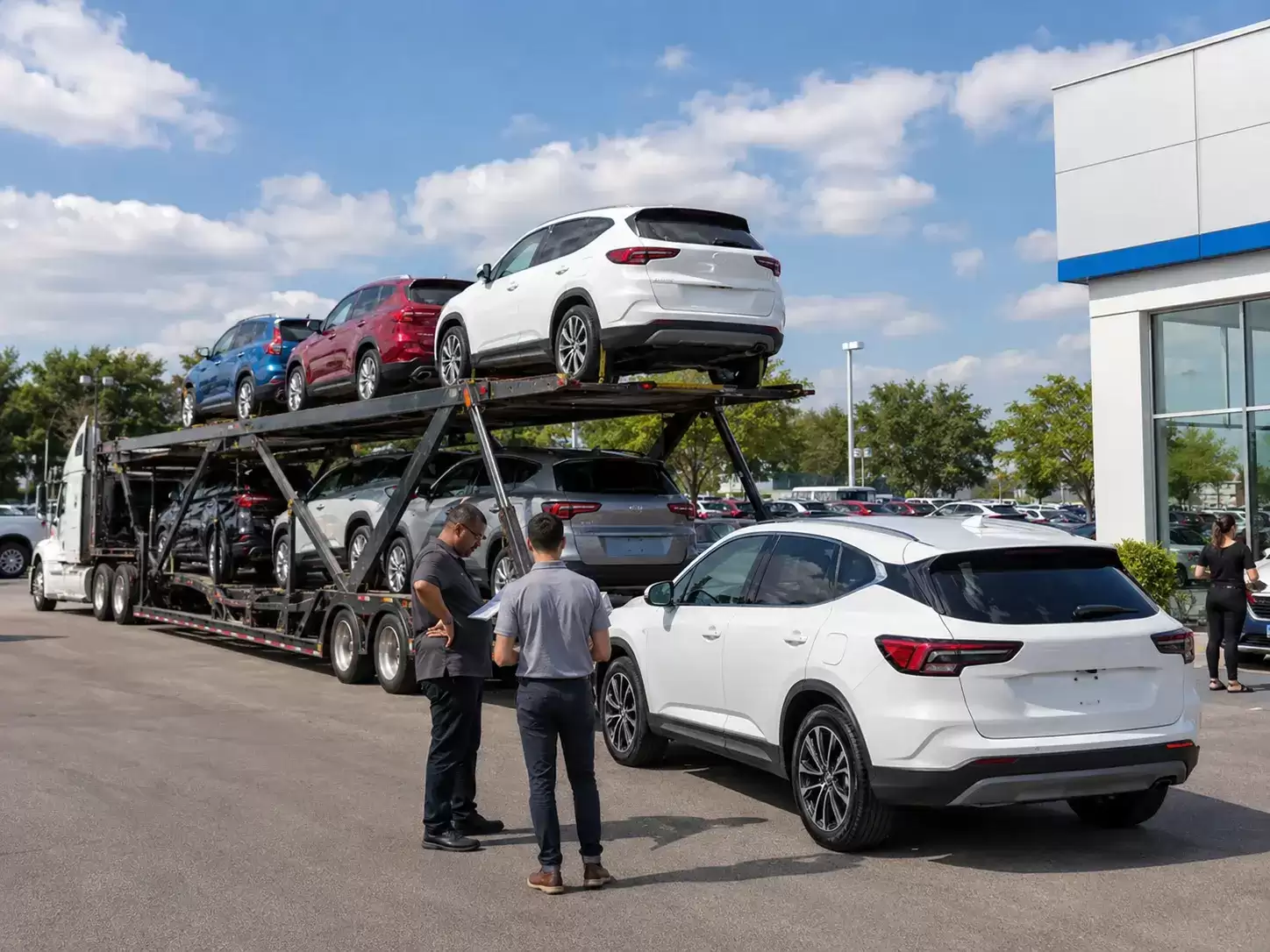
Most people shipping a car are doing one of six things:
Whichever applies to you, transporting a car is a routine, insured and thoroughly regulated business. Carriers are licensed by the FMCSA, they carry active cargo insurance, and the vehicle is documented in writing at both ends of the journey.
Direct Express has been arranging vehicle shipping since 2004 — USDOT #2231879, BBB A+ accredited, rated 4.6 stars across more than 1,100 verified Google reviews.
Most U.S. car shipments cost between $700 and $2,100 door-to-door. A standard sedan on an open carrier averages $1,100 to $1,300. Short moves under 500 miles run $500 to $800, while coast-to-coast runs $1,300 to $2,100. Four things set the price: distance, vehicle size, carrier type, and how fast you need it. Our calculator returns three real prices in about 30 seconds, with no obligation.
Interstate car shipping typically costs $700 to $2,100, set almost entirely by the distance between the two addresses. Neighbouring states run $500 to $800. Regional moves of 1,000 to 1,500 miles run $900 to $1,400. Cross-country moves run $1,800 to $2,800. There are no state-line fees, crossing permits, or paperwork surcharges added to your quote. We cover all 48 contiguous states.
Coast-to-coast shipping runs $1,300 to $2,800 for most vehicles. California to New York covers about 2,790 miles and prices at $2,075 Standard, $2,540 Expedited, and $2,780 Rush for a standard sedan. Long routes cost far less per mile than short ones — roughly $0.74 per mile coast-to-coast on Standard service, against $1.75 per mile on a 400-mile trip.
Six factors set the price: distance, vehicle size and weight, open versus enclosed transport, how accessible the pickup and delivery addresses are, how fast you need it, and the season. Distance matters most, and per-mile rates fall as the trip gets longer. Expect about $1.75 per mile under 500 miles, roughly $0.85 per mile at 1,500 miles, and $0.60 to $0.70 per mile past 2,500 miles.
Open transport runs $0.60 to $1.75 per mile, and the rate drops as distance rises. Under 500 miles you’ll pay around $1.75 per mile on an open carrier and $2.45 enclosed. Between 500 and 1,500 miles it’s about $0.85 open. Between 1,500 and 2,500 miles, about $0.70. Past 2,500 miles, about $0.60. Per-mile figures are useful for sanity-checking a quote, not for booking — carriers price the whole lane, not the odometer.
Four steps. First, get a quote by entering pickup, delivery, and vehicle type. Second, book a date — nothing is charged until a carrier is assigned to your vehicle. Third, prepare the car: wash it, photograph it, remove personal items, and leave about a quarter tank of fuel. Fourth, meet the driver at pickup and sign the Bill of Lading, then inspect and sign again at delivery. Most customers spend under 20 minutes in total.
Open transport with flexible dates is the cheapest option, running about 35 to 40 percent less than enclosed. Four more levers help: give a pickup window of several days rather than a fixed date, ship between major metro areas rather than rural addresses, avoid January and the peak snowbird months, and give yourself plenty of time. Together these typically save $150 to $400.
Add to the sedan base price: about $100 to $150 for a crossover, $200 to $350 for a large SUV, and $250 to $400 for a full-size pickup. Size and weight are what matter, since a carrier hauls a fixed tonnage and a heavier vehicle takes up more of the load. A vehicle that doesn’t start adds $150 to $300 because it requires winch loading. For dually, lifted, or otherwise oversized vehicles, the additional cost depends on the carrier and on how far outside standard dimensions the vehicle sits — tell us in advance so it’s priced correctly the first time rather than renegotiated at pickup.
Once a carrier is assigned, pickup usually happens within one or two days, sometimes three, and occasionally the same day. From there, transit runs 1 to 10 days depending on distance: 1 to 2 days under 500 miles, 3 to 5 days between 500 and 1,500 miles, 5 to 7 days between 1,500 and 2,500 miles, and 7 to 10 days coast-to-coast. Expedited and Rush service tighten the front end of that window.
Yes. Every carrier we dispatch carries active cargo insurance with a minimum of $150,000 in coverage, and it applies from pickup through delivery at no extra cost to you. Your own auto policy isn’t used and isn’t affected. Damage claims are documented on the Bill of Lading at delivery, which is exactly why the inspection at both ends matters — note anything at all before the driver leaves.
Payment comes in two parts, and nothing is taken when you book. A broker deposit is charged to your credit or debit card only once a carrier has been assigned to your vehicle — never before that. The remaining balance goes directly to the driver at delivery, payable by cash, money order, Venmo, or Zelle. Getting a price and reserving a date costs you nothing, and you’re not out of pocket until there’s a truck committed to your car.
Up to 100 pounds is the general rule, kept in the trunk or below the window line. If you need to bring more than that, ask your carrier before pickup — sometimes there’s room and sometimes there isn’t, because carriers have to clear weigh stations and the answer depends on how loaded the trailer already is. Personal items aren’t covered by cargo insurance, so leave nothing valuable, fragile, or irreplaceable in the vehicle.
Open transport is the industry standard. Your car rides on a two-level trailer with seven or eight others, exposed to weather much as it would be in a driveway. About 90 percent of vehicles ship this way, including new cars delivered to dealerships, and it’s the cheaper option. Enclosed transport uses a covered trailer carrying two to six vehicles, protecting against weather and road debris. It costs 35 to 40 percent more and is worth it for classic, exotic, luxury, or low-clearance vehicles.
We collect and deliver as close to your address as is legally and physically possible. An 80-foot transport truck can’t safely enter most residential streets, so if yours is narrow or has low branches, the driver will arrange a nearby meeting point, usually a large parking lot within a few miles. You’ll coordinate that directly with the driver, typically about 24 hours ahead. This happens on most shipments and isn’t a downgrade in service.
Two to three weeks is the sweet spot. That gives a carrier time to build an efficient route, which usually means a better price for you. Booking inside a week is possible but tends to push you toward Expedited or Rush pricing. Booking more than a month out rarely saves money, since carriers set their schedules a couple of weeks ahead.
Yes, as long as the vehicle rolls, brakes, and steers. A car that won’t start but still rolls ships on a winch-equipped carrier for a surcharge of about $150 to $300 — just tell us when you get your quote, because an inoperable vehicle assigned to a standard carrier gets refused at pickup and costs you days. We don’t ship vehicles that can’t roll, brake, or steer. Those need flatbed equipment, which is outside what we handle, so you’d want a specialist flatbed or heavy-equipment transporter instead.
On many shipments, yes. Some carriers provide GPS tracking through the driver, and we’ll share it with you on request — though not every carrier offers it, so it isn’t guaranteed on every order. What you always have is direct contact with the assigned driver, so you can ask where your vehicle is at any point. Most customers also get a call the day before delivery to arrange a convenient time.
Yes. We move vehicles from dealerships and from the major auction houses including Copart, Manheim, ADESA, and Barrett-Jackson, as well as private sellers. Auction pickups have their own rhythm — most yards require the buyer number and gate pass in advance and hold vehicles for a limited number of days before storage fees start, so book as soon as you win the lot. Give us the auction name, lot number, and buyer ID when you get your quote and we’ll route a carrier that already works that yard.
Because speed costs money and you should be the one deciding whether it’s worth paying for. Standard is the best price on a normal timeline. Expedited buys a tighter pickup window when you have a date to hit. Rush is the fastest we can move. On a California to New York shipment those come out at $2,075, $2,540, and $2,780. A single quote hides that trade-off; three prices let you make it yourself.
Yes, assuming the details you entered are accurate. The price changes only if the shipment does — a different vehicle than quoted, a car declared as running that isn’t, or a pickup location a carrier can’t reach. Direct Express pioneered online instant pricing for the auto transport industry in 2004, before the first car shipping cost calculator existed, and we’ve been quoting off live carrier market data ever since. We’re a BBB A+ accredited broker, USDOT #2231879, rated 4.6 stars across more than 1,100 verified Google reviews.