
Florida to New York Car Shipping
The original instant car shipping calculator — trusted since 2004. Door-to-door Florida to New York transport with no surprises, no hidden fees, and three options to ship your vehicle on your schedule.
★ 4.6/5 Google Reviews | BBB Accredited A+ | FMCSA Licensed (MC #479342) | USDOT #2231879 | No upfront payment required | 20+ years shipping vehicles


Florida to New York Car Shipping Rates by City
Every Florida to New York vehicle shipment is available at three service levels:
Standard, Expedited, & Rush Options
Choose the one that fits your timeline and budget. All three include full door-to-door service and carrier insurance.
The Company That Invented Instant Auto Transport Pricing
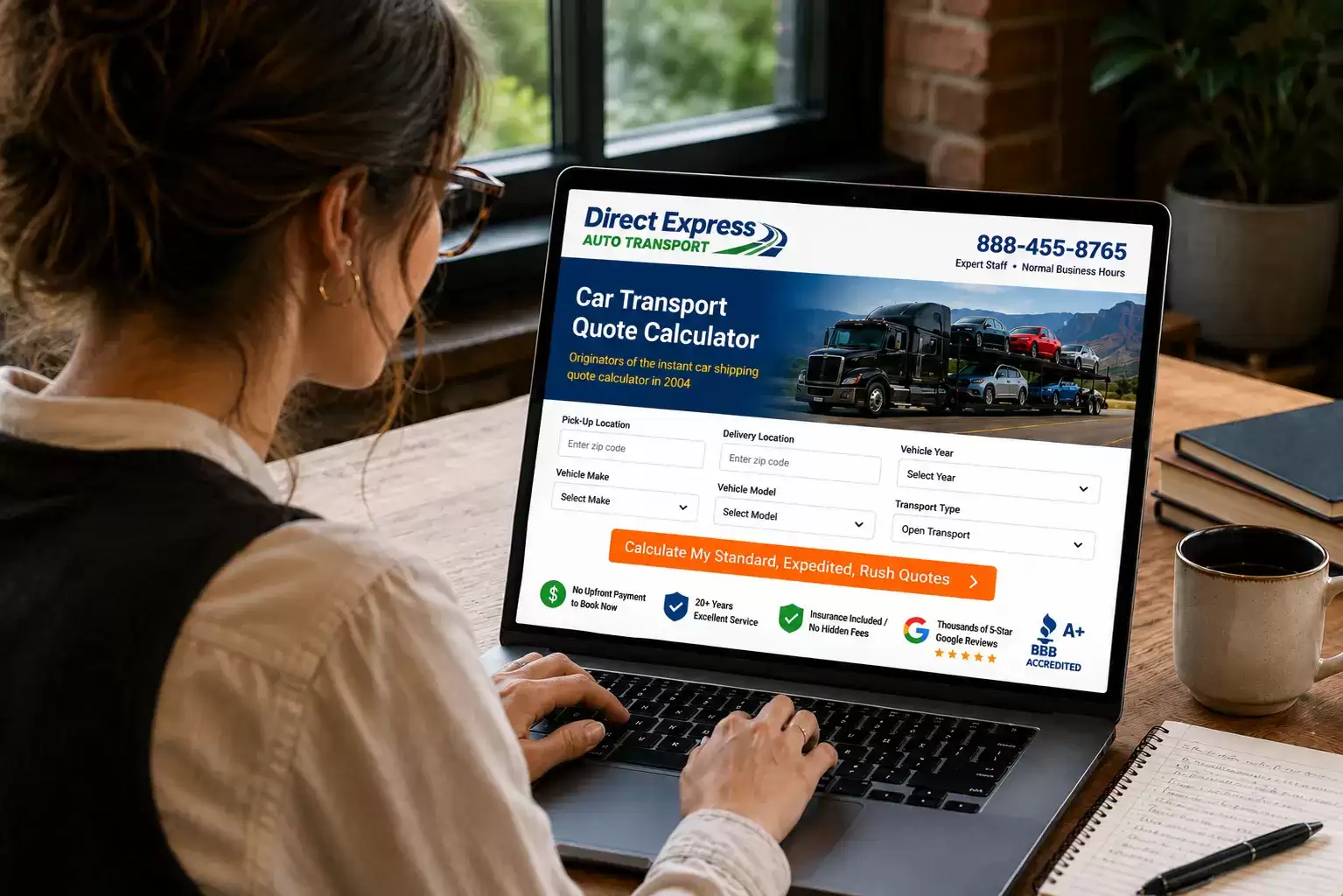
Direct Express Auto Transport pioneered online instant pricing for the auto transport industry in 2004. Before we built the first car shipping cost calculator, getting a quote from a broker meant phone calls, callbacks, and waiting — sometimes days. We changed that. Today you know your exact cost in 30 seconds, before committing to anything. No phone tag, no hassle. Just a real number, instantly.
Three Service Tiers for Every Florida to New York Shipment
Every shipment on this Florida to New York route is available at three service tiers so you can match your budget to your timeline. Standard delivers at the best available rate — ideal when your schedule has a few days of flexibility. Expedited moves your vehicle to the front of the dispatch queue for faster pickup. Rush gets your car picked up as fast as humanly possible — for moves where every day counts. All three tiers include full door-to-door service and carrier insurance.
What customers say about shipping a car from Florida to New York with Direct Express Auto Transport


Seasonal Pricing Guide: Florida to New York
Florida to New York is the snowbird return corridor — demand peaks March–April as retirees and seasonal residents head north for summer. October–November, when carriers are heading south into Florida, is the best value window.

Who Ships a Car from Florida to New York — and Why
Florida-to-New York is the original snowbird corridor — the route that defined the seasonal auto transport industry and remains the highest-volume bilateral state pair in the eastern United States. New York has more Florida snowbirds than any other state. The people who ship vehicles northbound represent a broad cross-section: South Florida retirees returning to Long Island, military families heading to Fort Drum or West Point, and college students returning to New York schools.
New York Snowbirds Returning Home: The Spring FL→NY Volume Driver
New York snowbirds returning from Florida are the defining seasonal force on the FL→NY direction. New York’s retiree and senior population winters in Florida in numbers that dwarf every other northeastern state. The concentration is heaviest in South Florida: the tri-county area of Miami-Dade, Broward, and Palm Beach counties serves as the primary winter home for a massive New York and New Jersey snowbird population.
Long Island, Westchester, and North Jersey Snowbird Concentration
Within that area, specific communities have near-legendary concentrations of New York and New Jersey winter residents — Century Village communities in Boca Raton, Delray Beach, and West Palm Beach; Pompano Beach; Deerfield Beach; Hollywood; Hallandale Beach; and the entire corridor between Fort Lauderdale and Miami. The Naples and Fort Myers area serves Gulf Coast snowbirds from the New York metro, and Sarasota attracts a similar affluent NY population.
Permanent Relocation from Florida to New York: New Yorkers Who Came Back
Permanent relocation from Florida to New York — while less common than the reverse flow — is a real and steady segment. New Yorkers who tried Florida retirement and are returning to be closer to family represent a meaningful slice of FL→NY volume.
Military PCS: NAS Jacksonville / MacDill AFB → West Point / Fort Drum / Fort Hamilton
Military PCS transfers between Florida and New York installations generate consistent, deadline-driven volume. Florida’s major installations — NAS Jacksonville, MacDill AFB, Eglin AFB, Hurlburt Field, Patrick Space Force Base, and NAS Pensacola — regularly transfer personnel to West Point, Fort Drum near Watertown, Stewart Army Sub-Post, and Fort Hamilton in Brooklyn. Military members on PCS orders have firm report dates and typically book Expedited or Rush service.
New York and Florida Students Shipping Cars Between Universities
College students moving between Florida and New York represent growing year-round volume. New York students at Florida schools — University of Florida, Florida State, University of Miami, UCF, FAU, FIU — ship their vehicles south at fall semester start and north at spring semester end. Florida-origin students at New York schools — NYU, Columbia, Fordham, SUNY system — make the reverse trip.
What Makes the Florida–New York Auto Shipping Run Different
The Route: I-95 North — Start to Finish
Florida-to-New York is an I-95 route, start to finish. I-95 begins in Miami, runs north through Fort Lauderdale, West Palm Beach, Jacksonville, Georgia, South Carolina, North Carolina, Virginia, the Washington DC metro, Maryland, Delaware, New Jersey, and enters New York at the George Washington Bridge. Miami to the GWB is approximately 1,280 miles; Jacksonville to the GWB approximately 975 miles — the shortest major FL origin to NYC pairing on this table.
George Washington Bridge: The Entry Point for All FL→NYC Carriers
The George Washington Bridge (Lower Level for commercial vehicles) is the entry point for virtually all Florida-to-NYC carrier runs. From the GWB, carriers can reach Upper Manhattan directly, or transition to the Cross Bronx Expressway for the Bronx and New England, the Lincoln Tunnel for Midtown, or the Verrazzano-Narrows Bridge approach for Brooklyn and Staten Island via New Jersey’s I-278.
The I-95 Waypoints: What Carriers Pass Through
The six-state run from Florida to New York passes through a series of significant metro relay points. Savannah, Georgia (approximately 140 miles north of Jacksonville) is the first major relay point — a significant port city with active auto transport traffic. Charleston, South Carolina (approximately 375 miles north of Jacksonville) is the second, sitting at the heart of I-95’s South Carolina corridor with its own inbound and outbound carrier volume.
Raleigh–Durham to Richmond: The Mid-Corridor Relay Zone
The Raleigh–Durham area (~600 miles from Jacksonville) is reached via I-95 east or US-17/US-74 through the Carolinas. Richmond, VA (~750 miles from Jacksonville) is the last major southern relay before the DC metro. The Washington–Baltimore corridor (~875 miles from Jacksonville) is dense with traffic but well-supplied with carriers. After Baltimore, I-95 runs through Delaware, the New Jersey Turnpike, and into New York via the Lincoln Tunnel or George Washington Bridge.
New York City and Long Island Delivery
NYC and Long Island delivery requires navigating one of the most complex carrier environments in the country. Manhattan is served via the George Washington Bridge (upper Manhattan) or the Lincoln Tunnel (Midtown). Brooklyn and Queens are reached via the Verrazzano-Narrows Bridge or through the Queens–Midtown Tunnel and Brooklyn–Battery Tunnel. The Bronx is directly accessible from I-95 via the Cross Bronx Expressway, making it the most straightforward NYC borough for carrier access.
Long Island Access: LIE (I-495) and Bridge Routing for Multi-Car Haulers
Long Island is reached via the Throgs Neck Bridge, Whitestone Bridge, or Queensboro Bridge into Queens, then east on the Long Island Expressway (I-495) or the Southern State Parkway where it permits commercial vehicles. Delivery to Long Island addresses requires a confirmed accessible pickup/delivery point — a street-level staging area or parking lot rather than an exact residential address for multi-car haulers.
Upstate New York: A Different Route
Buffalo and other upstate New York destinations require a routing extension after reaching the NYC area. Carriers delivering to NYC area destinations first, then upstate, typically exit I-95 in New Jersey or the Bronx and take I-87 north (New York State Thruway) to Albany (approximately 150 miles north of NYC). From Albany, I-90 west reaches Syracuse (approximately 90 miles), Rochester (approximately 185 miles), and Buffalo (approximately 290 miles from Albany). Tallahassee to Buffalo in the pricing table reflects this full routing — I-95 north to NJ/NY, then I-87 to Albany, then I-90 west to Buffalo.
Albany to Buffalo: I-87 North to I-90 West Extension
From Albany, I-90 west reaches Syracuse (~90 miles), Rochester (~185 miles), and Buffalo (~290 miles). Tallahassee to Buffalo pricing reflects this full routing: I-95 north to NJ/NY, then I-87 to Albany, then I-90 west to Buffalo. The Albany–Buffalo leg adds approximately 290 miles and 1–2 transit days beyond standard NYC-area deliveries.
Other Florida to New York Cities We Serve
Direct Express ships vehicles between hundreds of city pairs on this route. Below is a broader look at additional Florida origins and New York destinations we regularly serve.
Hub Cities Along the Florida–New York Car Shipping Corridor
The Florida-to-New York run follows I-95 through six states over approximately 975–1,280 miles depending on the Florida origin. The corridor passes through or near some of the most active auto transport relay points on the East Coast.
Major Origin Hubs in Florida
I-95 Corridor Relay Points
Major New York Delivery Points
The Long Island Factor: Long Island is one of the most active auto transport delivery zones in the northeastern United States — and also one of the most logistically specific. Nassau County (closest to NYC: Hempstead, Garden City, Valley Stream, Levittown, Massapequa, Mineola, Freeport) is reachable via the Verrazzano Bridge through Brooklyn or directly through Queens. Suffolk County (farther east: Huntington, Smithtown, Islip, Babylon, Brookhaven, Amityville, Brentwood, Patchogue, Ronkonkoma) requires travel on the Long Island Expressway (I-495) or the Sunrise/Southern State Parkway. Carriers deliver to accessible street-level staging areas — culs-de-sac, shopping plazas, or parking lots when residential streets are too narrow. Discuss your specific address with your carrier 24–48 hours before delivery to confirm logistics.
Florida to New York Auto Transport Video Guide
Jump to the chapter most relevant to your Florida to New York shipment
9 Chapters — Under 6 Minutes
Each chapter covers a specific part of the Florida to New York shipping process. Click any card to open that chapter directly in YouTube.
Open vs. Enclosed Car Transport on the Florida–New York Route
The Florida-to-New York corridor is primarily an open transport route, but seasonal and vehicle-specific factors make enclosed a regular choice for a meaningful portion of FL→NY shipments — particularly for snowbird returns of high-value vehicles and luxury cars heading to the NYC market.
Open Transport Recommended for Most
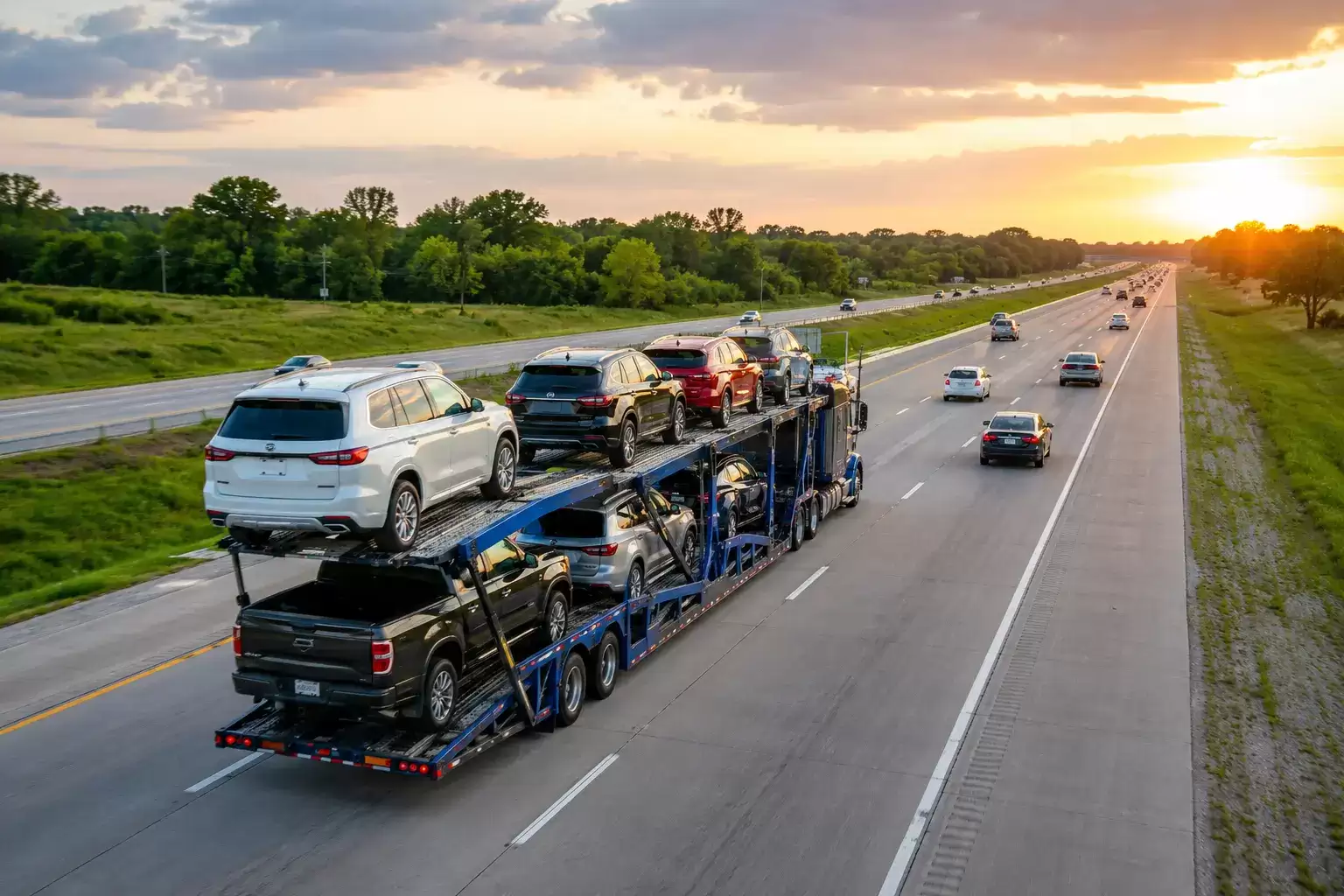
- Standard open-air trailer carrying 7–10 vehicles — the correct choice for the vast majority of FL→NY shipments year-round
- The I-95 corridor is one of the most well-traveled auto transport lanes in the country, with no unusual weather risk on the route itself (Florida humidity is a non-issue in transit)
- Carrier density on I-95 is among the highest in the eastern United States — open transport availability and pickup timing are consistently strong
- Appropriate for all standard vehicles: sedans, SUVs, pickup trucks, minivans, and any vehicle under approximately $60,000
- Weather consideration: vehicles delivered to New York in winter may sit on a carrier in cold conditions, but enclosed transport is not necessary to protect against cold weather alone — it is about preventing road debris and salt exposure during transport, not temperature
Enclosed Transport
- Vehicle travels in a fully enclosed, weatherproof trailer from Florida to New York
- Typically 40–60% more expensive than open transport
- Recommended for luxury vehicles, exotics, collector cars, and any vehicle over approximately $75,000
- South Florida (Palm Beach, Boca Raton, Fort Lauderdale, Miami) has among the highest per-capita luxury and exotic vehicle ownership in the country. Returning these vehicles to New York in enclosed condition is standard practice for the high-end market
- Vehicles being stored in Florida for winter and returning to New York in spring: enclosed provides documented condition transfer for insurance and inspection purposes
- Book 2–3 weeks ahead during March–April snowbird return peak — enclosed carrier demand is at its annual highest on this corridor in spring
Our honest recommendation: Open transport for the everyday vehicle. The I-95 corridor is well-maintained, well-traveled, and carrier-rich year-round. Enclosed for luxury, exotic, and high-value vehicles — this corridor’s snowbird demographics generate consistent enclosed transport demand, particularly in the spring return season.
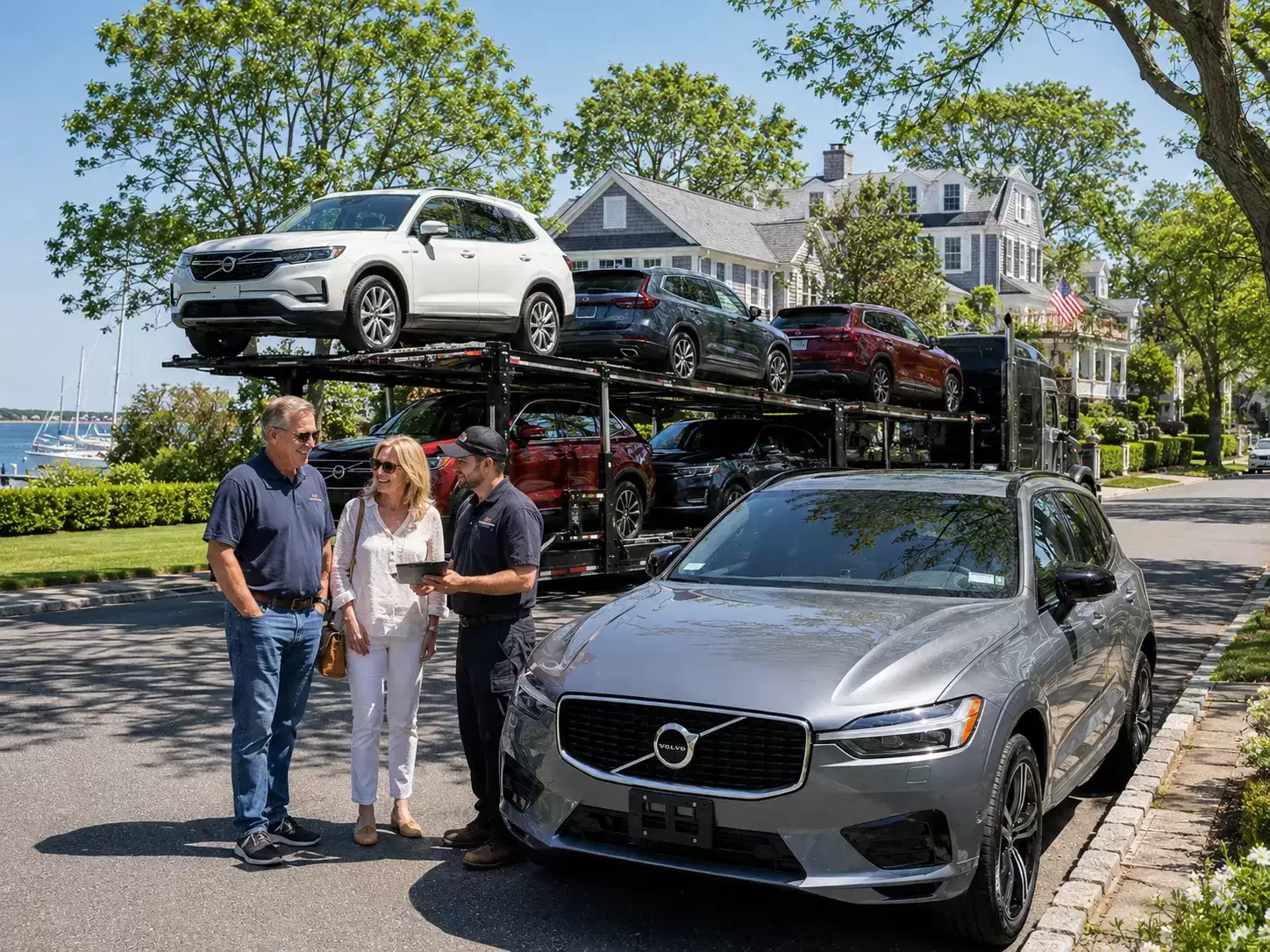
Door-to-Door Car Shipping: What to Expect in Florida and New York
Pickup in Florida
South Florida: Miami, Fort Lauderdale, and West Palm Beach
Standard door-to-door pickup throughout South Florida. Miami-Dade addresses: standard residential pickup throughout; very dense downtown Miami, Brickell, and Midtown high-rise buildings require carrier staging on a nearby wide commercial street — confirm your specific address at booking. Fort Lauderdale, Hollywood, Pompano Beach, and Boca Raton: standard residential, no staging concerns. West Palm Beach, Boynton Beach, and Delray Beach: standard residential throughout. South Florida is among the most carrier-active pickup zones in the country — strong dispatch availability in all service tiers year-round. No weather protocol at pickup in South Florida in any season.
Tampa Bay and Central Florida: Tampa, St. Petersburg, Clearwater, and Orlando
Standard door-to-door pickup throughout Tampa Bay and Central Florida. Tampa, St. Petersburg, and Clearwater: standard residential throughout the Tampa Bay metro, no staging concerns. Sarasota, Bradenton, and Fort Myers: standard residential, Gulf Coast carrier access. Orlando and the I-4 corridor (Kissimmee, Sanford, Lakeland): standard residential throughout; high carrier volume driven by the Orlando metro’s active relocation market. No weather protocol at pickup in this zone in any season.
Northeast and North Florida: Jacksonville, Daytona Beach, and the Space Coast
Standard door-to-door pickup throughout Northeast and North Florida. Jacksonville: Florida’s largest city by land area and the state’s primary I-95 northbound and I-10 westbound departure hub — standard residential throughout, strong carrier staging. Daytona Beach and the Space Coast (Melbourne, Titusville, Cape Canaveral): standard residential, I-95 access. North Florida markets (Tallahassee, Gainesville, Ocala): standard residential; allow additional dispatch lead time relative to South Florida and Tampa Bay due to lower carrier density in the northern tier. Florida Panhandle (Pensacola, Panama City): standard residential, good westbound carrier access.
Delivery in New York
New York City: Manhattan, Brooklyn, Queens, Bronx, and Staten Island
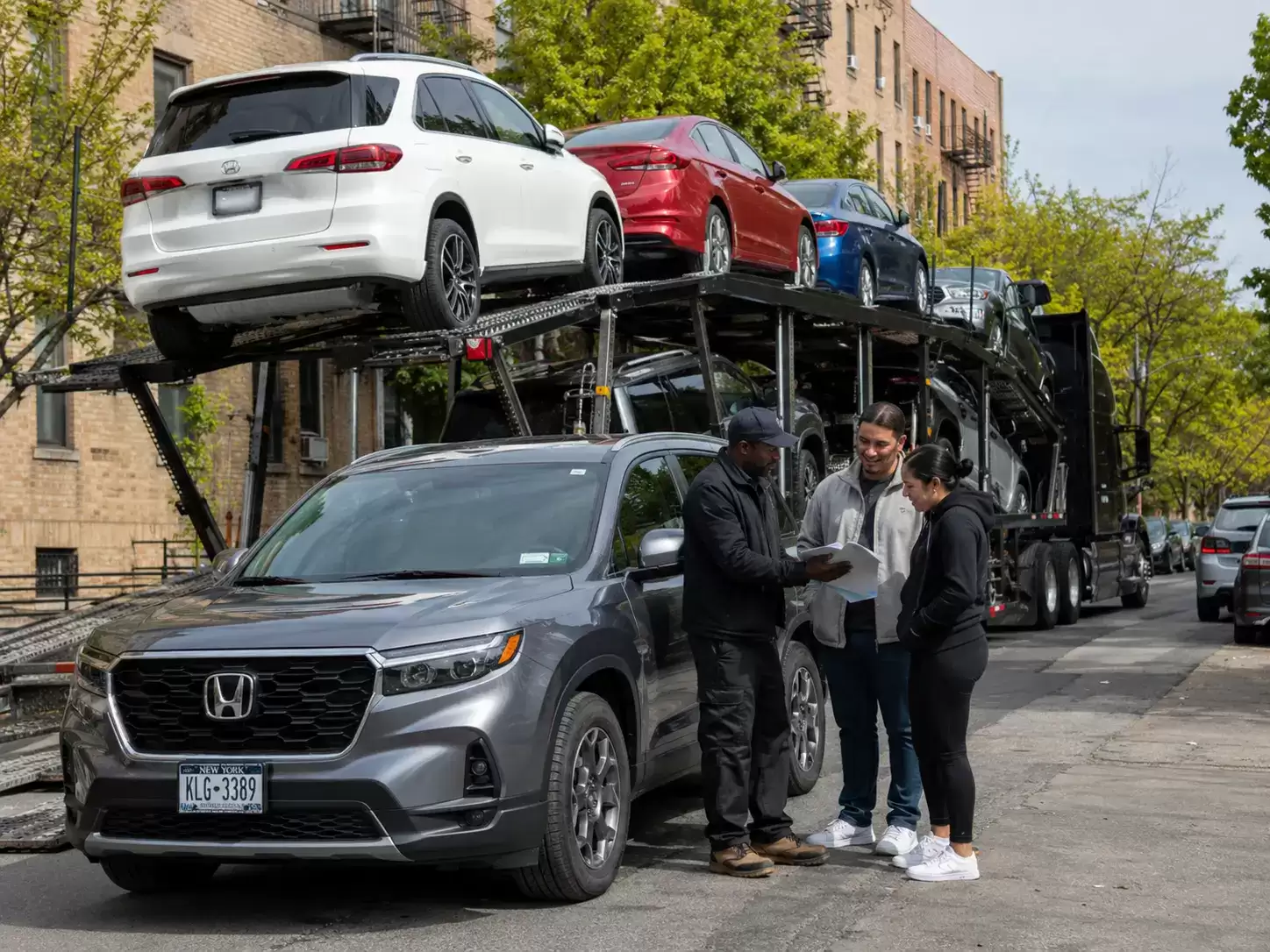
Standard door-to-door delivery throughout New York City. Manhattan: carrier staging required for virtually all addresses — multi-car haulers cannot park for delivery on most Manhattan streets; your carrier will stage at a nearby accessible wide commercial street. Brooklyn, Queens, and the Bronx: standard residential delivery on wider blocks; dense high-rise addresses require nearby staging. Staten Island: standard residential, no staging concerns. Allow extra lead time for NYC deliveries — urban logistics add 1–2 business days to delivery windows regardless of service tier. Confirm your staging location with your carrier 24–48 hours before delivery.
Long Island and Westchester
Standard door-to-door delivery throughout Long Island and Westchester. Nassau and Suffolk counties: standard residential throughout, no staging concerns. Eastern Long Island (The Hamptons, Montauk, Shelter Island): standard residential; some narrow village streets require nearby staging — confirm at booking. Westchester County (White Plains, Yonkers, New Rochelle, Mount Vernon, Tarrytown): standard residential throughout. Long Island and Westchester are the most operationally straightforward New York delivery zones.
Upstate New York: Albany, Buffalo, Rochester, and Syracuse
Standard door-to-door delivery throughout Upstate New York. Albany and the Capital Region: standard residential, I-87/I-90 corridor access. Buffalo and Western New York: standard residential; winter protocol November through April — add 1–2 day delivery buffer for heavy lake-effect snow on I-90 and local streets. Rochester and Syracuse: standard residential, I-90 access; same winter snow-belt protocol. Binghamton and Southern Tier: standard residential. Allow additional transit lead time for Upstate markets relative to NYC due to lower inbound carrier density outside the metro zone.
New York Vehicle Registration for New Florida Arrivals
New York requires registration within 30 days of establishing residency. Visit a New York DMV office with your out-of-state title, proof of New York insurance, and proof of New York address; no emissions inspection is required for most out-of-state vehicles. Cancel your Florida registration once your New York plates arrive.
Preparing Your Vehicle
Before pickup in Florida: remove all personal items from the interior, leave no more than a quarter tank of fuel, disable your car alarm, and remove any exterior accessories. Photograph your vehicle thoroughly from all angles with date-stamped images. Florida vehicles with beach equipment or exterior racks should have these removed. At delivery in New York, inspect your vehicle carefully before signing the Bill of Lading — your signature without notation constitutes acceptance of the vehicle’s condition. If delivery is to a NYC street address, ensure the receiving party is reachable at the time of delivery to sign and receive the vehicle.
Florida & New York Auto Transport Resources
Florida Helpful Government Links
- Florida Department of Highway Safety and Motor Vehicles (FLHSMV) — Florida’s vehicle title and registration agency. If permanently relocating to New York, obtain your Florida title for the New York registration process.
- FLHSMV — Out-of-State Title Transfer — Procedures for releasing your Florida title for registration in New York.
- FLHSMV — Registration Fees — Review any outstanding Florida registration fees before your move.
New York Helpful Government Links
- New York State Department of Motor Vehicles (NY DMV) — Primary agency for New York vehicle titles and registration. Register your out-of-state vehicle upon establishing New York residency.
- NY DMV — Register a Vehicle for the First Time — Requirements for registering a Florida vehicle in New York, including title transfer, insurance proof, and inspection certificates.
- NY DMV — Transfer Your Out-of-State License — Surrender your Florida license and obtain your New York driver’s license upon establishing residency.
- NY DMV — Registration Fees — New York registration fees vary by vehicle weight and county. Nassau and Suffolk counties (Long Island) have county-level surcharges.
Federal Auto Transport Resources
- FMCSA — Verify a Carrier’s License (SAFER System) — Verify that any auto transport company you consider is federally licensed and insured before booking.
- FMCSA — Protect Your Move — Federal consumer guidance about hiring vehicle shippers, including red flags for broker scams and your rights as a shipper.

Shipping from New York to Florida instead?
We cover both directions on this corridor. See city-by-city rates, transit times, and seasonal pricing for the reverse direction. View New York to Florida rates →
More Helpful Information
Other popular routes we serve.
How Auto Transport Works
How our car shipping cost calculator works its magic.