
Car Shipping To or From Oregon
Need to ship a car to or from Oregon? Direct Express Auto Transport has been the Beaver State’s most trusted auto transport broker since 2004 — with no upfront payment required, and a real-time quote available in 30 seconds.
★ 4.6/5 Google Reviews | BBB Accredited A+ | FMCSA Licensed (MC #479342) | USDOT #2231879 | No upfront payment required | 20+ years shipping vehicles


Oregon car shipping costs vary based on your route, the time of year, vehicle size, and the service tier you choose. Use our instant calculator above for a real-time quote — or see the route-by-route pricing tables below for a fast ballpark. Most standard sedan shipments to or from Oregon range from $325 for short hauls to Washington State to $1,550+ on long-haul routes to Florida or the Southeast. Our Expedited and Rush pricing tiers hasten the process to create an even more satisfying experience.
What customers say about shipping a car to or from Oregon with Direct Express Auto Transport


The interstate corridors that move Oregon vehicles
Three primary highway arteries define Oregon’s auto transport network, with two important secondary routes serving eastern and central Oregon:
I-5 (North-South backbone): The West Coast’s primary carrier artery, running from the California border near Ashland through Medford, Grants Pass, Roseburg, Eugene, Corvallis, Salem, and Portland to the Washington border at the Columbia River. I-5 carries the highest carrier volume of any Oregon highway by a wide margin — virtually every vehicle moving between California and the Pacific Northwest travels I-5. The Willamette Valley segment from Eugene to Portland is among the most carrier-dense corridors in the western United States. The Siskiyou Summit section south of Ashland (elevation 4,310 feet) can close during winter storms and is the only significant transit bottleneck on the Oregon I-5 corridor.
I-84 (East-West backbone): Oregon’s only true east-west interstate, running from its I-5/I-205 junction in Portland east through the Columbia River Gorge, Hood River, The Dalles, Pendleton, and La Grande to the Idaho border. I-84 is the sole major carrier route for vehicles moving between the Pacific Northwest and Idaho, Utah, Nevada, and the Mountain West. The Columbia River Gorge section between Portland and The Dalles is subject to high winds and occasional ice closures that can temporarily halt carrier movement. Carriers running the Portland-to-Salt Lake City or Portland-to-Boise route use I-84 exclusively.
I-205 (Portland Bypass / East Loop): The eastern Portland metro bypass, running from I-5 south of Portland north through Milwaukie, through East Portland, crossing the Columbia River into Washington, and rejoining I-5 north of Vancouver, WA. I-205 is critical for carrier access to eastern Portland suburbs, Clackamas County, and Clark County, Washington, without requiring passage through downtown Portland. Most carrier trucks prefer I-205 over downtown I-405 for Portland metro pickups and deliveries.
US-97 (Central Oregon N-S): The primary route for central Oregon communities, running south from the Columbia River through Madras, Redmond, Bend, and La Pine to the California border near Klamath Falls. US-97 is not a primary carrier artery — it carries far less carrier truck traffic than I-5 or I-84 — but it is the only practical route for Bend and central Oregon communities. Carriers serving Bend and the US-97 corridor are making deliberate detours from primary routes; Expedited tier is the correct default for all US-97 corridor communities.
Vehicles shipping to or from Portland benefit from the best carrier access in the state by a wide margin. Salem and Eugene on I-5 have solid secondary hub access. Medford has reasonable access at the southern I-5 terminus. Bend and the US-97 corridor, the Oregon coast, and eastern Oregon communities east of I-84 will experience longer pickup windows and should use Expedited tier for time-sensitive shipments.
Portland as the Pacific Northwest’s I-5/I-84 carrier hub: what it means for Oregon auto transport
Portland occupies one of the most strategically advantageous positions in the western United States carrier network. Understanding why — and how it affects your shipment — helps Oregon shippers book more effectively:
The I-5 West Coast corridor throughput advantage: Every carrier running the California-to-Seattle I-5 corridor passes through or near Portland. A carrier based in Los Angeles heading to Seattle has no choice but to drive through the Portland metro. This means Portland is continuously flooded with carriers in both directions — northbound toward Seattle and southbound toward San Francisco and Los Angeles. For Portland shippers, this creates exceptional Standard tier performance year-round on California, Washington, and Alaska-via-Seattle routes. Carriers are almost never deadheading through Portland looking for loads on the I-5 corridor.
The I-84 Intermountain West gateway: Portland is the western terminus of I-84, the only major highway connecting the Pacific Northwest to Idaho, Nevada, Utah, and the Mountain West. Carriers running the Portland-to-Boise or Portland-to-Salt Lake City corridor load in Portland and deliver in the Intermountain West — and then need return freight back to Portland. This creates a consistent westbound carrier pipeline from Idaho, Nevada, and Utah into Portland that keeps inbound Pacific Northwest loads from the Mountain West well-supplied.
The eastbound deadhead from Bend and central Oregon: US-97 south from the Columbia River to Bend is a deliberate detour from both I-5 and I-84. Carriers who deliver in Bend must either find a return load in the Bend market or deadhead back to the I-5 or I-84 corridor. This is the primary reason Bend and central Oregon have higher pricing and longer pickup windows than their population alone would suggest: the carrier cost model for Bend includes the deadhead cost that carriers must price into every Bend-area move.
The Willamette Valley I-5 freight pipeline: The I-5 corridor between Portland and Eugene is approximately 110 miles of continuous high-density carrier traffic. Salem at the midpoint and Eugene at the southern end both benefit from this through-carrier traffic even when specific Salem or Eugene origin loads are not filling trailers. Carriers running Portland to California stop regularly at Salem and Eugene for fuel, rest, and load consolidation. This proximity to high-frequency carrier stops means Salem and Eugene pickup windows are more competitive than their size suggests.
Oregon’s major auto carrier hubs and what they mean for you
Not all Oregon cities are equal from a logistics standpoint. Here is how the major hubs rank in terms of carrier availability:
Portland / I-5 / I-84 / I-205 Convergence: By far the highest carrier density in Oregon and the Pacific Northwest’s second-largest auto transport hub after the Seattle-Tacoma area. The I-5/I-84/I-205 convergence in the Portland metro creates a multi-directional carrier network with daily departures to California, Washington, Idaho, Nevada, and cross-country destinations. Standard tier performs exceptionally well in Portland year-round. The I-205 eastern bypass and I-84 access give carrier trucks excellent reach to all Portland metro, Gresham, Lake Oswego, Beaverton, Hillsboro, and Clark County, Washington communities.
Salem / I-5 Mid-Willamette Valley: Oregon’s state capital and the mid-point of the I-5 Willamette Valley corridor, approximately 50 miles south of Portland. Salem benefits from constant I-5 carrier through traffic in both directions, giving it pickup windows that are competitive for a secondary market. Willamette University and the state government employment base generate consistent local demand. Expedited tier recommended for hard-deadline Salem shipments during peak summer months.
Eugene / I-5 Southern Willamette Valley: Oregon’s second-largest city and the University of Oregon’s home, approximately 110 miles south of Portland at the southern end of the Willamette Valley I-5 corridor. Eugene is the last major carrier hub before I-5 climbs toward Grants Pass and the Siskiyou Summit. University of Oregon’s enrollment (~22,000) creates concentrated August and May vehicle shipping demand. Expedited tier recommended for peak university move periods and for hard-deadline shipments.
Medford / I-5 Rogue Valley: Southern Oregon’s primary hub at the Rogue River Valley, approximately 275 miles south of Portland and 27 miles north of the California border. Medford sits in a geographic bowl surrounded by mountains, and I-5 here passes through one of the more challenging sections of the West Coast corridor. Despite its size, Medford sees reasonable carrier access because I-5 carriers running California to Portland stop regularly in the Rogue Valley area. Expedited recommended, particularly for November through March when the Siskiyou Summit above Ashland can affect scheduling.
Bend / US-97 Central Oregon: Oregon’s fourth-largest city and the hub for central and eastern Oregon, sitting on US-97 approximately 160 miles southeast of Portland. Bend’s rapid population growth and outdoor recreation economy drive significant inbound relocation demand from California and the Pacific Northwest. However, its distance from I-5 and I-84 means carriers must make deliberate detours to serve the Bend market. Expedited tier is the correct default for Bend year-round, with Rush tier recommended for tight move deadlines during peak summer season.
Corvallis / US-20 Mid-Valley: Home of Oregon State University (~33,000 students), approximately 85 miles south of Portland on US-20 between Salem and Eugene. Corvallis is not directly on I-5 — it sits west of the interstate on US-20 — but its proximity to the Salem and Eugene I-5 access points gives it reasonable carrier access. The OSU enrollment cycle creates large annual August and May demand spikes. Expedited recommended during university move periods.
Springfield / I-5 Adjacent to Eugene: Immediately east of Eugene on I-5, Springfield is effectively part of the Eugene carrier market. Carrier access is essentially equivalent to Eugene via the I-5 corridor.
Oregon auto transport cost estimates: major routes
The tables below show estimated pricing for the most commonly requested Oregon auto transport routes, based on real-time market data for a standard operable sedan via open carrier. All prices reflect current market conditions for Standard, Expedited, and Rush tiers. Your actual quote may vary based on vehicle size, exact pickup/delivery zip codes, and seasonal demand. Use our instant calculator for a real-time rate.
Popular Routes To Oregon
Swipe to view full table →
| From | To | Distance (mi) | Estimated Days | Standard | Expedited | Rush |
|---|---|---|---|---|---|---|
| California | Oregon | 650 | 2–3 days | $600 | $720 | $840 |
| Washington | Oregon | 180 | 1–2 days | $325 | $390 | $455 |
| Arizona | Oregon | 1,200 | 4–6 days | $925 | $1,110 | $1,295 |
| Texas | Oregon | 2,200 | 6–9 days | $1,275 | $1,530 | $1,785 |
| Colorado | Oregon | 1,300 | 4–6 days | $975 | $1,170 | $1,365 |
| Nevada | Oregon | 700 | 2–4 days | $625 | $750 | $875 |
| Idaho | Oregon | 400 | 2–3 days | $425 | $510 | $595 |
| Florida | Oregon | 3,100 | 7–10 days | $1,550 | $1,860 | $2,170 |
| New York | Oregon | 3,000 | 7–10 days | $1,500 | $1,800 | $2,100 |
| Georgia | Oregon | 2,800 | 7–10 days | $1,450 | $1,740 | $2,030 |
Popular Routes From Oregon
Swipe to view full table →
| From | To | Distance (mi) | Estimated Days | Standard | Expedited | Rush |
|---|---|---|---|---|---|---|
| Oregon | California | 650 | 2–3 days | $600 | $720 | $840 |
| Oregon | Washington | 180 | 1–2 days | $325 | $390 | $455 |
| Oregon | Arizona | 1,200 | 4–6 days | $925 | $1,110 | $1,295 |
| Oregon | Texas | 2,200 | 6–9 days | $1,275 | $1,530 | $1,785 |
| Oregon | Colorado | 1,300 | 4–6 days | $975 | $1,170 | $1,365 |
| Oregon | Nevada | 700 | 2–4 days | $625 | $750 | $875 |
| Oregon | Idaho | 400 | 2–3 days | $425 | $510 | $595 |
| Oregon | Florida | 3,100 | 8–11 days | $1,550 | $1,860 | $2,170 |
| Oregon | New York | 3,000 | 8–11 days | $1,500 | $1,800 | $2,100 |
| Oregon | Georgia | 2,800 | 7–10 days | $1,450 | $1,740 | $2,030 |
Why cross-country car transport from Oregon often costs less per mile than shorter hauls
Oregon shippers sometimes notice that shipping a car to Florida or New York costs only moderately more than shipping to Arizona, even though Florida is more than twice the distance. The explanation is carrier economics. A carrier running Portland to Miami on I-5 south and I-10 east is making a full transcontinental run, spreading fixed costs — driver time, fuel, insurance, overhead — across 3,100 miles. The per-mile cost drops significantly at that distance. On a shorter haul to Arizona (1,200 miles), the carrier makes a deliberate mid-range run with the same fixed cost structure compressed into fewer miles, yielding a higher per-mile rate even though the absolute dollar amount is lower. This is why Oregon-to-Florida and Oregon-to-New York rates often look surprisingly close to shorter West Coast hauls, and why true cross-country moves from Oregon frequently represent the best value on a cost-per-mile basis.

Best time to ship a car to or from Oregon — the complete seasonal guide

Standard, Expedited, or Rush — which tier is right for your Oregon shipment?
| Tier | How It Works | Pickup Window | Best For | Price vs. Standard |
|---|---|---|---|---|
| Standard | Listed at market rate; carrier assigned when available | 3–7 business days | Flexible schedules; off-peak season; Portland metro I-5 and I-84 corridor pickups; I-84 Gorge waypoint communities | Base rate |
| Expedited (most popular) |
Listed above market rate; attracts carriers faster through the load board | 1–3 business days | Most Oregon shippers; Bend and central Oregon year-round; Salem and Eugene hard-deadline moves; university and snowbird departure windows | +20% |
| Rush | Top of market; maximum carrier priority; first available driver assigned | Same or next business day | Firm technology relocation start dates; last-minute summer peak moves; Bend and eastern Oregon tight deadlines | +40% |
The Oregon-specific tier recommendation
For Portland metro shippers, Standard tier performs reliably during the off-peak period from December through March on the I-5 and I-84 corridors, when carrier competition for Oregon loads is at its most favorable and Pacific Northwest weather rarely disrupts the Portland-area pickup window. The I-5 California corridor and I-5 Washington corridor both carry enough through-carrier volume that Standard Portland listings are typically assigned within three to five business days year-round during quiet months. From April onward, and especially May through September, Expedited tier is the correct default for any Oregon shipper with a meaningful delivery deadline: the university move season, technology relocation peak, and snowbird departure wave all combine to compress available carrier capacity. Salem and Eugene shippers on the I-5 corridor should mirror Portland tier decisions with a one-tier-up bias during peak months given their secondary hub status. Bend, central Oregon, the Oregon coast, and eastern Oregon communities off the primary interstates should use Expedited as their baseline year-round — the required carrier detour from I-5 or I-84 means Standard listings at these locations can sit for longer than most shippers find acceptable regardless of season.


How to ship a car to or from Oregon: 4 steps
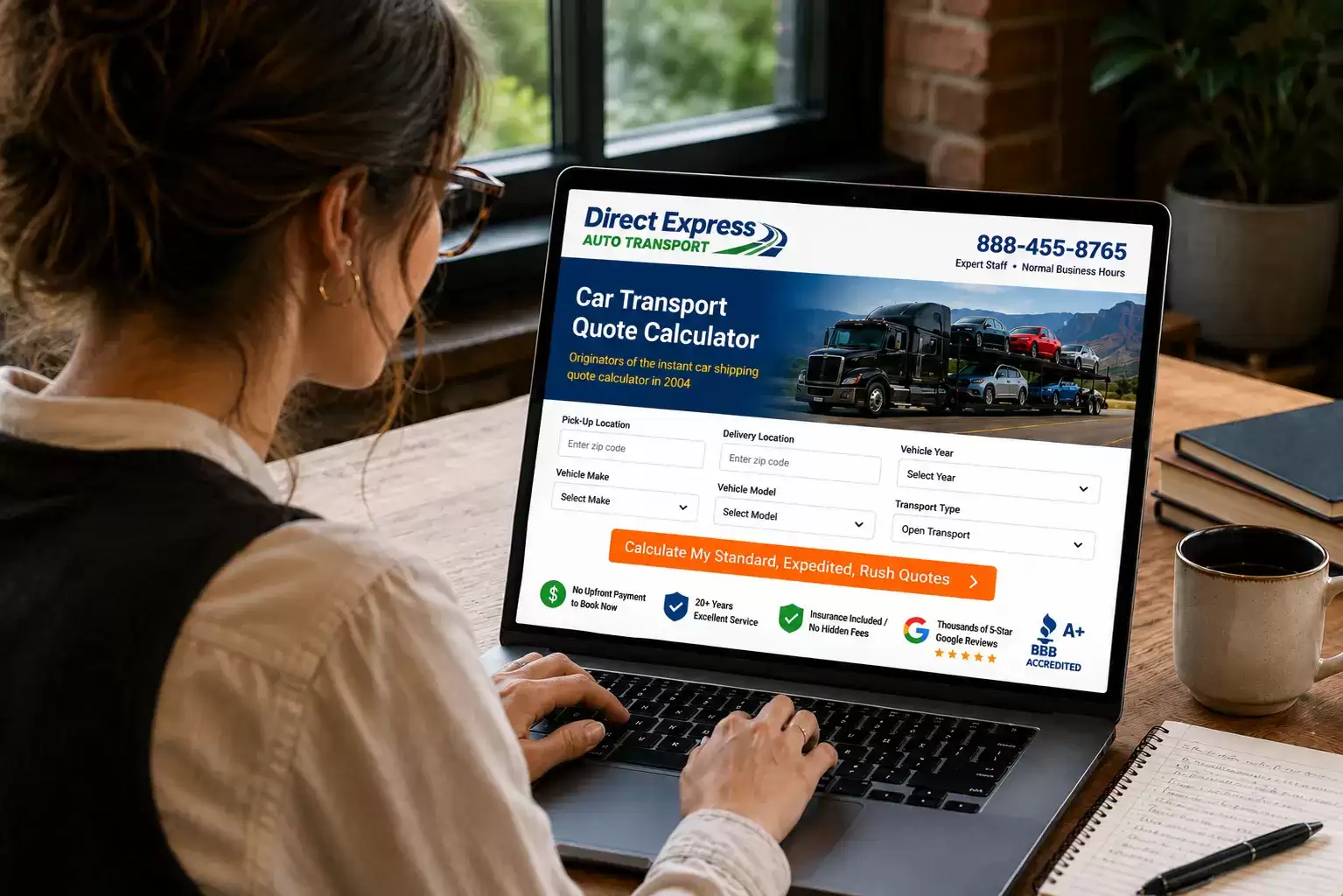
Step 1: Get your instant quote. Use our Oregon car shipping calculator above. Enter your pickup zip code, delivery zip code, vehicle year, make, and model. Your real-time quote appears in 30 seconds, with Standard, Expedited, and Rush pricing shown side by side. No phone call required.
Step 2: Book your order — no upfront payment. Select your tier and confirm your pickup window. We do not charge your card until a carrier is assigned and confirmed. Your card is only authorized when your driver is locked in and ready to pick up your vehicle.
Step 3: Carrier pickup and inspection. Your assigned carrier contacts you directly to confirm pickup timing. At pickup, the driver completes a Bill of Lading inspection report documenting your vehicle’s pre-transport condition on all panels. Review it carefully before signing — this document is your protection record at delivery.
Step 4: Delivery and final inspection. Your driver will contact you before arrival to coordinate delivery. At delivery, inspect your vehicle against the Bill of Lading before signing off. Payment to the carrier (cash or certified funds) is due at delivery. If you note any new damage, document it on the Bill of Lading before the driver departs — this is the required first step for any carrier insurance claim.
University and college vehicle transport in Oregon
Oregon State University in Corvallis and the University of Oregon in Eugene are two of the most recognized public universities in the Pacific Northwest, and together with Portland State University they enroll more than 80,000 students statewide. The August move-in and May move-out periods create a concentrated vehicle shipping demand across the Willamette Valley that, combined with the fall snowbird departure and tech industry relocation seasons, makes May through October Oregon’s most competitive booking window. Book three to four weeks ahead and select Expedited tier if your shipment falls within two weeks of a university move period.
| University | Location | Approx. Enrollment |
|---|---|---|
| Oregon State University | Corvallis | ~33,000 |
| Portland State University | Portland | ~26,000 |
| University of Oregon | Eugene | ~22,000 |
| Western Oregon University | Monmouth | ~5,000 |
| Southern Oregon University | Ashland | ~4,000 |
| Pacific University | Forest Grove | ~4,000 |
| Oregon Institute of Technology | Klamath Falls | ~4,000 |
| George Fox University | Newberg | ~4,000 |
| Willamette University | Salem | ~2,500 |
| University of Portland | Portland | ~4,000 |

Military base vehicle shipping in Oregon
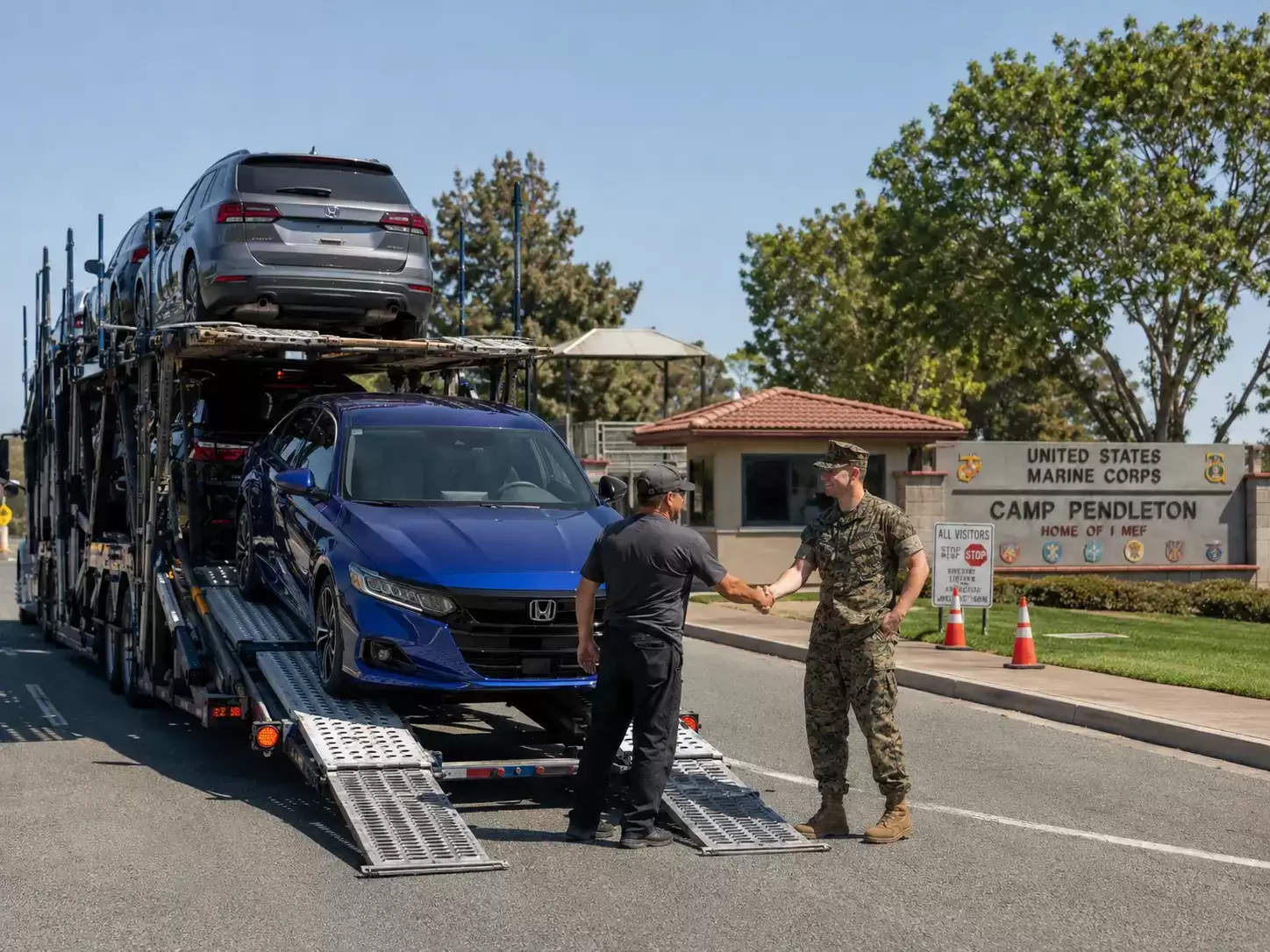
Oregon’s military presence is centered primarily on the Air National Guard and Army National Guard components, with the Portland Air National Guard Base serving as the state’s primary active-component installation. PCS vehicle shipping from Oregon military installations benefits significantly from the Portland metro’s carrier hub access for most long-distance routes.
Portland Air National Guard Base (142nd Wing) — Portland International Airport
The Oregon Air National Guard’s 142nd Wing flies F-15C/D Eagles from Portland International Airport, making it the primary air defense installation for the Pacific Northwest. Personnel relocating to or from the 142nd Wing benefit from Portland International Airport’s location in the northeast Portland metro, with direct I-205 and I-84 access to Oregon’s best carrier network. PCS moves from the Portland ANG base to installations nationwide are among the best-served military vehicle shipping moves in the Pacific Northwest.
Camp Rilea Armed Forces Training Center — Warrenton
Oregon’s primary National Guard training installation sits in Clatsop County near Warrenton on the northern Oregon coast. Camp Rilea is approximately 90 miles northwest of Portland via US-30 and US-101, significantly off the I-5 and I-84 carrier corridors. Expedited tier is strongly recommended for all Camp Rilea PCS vehicle shipments given the coastal location and required carrier detour from primary Portland-area carrier routes.
Oregon National Guard installations statewide
Oregon maintains armories and readiness centers throughout the state, from Medford and Klamath Falls in the south to Pendleton and La Grande in the east to Astoria on the coast. Personnel at Guard facilities statewide are served through the nearest primary carrier hub — Portland, Salem, Eugene, or Medford — depending on their location. For Guard personnel in central or eastern Oregon, the Bend or Pendleton markets should use Expedited tier as the default given their distance from primary I-5 and I-84 carrier trunk routes.
Cities we serve in Oregon
We provide auto transport pickup and delivery throughout Oregon. Cities on or near the I-5 Willamette Valley corridor have the shortest pickup windows and most competitive rates. Central Oregon, coastal, and eastern Oregon communities may require Expedited tier for time-sensitive shipments given their distance from primary carrier trunk routes.
Portland Metro / I-5 / I-205 / I-84 Convergence
Portland — Oregon’s largest city and the Pacific Northwest’s most active I-5/I-84 carrier hub; daily carrier departures to California, Washington, Idaho, Nevada, and cross-country destinations; highest carrier density in the state. Beaverton and Hillsboro — Washington County Silicon Forest communities west of Portland; home of Nike World Headquarters and Intel Ronler Acres campus; US-26 and I-217 access to the Portland carrier network; significant technology relocation demand. Gresham — Portland’s largest eastern suburb; I-84 direct access east toward the Columbia River Gorge; served from the Portland hub. Lake Oswego and Tualatin — Clackamas County suburbs south of Portland on I-5; strong relocation and professional move demand; served from the Portland metro hub. Tigard and Sherwood — Washington County communities on I-5 south of Portland; I-5 through-carrier access toward Salem and Eugene. Vancouver, WA — Clark County, Washington community directly across the Columbia River on I-5; effectively part of the Portland carrier market; served from the Portland/I-205 hub with Washington State pickup and delivery coordination.
Mid-Willamette Valley / Salem / I-5 Corridor
Salem — Oregon’s state capital and mid-Willamette Valley hub approximately 50 miles south of Portland on I-5; constant I-5 through-carrier traffic gives Salem competitive pickup windows for a secondary market; Willamette University and state government employment base. Keizer — Salem’s northern neighbor on I-5; served from the Salem hub. Corvallis — Home of Oregon State University west of I-5 on US-20; significant August and May student vehicle shipping demand; carriers access Corvallis from I-5 at the Albany junction; Expedited recommended during university move periods. Albany — US-20 junction with I-5 between Salem and Eugene; served as the access point for Corvallis; I-5 through-carrier access. McMinnville — Yamhill County seat on OR-99W between Portland and Salem; wine country hub; US-18 access toward the coast; Expedited recommended.
Southern Willamette Valley / Eugene / I-5 Corridor
Eugene — Oregon’s second-largest city and University of Oregon home at the southern end of the Willamette Valley I-5 corridor; approximately 110 miles south of Portland; last major carrier hub before I-5 climbs toward the Siskiyou Summit; significant August and May university move demand. Springfield — Directly east of Eugene on I-5; effectively part of the Eugene carrier market with equivalent pickup windows. Cottage Grove — I-5 community south of Eugene; I-5 through-carrier access toward Roseburg and Medford. Roseburg — Douglas County seat on I-5 between Eugene and Medford; reasonable carrier access from I-5 through traffic; Expedited recommended for hard deadlines.
Southern Oregon / I-5 / Rogue Valley
Medford — Southern Oregon’s primary I-5 hub in the Rogue River Valley; approximately 275 miles south of Portland; last significant carrier hub before the California border; Expedited recommended, particularly November through March when Siskiyou Summit weather can affect scheduling. Ashland — I-5 community at the base of the Siskiyou Summit just north of the California border; Oregon Shakespeare Festival generates significant seasonal visitor vehicle movement; Expedited recommended. Grants Pass — Josephine County seat on I-5 between Roseburg and Medford; I-5 through-carrier access; Expedited recommended for hard deadlines. Klamath Falls — Southern Oregon secondary hub on US-97; Oregon Institute of Technology campus; Expedited required given distance from I-5 primary corridor.
Central Oregon / US-97 / Bend
Bend — Oregon’s fourth-largest city on US-97 in Deschutes County; rapidly growing outdoor recreation and remote-work relocation destination; significant California-to-Bend migration demand; US-97 requires carrier detour from I-5 and I-84; Expedited tier required year-round. Redmond — Deschutes County community north of Bend on US-97; served from the Bend market. Madras and Prineville — Jefferson and Crook County communities north and east of Bend on US-97 and US-26; secondary central Oregon markets; Expedited strongly recommended. La Pine and Sisters — Rural Deschutes County communities south and northwest of Bend; Expedited required.
Eastern Oregon / I-84 / Columbia River Gorge
Hood River — Columbia Gorge community on I-84 approximately 60 miles east of Portland; world-class windsurfing destination; I-84 through-carrier traffic gives Hood River better carrier access than its size suggests; wind event caveat applies to all Gorge-corridor timing. The Dalles — Wasco County seat on I-84 at the eastern end of the Gorge; Intel campus generates technology relocation demand; I-84 direct access. Pendleton — Eastern Oregon’s primary hub on I-84 in Umatilla County; I-84 through-carrier access on the Portland-to-Boise corridor; reasonable availability given I-84 carrier traffic. Expedited recommended for hard deadlines. La Grande — Union County seat on I-84 in the Blue Mountains; I-84 access east toward Idaho; Expedited recommended. Ontario — Oregon’s easternmost I-84 city at the Idaho border; effectively served from the Boise carrier market; reasonable carrier access given the Boise proximity.
Oregon government resources for vehicle shipping
- Oregon DMV — Driver & Motor Vehicle Services — Official source for Oregon vehicle registration, title transfer, and out-of-state vehicle titling requirements when your shipped vehicle arrives in Oregon.
- Oregon Department of Justice — Consumer Protection — File a complaint or research a mover’s complaint history with Oregon’s consumer protection office.
- FMCSA SAFER System — Look up any auto transport carrier’s federal operating authority, insurance status, and safety record before booking.
- FMCSA Protect Your Move — Federal consumer guidance on avoiding auto transport fraud and understanding your rights as a shipper.
- TripCheck — Oregon Road Conditions — Current road conditions, chain control requirements, I-84 Gorge wind alerts, and I-5 Siskiyou Summit weather advisories that may affect carrier transit times.

Popular long-distance Oregon car transport routes
Oregon to California: Car Shipping
Oregon-to-California is the state’s highest-volume long-distance corridor, driven by the constant bidirectional migration between the Pacific Northwest and the Bay Area and Los Angeles metro. I-5 south from Portland runs continuously through the Willamette Valley, over the Siskiyou Summit, and into Redding and Sacramento. The I-5 West Coast corridor is among the most carrier-dense in the United States, and California-bound loads from Oregon are available daily year-round. Transit is typically 2–3 days to Northern California and 3–5 days to Southern California. Standard tier performs reliably on this corridor year-round except during the Siskiyou Summit winter closure window. Our California car shipping page covers Sacramento, the Bay Area and Southern California delivery.
Oregon to Washington: Auto Transport
I-5 north from Portland crosses the Columbia River into Vancouver, Washington and continues through Olympia and Seattle to the Canadian border. This is the shortest and most carrier-dense route in Oregon, with carriers running the Portland-Seattle corridor constantly in both directions. Transit is typically 1–2 days. Standard tier is reliable year-round on the Portland-to-Seattle corridor, which is among the most actively served carrier lanes in the western United States. Seattle, Olympia and Vancouver delivery details are on our Washington car shipping page.
Oregon to Arizona: Vehicle Shipping
Oregon-to-Arizona is the primary snowbird corridor, routing south on I-5 through California, then east on I-10 toward Phoenix, Scottsdale, and Tucson. The fall Oregon-to-Arizona snowbird departure wave makes this one of the most active southbound carrier lanes in the Pacific Northwest during October and November. Book in September for fall departures. Transit is typically 4–6 days. The spring return from Arizona in March and April is well-served by Standard tier. Arizona car shipping covers Phoenix, Scottsdale and Tucson delivery areas.
Oregon to Nevada: Vehicle Transport
Oregon-to-Nevada routes use I-5 south to Sacramento and US-50 east toward Reno, or I-84 east through the Gorge and south through Idaho and Nevada to Las Vegas. Reno is approximately 7 hours from Portland via the I-5/US-50 routing; Las Vegas is a longer haul via I-84 and I-15 south. Both markets are well-served from Oregon. Transit is typically 2–4 days to Reno and 4–6 days to Las Vegas. For Reno and Las Vegas delivery coverage, see Nevada car shipping.
Oregon to Idaho: Car Transport
I-84 east from Portland through the Columbia River Gorge runs directly into Boise, Idaho in approximately 430 miles. This is Oregon’s primary Intermountain West corridor, and the Portland-to-Boise route is one of the most-traveled carrier lanes on I-84 in both directions. Transit is typically 2–3 days. The return load from Boise to Portland is consistently available, keeping Portland-to-Idaho pricing competitive year-round. See Idaho car shipping for Boise and Treasure Valley delivery.
Oregon to Colorado: Auto Shipping
Oregon-to-Colorado routes run east via I-84 through the Gorge to Boise, then south via I-84 to Salt Lake City and east via I-70 to Denver and the Front Range, or east via I-80 from Salt Lake City. Denver’s enormous relocation demand keeps Colorado-bound carrier loads well-supplied. Transit is typically 4–6 days. Mountain pass conditions can add transit buffer for November through March shipments east of Salt Lake City. Denver and Front Range delivery coverage is on our Colorado car shipping page.
Oregon to Texas: Vehicle Relocation
Oregon-to-Texas routes run south on I-5 through California and east via I-10 toward San Antonio and Houston, or south and east via I-84 and I-15 through Las Vegas and Albuquerque toward Dallas. Both Dallas and Houston are among the most active carrier destination markets in the country. Transit is typically 6–9 days. The California-to-Texas I-10 corridor is heavily traveled year-round, keeping Texas-bound Oregon freight well-served. Dallas, Houston and San Antonio delivery details are on our Texas car shipping page.
Oregon to Utah: Vehicle Hauling
I-84 east from Portland through the Gorge to Boise, then south via I-84/I-15 to Salt Lake City is Oregon’s primary Utah corridor. Salt Lake City is approximately 850 miles from Portland via I-84, and the I-84/I-15 carrier lane is consistently active given Utah’s rapid population growth. Transit is typically 3–5 days. Our Utah car shipping page covers Salt Lake City and Wasatch Front delivery.
Oregon to Illinois: Car Hauling
Oregon-to-Illinois routes run east via I-84 through Idaho and Utah, then east via I-80 through Nebraska toward Chicago, or south via I-5 and I-15 through Las Vegas and east via I-70 toward Chicago via St. Louis. Chicago serves as the Midwest’s carrier hub interchange for all eastbound and midwestern destinations. Transit from Portland to Chicago is typically 5–7 days. Illinois car shipping covers Chicago metro delivery areas.
Oregon to Florida: Auto Carrier
Oregon-to-Florida is one of the longest carrier runs in the continental United States, routing south on I-5 through California and east on I-10 through New Mexico, Texas, and into Florida, or east via I-84 and I-80 through the Midwest and south toward Florida. The most efficient route is typically I-5 south and I-10 east. Transit is typically 8–11 days. Per-mile cost on Oregon-to-Florida routes drops significantly given the transcontinental distance, making these runs more cost-effective per mile than mid-range hauls. For Tampa, Orlando and South Florida delivery coverage, see Florida car shipping.
Oregon to New York: Car Carrier
Oregon-to-New York is a full coast-to-coast run, routing east via I-84/I-80 through Idaho, Utah, and across the Midwest to I-80 east into New York, or via I-90 through Montana and the northern states. I-80 is the primary recommended route. Transit is typically 8–11 days from Portland. The I-80 corridor from the Pacific Northwest to New York is one of the most-traveled transcontinental carrier lanes in the country. See New York car shipping for metro and upstate delivery areas.
Oregon to Georgia: Vehicle Shipping
Oregon-to-Georgia routes run south on I-5 and east on I-10 through Houston, then east via I-10 and I-75 toward Atlanta and Savannah. Atlanta’s massive relocation market creates strong eastbound carrier demand from the Pacific Northwest. Transit from Portland to Atlanta is typically 7–10 days. Atlanta and Savannah delivery details are on our Georgia car shipping page.
Oregon to Montana: Auto Transport
I-84 east to Pendleton and north via I-82 to I-90 east toward Missoula and Billings, or I-90 east from Seattle through Spokane into Montana, serves Oregon-to-Montana routes. Montana is sparsely populated, and carrier availability is best from the I-90 Spokane gateway rather than any direct Oregon route. Expedited recommended year-round for Montana deliveries; add substantial winter transit buffer from October through April on Montana mountain pass routes. Missoula and Billings delivery coverage is detailed on our Montana car shipping page.

Nearby states for Oregon auto transport
Washington: Car Shipping
Washington borders Oregon to the north along the Columbia River. I-5 crosses the river at Portland, connecting the two states in a continuous high-density carrier corridor. Portland and Seattle form the Pacific Northwest’s two primary carrier hubs, and the I-5 corridor between them is one of the most actively served carrier lanes in the western United States. Oregon-Washington is effectively a single carrier market on I-5, with near-daily departures in both directions.
California: Auto Transport
California borders Oregon to the south. I-5 connects Portland to San Francisco in approximately 650 miles and to Los Angeles in approximately 1,100 miles, making California Oregon’s highest-volume carrier corridor partner. The California-to-Pacific-Northwest migration flow is one of the strongest regional relocation currents in the country, and I-5 carriers between Oregon and California run nearly continuously in both directions.
Idaho: Vehicle Shipping
Idaho borders Oregon to the east. I-84 east from Portland to Boise is Oregon’s primary Intermountain West corridor, running approximately 430 miles through the Columbia River Gorge and eastern Oregon into the Treasure Valley. Portland-to-Boise is one of I-84’s most active carrier lanes, with consistent bidirectional traffic year-round.
Nevada: Vehicle Transport
Nevada is accessible from Oregon via I-5 south to Sacramento and US-50 east to Reno, or via I-84 east through Idaho and south into Nevada. Reno and Las Vegas are both reachable via well-traveled carrier routes. Reno is a natural stop on the I-5/US-50 corridor; Las Vegas is more efficiently reached via the I-84/I-15 south routing.
Utah: Auto Shipping
Utah is accessible via I-84 east from Portland through the Gorge and Boise, then south via I-84/I-15 to Salt Lake City. This is one of the most actively traveled carrier routes from the Pacific Northwest to the Mountain West. Utah’s rapid population growth and strong inbound relocation demand keep the Oregon-to-Utah corridor well-served year-round.
Arizona: Car Hauling
Arizona is the primary snowbird destination for Oregon and Pacific Northwest residents, accessible via I-5 south through California and east on I-10 toward Phoenix, Scottsdale, and Tucson. The fall Oregon-to-Arizona snowbird wave and spring return are among the most predictable carrier demand cycles in the western United States. Arizona-bound loads from Oregon peak in October and November; northbound Oregon loads from Arizona peak in March and April.

Ready to ship your car to or from Oregon?
Join hundreds of thousands of customers — Snowbirds, military families, tech relocators, students, and families moving across the country — who have trusted Direct Express Auto Transport with their Oregon vehicle shipments since 2004. Get your instant, no-obligation quote now. It takes 30 seconds, requires no personal information, and there is no upfront payment required to hold your spot.
Instant quote — real-time pricing in under 5 seconds
No upfront payment — your card is charged only when a carrier is assigned
No risk to get a quote and book your order
BBB Accredited A+ since 2004
FMCSA licensed and fully bonded
4.6 stars across thousands of verified Google reviews