
Michigan Car Shipping Services
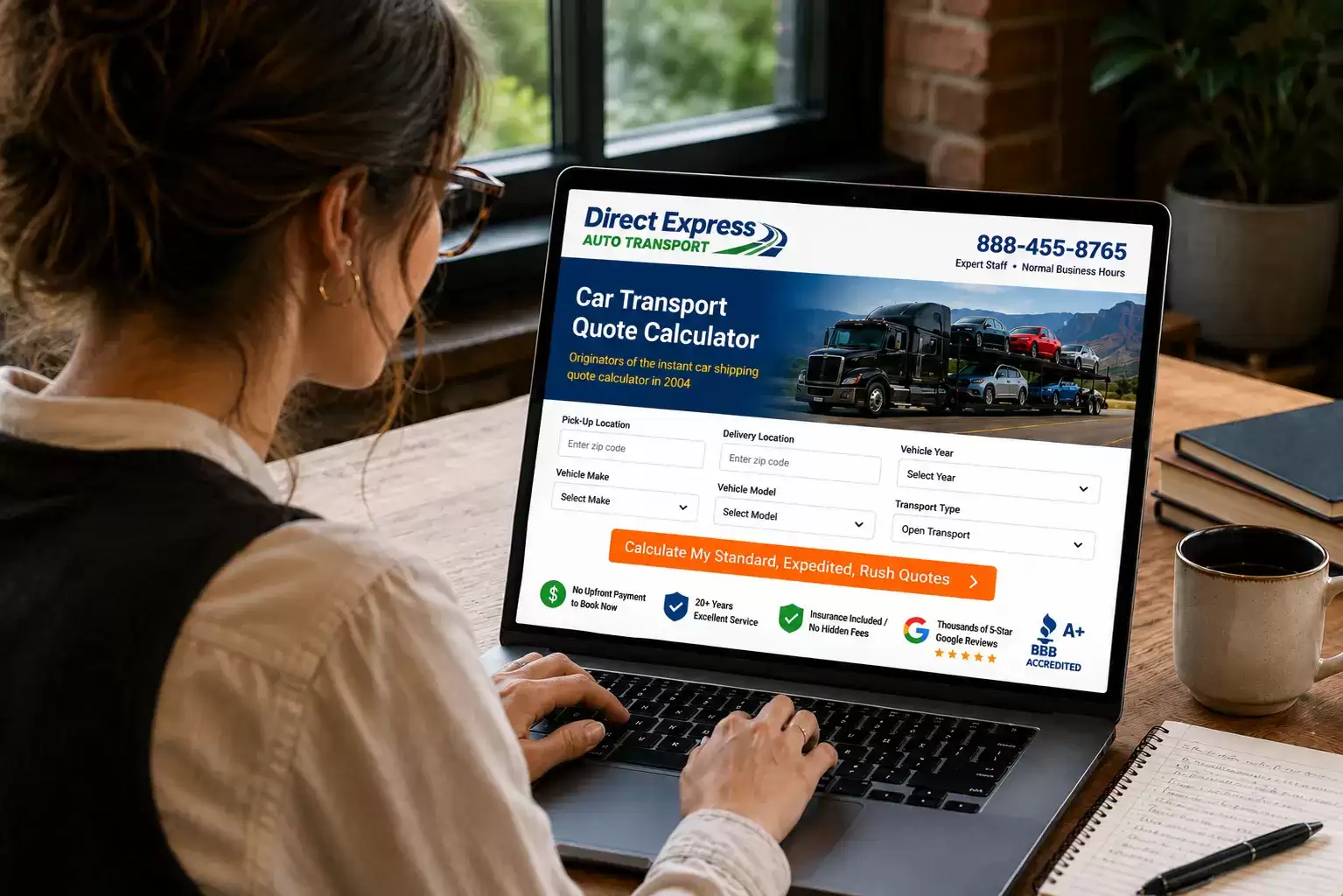
Need to ship a car to or from Michigan? Get a real-time, transparent price in 30 seconds — no phone calls, no risk, no upfront payment. Direct Express Auto Transport has been the Great Lakes State’s most trusted auto transport broker since 2004, with a 4.6-star average across thousands of verified Google reviews.
★ 4.6/5 Google Reviews | BBB Accredited A+ | FMCSA Licensed (MC #479342) | USDOT #1240502 | No upfront payment required | 20+ years shipping vehicles


Michigan car shipping costs vary based on your route, the time of year, vehicle size, and the service tier you choose. Use our instant calculator above for a real-time quote — or see the route-by-route pricing tables below for a fast ballpark. Most standard sedan shipments to or from Michigan range from $385 on short hauls to neighboring Ohio up to $1,530+ on long-haul routes to California. The Michigan-to-Florida Snowbird corridor — one of the most iconic seasonal routes in the country — typically runs $775–$1,085 depending on tier and timing. Our Expedited and Rush pricing tiers hasten the process to create an even more satisfying experience.
What customers say about shipping a car to or from Michigan with Direct Express Auto Transport


The interstate corridors that move Michigan vehicles
Four primary highway arteries define Michigan’s auto transport network:
I-75 (The primary Michigan spine): Enters Michigan from Ohio at the Toledo border and runs north through Monroe, Detroit, Pontiac, Flint, Saginaw, and Bay City before continuing north through Gaylord and ultimately reaching the Mackinac Bridge. I-75 is Michigan’s most important auto transport corridor — it is the primary route for vehicles moving between Metro Detroit and Florida on the southbound side, and between Detroit and the Northern Lower Peninsula on the northbound side. The I-75 corridor from Detroit to Naples, Florida is one of the most iconic Snowbird auto transport lanes in the country.
I-94 (East-West Great Lakes corridor): Enters Michigan from Indiana near New Buffalo and runs east through Kalamazoo, Battle Creek, Lansing, and Ann Arbor before reaching Detroit and continuing east to Port Huron and the Canadian border at the Blue Water Bridge. I-94 is the primary carrier route for vehicles moving between Michigan and Chicago, the western Midwest, and ultimately the Pacific Coast via I-80. It is also the main artery connecting the Detroit metro to the University of Michigan in Ann Arbor and to the western Michigan communities of Kalamazoo and the Lake Michigan shore.
I-96 (Detroit to Grand Rapids corridor): Runs west from Detroit through Novi, Brighton, Howell, Lansing, and on to Grand Rapids, where it terminates near Lake Michigan. I-96 is the primary carrier route between Metro Detroit and West Michigan — connecting the state’s two largest markets and providing access to the Lake Michigan lakeshore communities between Muskegon and Holland. Carriers serving both the Detroit metro and Grand Rapids frequently run I-96 as a combined dispatch route.
I-69 (Central Michigan connector): Enters Michigan from Indiana near Coldwater and runs northeast through Battle Creek, Lansing, and Flint before reaching Port Huron at the Canadian border. I-69 serves as a secondary corridor for carriers connecting Michigan to Indiana, Ohio, and the Southeast, and is the primary route serving Michigan State University in East Lansing and the mid-state communities between Lansing and Flint. Carriers avoiding the Detroit metro congestion on I-94 sometimes route through I-69 for central Michigan deliveries.
Vehicles shipping to or from the Detroit metro, Ann Arbor, Grand Rapids, or Lansing benefit from the highest carrier frequency in the state — multiple daily departures in every direction. If you are shipping to the Upper Peninsula, the Northern Lower Peninsula (Traverse City, Petoskey, Charlevoix), or the rural Thumb region of Michigan, expect longer pickup windows due to the significant deviation from primary carrier trunk routes. Expedited tier is strongly recommended for all Upper Peninsula and Northern Michigan shipments.
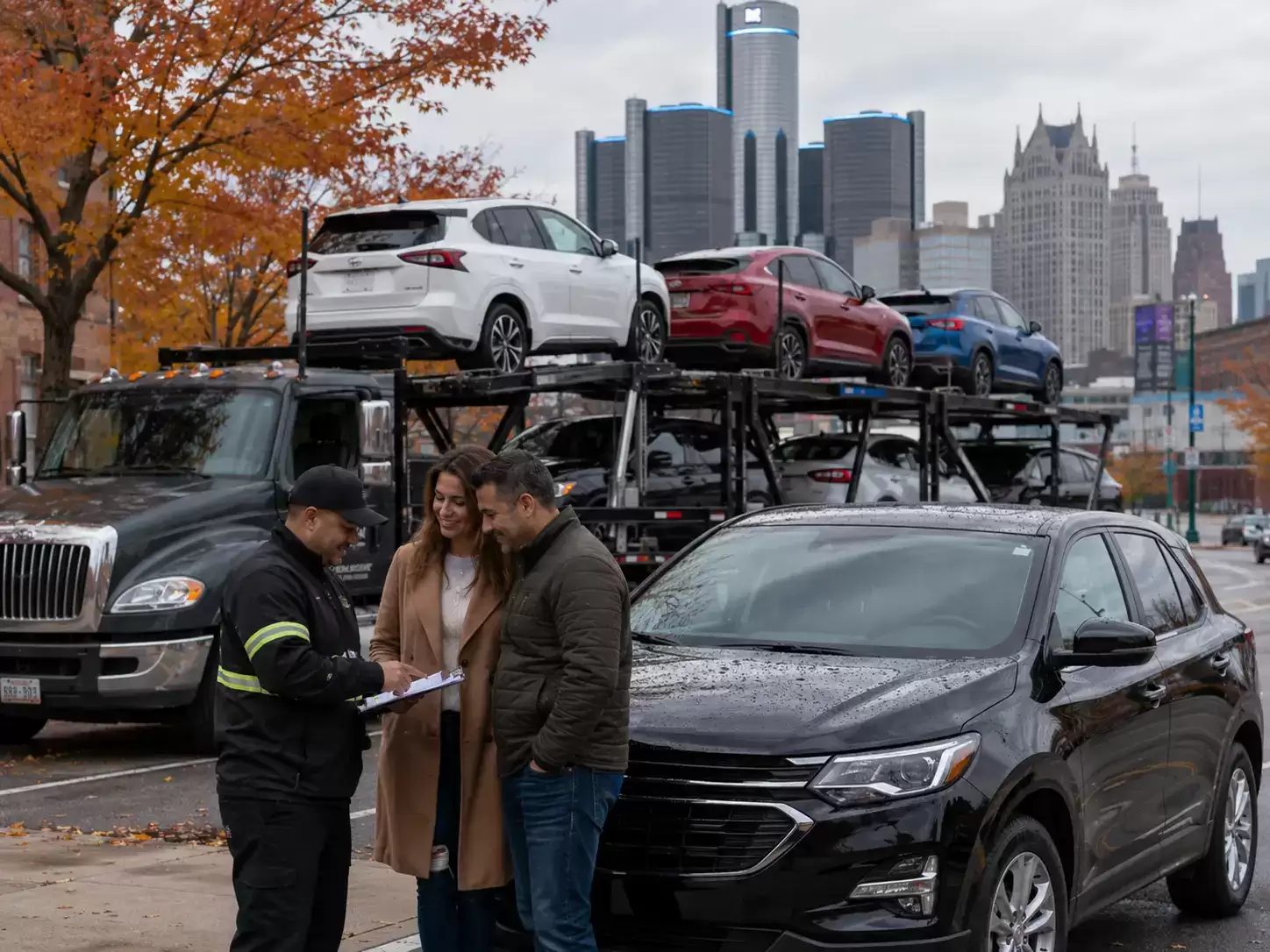

Michigan’s peninsula geography: what it means for your vehicle shipment
Michigan’s shape on the map — two peninsulas surrounded on three sides by the Great Lakes — is not just a geographic curiosity. It has direct, practical implications for auto transport pricing and carrier availability that every Michigan shipper should understand.
All carriers enter and exit through the same corridor: The Lower Peninsula is accessible by land only through the narrow Ohio-Indiana border corridor at Toledo and the Indiana Toll Road. There is no carrier shortcut through Wisconsin or Canada. Every carrier running to or from Michigan must pass through this bottleneck, which concentrates carrier traffic and creates a predictable, manageable dispatch pattern. The Toledo-to-Detroit I-75 segment is one of the most carrier-dense stretches of interstate in the Midwest as a result.
The peninsula factor keeps rates honest: Because carriers must backtrack through the same corridor they entered, they are always looking for loads that help them optimize their return trip. A carrier delivering a vehicle to Detroit from Florida needs a southbound load to make the return trip profitable. This dynamic keeps carrier incentives for Michigan loads competitive in both directions throughout the year — carriers cannot afford to run empty on the exit leg the way they might in a through-state with multiple exit options.
The Upper Peninsula is a different market entirely: Crossing the Mackinac Bridge ($4.00 per axle for commercial vehicles) and navigating the UP’s sparse highway network is a meaningful deviation from any carrier’s planned route. The UP’s population of approximately 300,000 generates far less shipping demand than the Lower Peninsula, which means carriers run there infrequently and primarily on consolidated loads. If you are shipping to or from Marquette, Sault Ste. Marie, Iron Mountain, or any UP community, expect pickup windows significantly longer than Lower Peninsula markets and budget for Expedited or Rush tier. Contact our team directly for UP logistics — these shipments benefit from personal coordination.
Lake Michigan lakeshore communities: The western Michigan lakeshore from Benton Harbor north through South Haven, Holland, Grand Haven, Muskegon, and Traverse City presents a secondary access challenge. These communities sit at the end of I-94 or require deviation from I-96, and their seasonal resort character means carrier demand spikes in summer and drops sharply in winter. Book Expedited for summer lakeshore deliveries, particularly during July and August when cottage season demand is highest.
Detroit and the automotive industry: Michigan’s unique shipping profile
No other state has an industry that shapes its auto transport market the way the automotive sector shapes Michigan’s. Understanding this context helps Michigan shippers understand why certain corridors — particularly Detroit to California, Detroit to Georgia, and Detroit to Texas — have carrier availability that consistently exceeds what their raw market size would otherwise produce.
OEM and supplier engineering relocations: Ford, General Motors, Stellantis, and hundreds of Tier 1 and Tier 2 supplier companies relocate engineers and executives constantly between their Michigan campuses and facilities in California’s Silicon Valley (autonomous vehicle development), Georgia (assembly plants), Texas (emerging tech hubs), Tennessee (Saturn and Nissan connections), and the Southeast. These professional relocations generate a year-round stream of vehicle shipping demand that has no seasonal low. An automotive engineer moving from Dearborn to Mountain View for an autonomous vehicle assignment ships a vehicle on this corridor; so does the engineer returning when the project ends. This bidirectional professional rotation keeps Detroit-to-California one of the most consistently carrier-active long-haul routes in the Midwest regardless of season.
The auto auction corridor: The Detroit metro hosts some of the largest wholesale auto auctions in the country, including ADESA Detroit in Carleton and Manheim Detroit in Carleton. These facilities process thousands of vehicles weekly for dealer-to-dealer and fleet sales. While auction transport is primarily a commercial wholesale function handled through dedicated commercial channels, it contributes to the overall density of vehicle-transport carriers operating in Metro Detroit — which benefits individual consumer shippers by increasing the pool of available carriers in the area.
Canadian border proximity: Metro Detroit sits directly across the Detroit River from Windsor, Ontario. The Ambassador Bridge and the Detroit-Windsor Tunnel handle enormous cross-border commercial traffic. While international vehicle shipping involves separate documentation and is outside the scope of standard domestic auto transport, the sheer volume of commercial vehicle traffic generated by the border crossing adds carrier density to the Metro Detroit market that further benefits domestic Michigan shippers.
Michigan’s major auto carrier hubs and what they mean for you
Detroit Metro (Wayne, Oakland, Macomb, Washtenaw counties): The dominant carrier hub for the entire state. The I-75/I-94/I-96 network converging in Metro Detroit gives the greater Detroit area carrier density that approaches Chicago levels on the most active corridors. Daily departures to Florida, California, Texas, Georgia, and every major market. Automotive industry demand, university shipping from Ann Arbor and Ypsilanti, and the Snowbird migration to Florida create a year-round demand profile with no true off-season. The suburbs — Troy, Novi, Dearborn, Livonia, Sterling Heights, Farmington Hills, Bloomfield Hills — are all served on the same carrier circuit as the city proper.
Ann Arbor: University of Michigan’s home city on I-94 between Detroit and Jackson. Ann Arbor is the second-most-active auto transport market in Michigan, driven by UM’s 48,000-student enrollment, the university’s enormous research and medical complex, and the significant professional relocation demand from automotive and tech industry professionals choosing Ann Arbor over the Detroit suburbs. Carriers on I-94 between Detroit and Chicago pass directly through Ann Arbor, giving it exceptional east-west carrier access.
Grand Rapids: West Michigan’s dominant hub on I-96 and US-131. Grand Rapids is the state’s second-largest city and the commercial center of an eight-county West Michigan region. Office Furniture industry corporate relocations, Spectrum Health and other major employer moves, and Grand Valley State University student shipping support a consistent year-round demand base. Carriers serving Grand Rapids often combine it with Kalamazoo, Battle Creek, and the Lake Michigan lakeshore communities on shared dispatch circuits.
Lansing / East Lansing: State capital and Michigan State University corridor on I-96 and I-69. MSU’s enrollment of approximately 50,000 students makes East Lansing one of the highest-volume university auto transport markets in the Midwest. State government workforce relocations add a non-seasonal baseline to the student shipping demand. Carriers on I-96 between Detroit and Grand Rapids, and on I-69 between Indiana and Flint, both pass through or near the Lansing metro.
Kalamazoo: Southwest Michigan hub on I-94 between Detroit and Chicago. Kalamazoo’s position on the primary carrier route between Detroit and Chicago gives it carrier access far above its market size. Western Michigan University adds student shipping demand. Carriers on I-94 running cross-country between Chicago and Detroit/Ann Arbor routinely include Kalamazoo stops.
Flint: Mid-state hub on I-75 between Detroit and Saginaw. Flint’s position on I-75 north gives it consistent carrier access on the Detroit-to-Northern-Michigan corridor. University of Michigan-Flint and Kettering University add education sector shipping demand. Pickup windows here are competitive with expectations for a mid-size Michigan city on a major trunk route.
Traverse City / Northern Lower Peninsula: Michigan’s premier resort and tourism destination at the top of Grand Traverse Bay. Traverse City and surrounding communities (Petoskey, Charlevoix, Boyne City) are accessible primarily via US-131 north from Grand Rapids and M-72 east from I-75. Carrier access is significantly slower than the southern Lower Peninsula, particularly in winter when northern Michigan highway conditions limit carrier operations. Expedited tier is strongly recommended year-round; summer demand spikes require booking 10–14 days ahead.
Upper Peninsula (Marquette, Sault Ste. Marie, Iron Mountain, Houghton): The UP is Michigan’s most challenging auto transport market. All carriers must cross the Mackinac Bridge ($4 toll per axle for commercial vehicles) and navigate the UP’s limited highway network. Carrier frequency in the UP is a fraction of Lower Peninsula levels. Rush or Expedited tier and direct team coordination are required for UP shipments. Contact our team before booking a UP shipment so we can set accurate expectations and identify the best routing option for your specific community.

Michigan car shipping cost estimates: major routes
The tables below show estimated pricing for the most commonly requested Michigan auto transport routes, based on real-time market data for a standard operable sedan via open carrier. All prices reflect current market conditions for Standard, Expedited, and Rush tiers. Your actual quote may vary based on vehicle size, exact pickup/delivery zip codes, and seasonal demand. Use our instant calculator for a real-time rate.
Popular Routes To Michigan
Swipe to view full table →
| From | To | Distance (mi) | Estimated Days | Standard | Expedited | Rush |
|---|---|---|---|---|---|---|
| Florida | Michigan | 1,370 | 3–5 days | $960 | $1,150 | $1,345 |
| California | Michigan | 2,310 | 6–8 days | $1,410 | $1,690 | $1,975 |
| Texas | Michigan | 1,500 | 4–6 days | $1,050 | $1,260 | $1,470 |
| New York | Michigan | 610 | 2–4 days | $710 | $850 | $995 |
| Illinois | Michigan | 330 | 1–3 days | $470 | $565 | $660 |
| Georgia | Michigan | 860 | 2–4 days | $820 | $985 | $1,150 |
| Colorado | Michigan | 1,380 | 4–6 days | $965 | $1,160 | $1,350 |
| Arizona | Michigan | 1,870 | 5–6 days | $1,235 | $1,480 | $1,730 |
| Washington | Michigan | 2,200 | 5–7 days | $1,340 | $1,610 | $1,875 |
| Ohio | Michigan | 200 | 1–2 days | $325 | $390 | $455 |
Popular Routes From Michigan
Swipe to view full table →
| From | To | Distance (mi) | Estimated Days | Standard | Expedited | Rush |
|---|---|---|---|---|---|---|
| Michigan | Florida | 1,370 | 3–5 days | $960 | $1,150 | $1,345 |
| Michigan | California | 2,310 | 6–8 days | $1,410 | $1,690 | $1,975 |
| Michigan | Texas | 1,500 | 4–6 days | $1,050 | $1,260 | $1,470 |
| Michigan | New York | 610 | 2–4 days | $710 | $850 | $995 |
| Michigan | Illinois | 330 | 1–3 days | $470 | $565 | $660 |
| Michigan | Arizona | 1,870 | 5–6 days | $1,235 | $1,480 | $1,730 |
| Michigan | Georgia | 860 | 2–4 days | $820 | $985 | $1,150 |
| Michigan | Colorado | 1,380 | 4–6 days | $965 | $1,160 | $1,350 |
| Michigan | Washington | 2,200 | 5–7 days | $1,340 | $1,610 | $1,875 |
| Michigan | North Carolina | 870 | 2–4 days | $830 | $995 | $1,160 |
Why the Michigan-to-Florida corridor prices the way it does
The Detroit-to-Naples run at approximately 1,370 miles is one of the most carrier-optimized Snowbird routes in the country. Carriers running I-75 south from Michigan to Florida know exactly what they will find at both ends: a steady stream of outbound Michigan vehicles in fall and winter, and a reliable supply of northbound vehicles heading back to Michigan in spring. This bidirectional predictability reduces carrier risk on the route and keeps per-mile rates more competitive than the raw mileage might suggest. It is why a Michigan-to-Florida shipment often costs less per mile than a Michigan-to-Texas shipment of comparable distance.

Best time to ship a car to or from Michigan — the complete seasonal guide

Standard, Expedited, or Rush — which tier is right for your Michigan shipment?
Direct Express Auto Transport pioneered the three-tiered pricing model that is still for the most part unique to us. Each tier represents a different level of carrier incentive — the higher the tier, the more attractive your shipment is to carriers on the dispatch board, and the faster your vehicle gets assigned. Here is how each tier performs specifically on Michigan routes:
Swipe to view full table →
| Tier | Best for Michigan when… | What to expect |
|---|---|---|
| Standard | Inbound MI in Jan–Mar (Snowbird return window), flexible timeline on any Detroit metro or Ann Arbor route in spring or fall, Detroit-to-Florida in February after Snowbird peak eases | Assignment in 4–8 days on major corridors. Best value when you have a flexible timeline and your origin or destination is in the Metro Detroit or Ann Arbor market. |
| Expedited (most popular) |
Snowbird outbound Oct–Jan on Florida and Arizona routes, summer OEM and university moves, any Northern Michigan or West Michigan lakeshore shipment, any Upper Peninsula shipment | Assignment in 1–3 days on major corridors. Strongly recommended for all Snowbird-season outbound, Northern Michigan, and Upper Peninsula shipments. |
| Rush | Hard Florida or Arizona Snowbird move-in deadline Nov–Jan, job-start relocation with a fixed date, vehicle needed at a Detroit-area dealership or OEM facility by a specific date | Priority dispatch, often assigned within 24–48 hours. Best for urgent Snowbird deadlines and summer peak OEM relocation moves. |
The Michigan-specific tier recommendation
For Metro Detroit shippers, Standard tier is viable during the spring and fall off-peak windows on major corridors — the automotive industry’s year-round demand baseline keeps carrier supply higher than in comparable Midwest markets, and Standard assignments here often outperform expectations. For Snowbird-season outbound moves, Northern Michigan destinations, and any Upper Peninsula shipment, Expedited is the right default. The cost difference is typically $90–$160 on most Michigan routes, and the pickup speed advantage during competitive periods is significant.


How to ship a car to or from Michigan: 4 steps
Step 1: Get your instant Michigan car shipping quote
Enter your pickup and delivery zip codes, your vehicle year, make, and model, whether it runs, and your preferred transport type (open or enclosed). Our calculator returns a real-time market rate in under 5 seconds. No name, phone number, or email required — you get the price first, every time.
Step 2: Choose your tier and confirm your dates
Select Standard, Expedited, or Rush based on your timeline and the seasonal guidance above. Enter your first available pickup date — you don’t need a firm date, just the earliest day the vehicle can be ready. If your delivery address is in the Upper Peninsula, Northern Michigan, or a lakeshore resort community, note this at booking so our team can coordinate logistics in advance. Our dispatch team starts working immediately.
Step 3: Secure your spot — no upfront payment
Complete your booking online or by phone. Your credit card is on file but not charged until a carrier is assigned to your shipment. There is no deposit, no cancellation fee, and no obligation until assignment. Once matched, you receive the carrier’s name, phone number, and estimated pickup date by email.
Step 4: Door-to-door pickup and delivery
Your carrier calls your pickup contact 12–24 hours before arrival to confirm timing and the meeting location. For Detroit proper and older urban neighborhoods, the driver will coordinate a nearby accessible commercial street if residential access is limited. At delivery, inspect your vehicle thoroughly, note any issues on the Bill of Lading, and pay the carrier the balance due by cash or money order.
Shipping a Car to or From a Michigan College or University
Michigan is home to two of the most prestigious and heavily enrolled public universities in the country — the University of Michigan and Michigan State University — as well as a network of regional universities serving every corner of the Lower Peninsula. The enormous volume of out-of-state students from New York, Illinois, Ohio, New Jersey, California, and the East Coast shipping vehicles to Michigan campuses each August, combined with Michigan graduates relocating to coastal cities after commencement, makes university auto transport one of the state’s most consistent demand drivers. The universities below each have a student population of 10,000 or more and represent major auto shipping demand centers, especially in August, December, and May.
Swipe to view full table →
| University | Location | Approx. Enrollment |
|---|---|---|
| Michigan State University | East Lansing | ~50,000 |
| University of Michigan | Ann Arbor | ~48,000 |
| Grand Valley State University | Grand Rapids | ~25,000 |
| Wayne State University | Detroit | ~24,000 |
| Western Michigan University | Kalamazoo | ~20,000 |
| Central Michigan University | Mount Pleasant | ~18,000 |
| Oakland University | Rochester | ~18,000 |
| Eastern Michigan University | Ypsilanti | ~15,000 |
| Ferris State University | Big Rapids | ~12,000 |
| Northern Michigan University | Marquette | ~7,500 |
Tips for college car shipping in Michigan: University of Michigan in Ann Arbor and Michigan State in East Lansing both experience significant carrier competition during the first two weeks of August when out-of-state students ship vehicles for fall move-in. Book Expedited 2–3 weeks ahead for August arrivals at either campus. Ann Arbor street access near central campus on State Street and South University is restricted for large carriers; deliveries stage on Fuller Road or at the Stadium Boulevard corridor. East Lansing campus deliveries typically stage on Farm Lane or at the Spartan Stadium lots. Northern Michigan University in Marquette is in the Upper Peninsula — all UP delivery guidance applies; contact our team directly for NMU shipments.


Military Car Shipping to and From Michigan Bases
Michigan’s military presence is concentrated in the Air National Guard and Army National Guard, with one significant active-component installation in the Metro Detroit area. We ship vehicles to and from all Michigan military installations, including:
Selfridge Air National Guard Base — Harrison Township
Located in Macomb County on Lake St. Clair northeast of Detroit, Selfridge ANGB is the largest Air National Guard base east of the Mississippi River and the oldest continuously operating military air field in the United States. The 127th Wing at Selfridge operates A-10 Thunderbolts and KC-135 Stratotankers, and the base also hosts Coast Guard Air Station Detroit. Selfridge’s Macomb County location places it within the Metro Detroit carrier circuit, giving it excellent access to carriers on I-94 and I-696. Military personnel at Selfridge transferring to active-duty assignments in other states ship vehicles on the same carrier network as the broader Metro Detroit market. Book Expedited during the June-August PCS season for hard reporting dates.
Camp Grayling / Michigan Army National Guard — Grayling
Located in Crawford County in the northern Lower Peninsula, Camp Grayling is Michigan’s largest military training facility and one of the largest National Guard training sites in the country at over 147,000 acres. As a training installation rather than a permanent duty station, Camp Grayling generates vehicle shipping demand primarily during mobilization and demobilization events when Michigan Guard units deploy or return from overseas missions. Grayling is accessible via I-75 north, approximately 220 miles north of Detroit. Expedited tier is recommended for Grayling shipments given the northern Michigan deviation from primary carrier trunk routes.
Fort Custer Training Center — Battle Creek
The Michigan Army National Guard’s primary training center in southwest Michigan near Battle Creek on I-94. Fort Custer generates training-cycle vehicle shipping demand and benefits from its I-94 corridor position between Detroit and Chicago, which provides carrier access comparable to the broader Battle Creek market. Vehicle shipping to and from Fort Custer is typically coordinated through the Battle Creek metro carrier circuit.
A note for military members: Always verify whether your branch covers POV (Privately Owned Vehicle) shipment costs under your PCS or mobilization orders before booking. If your move qualifies, government shipping may be arranged through your transportation office, but many service members choose a private carrier for speed or to ship a second vehicle not covered by orders.
Michigan cities we serve
Direct Express Auto Transport provides car shipping services to and from every city in Michigan. Our highest-volume Michigan markets include:
Detroit / Dearborn / Warren — Michigan’s dominant auto transport hub at the I-75/I-94/I-96 network. Ford Motor Company’s global headquarters in Dearborn and GM’s Renaissance Center in downtown Detroit anchor a year-round automotive industry relocation demand base. Daily carrier departures to Florida, California, Georgia, Texas, and every major market.
Troy / Bloomfield Hills / Novi — Metro Detroit’s primary automotive corporate corridor on I-75, I-696, and I-96 northwest. Stellantis, FCA, and scores of Tier 1 automotive suppliers maintain campuses throughout Oakland County. Pickup windows here are among the fastest in the state outside of the Detroit city market.
Ann Arbor — University of Michigan corridor on I-94. One of the most active auto transport markets in the state despite its size, driven by UM’s enormous enrollment, the university hospital system, and the growing autonomous vehicle and tech industry in the Ann Arbor/Ypsilanti corridor.
Grand Rapids — West Michigan’s dominant hub on I-96 and US-131. The state’s second-largest city and the commercial center for an eight-county region. Carriers serving Grand Rapids frequently combine it with Kalamazoo and the Lake Michigan lakeshore on combined west Michigan dispatches.
Lansing / East Lansing — State capital and Michigan State University corridor. MSU’s 50,000-student enrollment makes August vehicle shipping in East Lansing among the most competitive in the state. State government workforce relocations support consistent year-round baseline demand.
Sterling Heights / Clinton Township / Macomb Township — Macomb County automotive and manufacturing corridor on I-94 and M-59 northeast of Detroit. FCA/Stellantis assembly plants and the dense Tier 1 supplier network in Macomb County generate consistent industrial workforce relocation demand. Macomb Township’s rapid residential growth has made it one of the fastest-expanding communities in Metro Detroit, with carrier access shared across the broader Macomb County northeast corridor. Adjacent to Selfridge ANGB for combined military and civilian dispatch runs.
Kalamazoo / Portage — Southwest Michigan hub on I-94 midway between Detroit and Chicago. Stryker Corporation’s global headquarters and Western Michigan University are the primary demand drivers. Carriers on I-94 between Detroit and Chicago routinely include Kalamazoo stops.
Flint — Mid-state hub on I-75 between Detroit and Saginaw. Kettering University and University of Michigan-Flint contribute education sector demand. I-75 carrier activity in both directions keeps Flint reasonably accessible year-round.
Traverse City — Northern Michigan’s premier resort destination at the top of Grand Traverse Bay. High seasonal demand June through September for summer cottage arrivals; Expedited tier required year-round. Northern Michigan’s wine country, cherry orchards, and Sleeping Bear Dunes draw significant tourist and second-home traffic that translates into vehicle shipping demand each summer.
Saginaw / Bay City — Mid-Michigan industrial corridor on I-75 north of Flint. Carriers on the Detroit-to-Mackinac Bridge I-75 route pass directly through both cities, maintaining serviceable pickup windows despite their distance from the primary Metro Detroit market.

Michigan Helpful Government Links
- Michigan Secretary of State — Vehicle Registration — The primary resource for registering and titling a vehicle after it arrives in Michigan. New Michigan residents must register within 30 days of establishing residency.
- Michigan SOS — Title Transfer and New Resident Registration — Step-by-step guide for transferring an out-of-state title and obtaining Michigan plates. Covers required documents and how to find your local Secretary of State branch office.
- Michigan Department of Environment, Great Lakes, and Energy — Michigan does not have a statewide vehicle emissions testing program, but certain Metro Detroit counties have participated in EPA-monitored air quality programs. Check current requirements for your specific county before registering.
- FMCSA — Verify a Carrier’s License (SAFER System) — The Federal Motor Carrier Safety Administration’s carrier lookup tool. Verify that any auto transport company you consider is federally licensed and insured before booking.
- Michigan DOT — Road Conditions and Travel Information — Real-time road conditions, construction updates, and winter travel information for Michigan interstates. Useful for tracking I-75 and I-94 conditions during winter shipment windows.

Popular Long Distance Routes From or To Michigan
Michigan to Florida Car Shipping
Michigan-to-Florida is the most important long-distance auto transport corridor in the state — and one of the most iconic Snowbird routes in the country. Detroit-area retirees have been wintering on Florida’s Gulf Coast for generations, and the I-75 corridor connecting Metro Detroit to Naples, Fort Myers, Sarasota, and the Space Coast is among the most carrier-dense seasonal routes in the country. At approximately 1,370 miles via I-75 south through Toledo and Cincinnati, Standard transit runs three to five days. The bidirectional Snowbird cycle — Michigan vehicles heading south in October through January and returning in March through April — creates a predictable, well-established carrier market in both directions. Book Expedited 10–14 days ahead for October through January departures; March and April returns enjoy excellent carrier availability as northbound loads are in high demand.
Michigan to California Auto Transport
The Michigan-to-California corridor is driven primarily by automotive industry engineering relocations between Detroit’s OEM campuses and Silicon Valley’s autonomous vehicle and tech hub in Mountain View, San Jose, and San Francisco. Engineers at Ford, GM, Stellantis, and major Tier 1 suppliers regularly move between Michigan and California on multi-year assignments, creating a consistent bidirectional professional relocation market unlike any other Midwest state. At approximately 2,310 miles via I-94 west to I-80 west, Standard transit runs six to eight days. California-to-Michigan demand peaks in late summer as OEM annual assignment cycles turn over; Michigan-to-California peaks in spring as tech companies hire from Detroit’s engineering talent pool.
Michigan to Texas Vehicle Shipping
Texas has become a significant destination for Michigan vehicle shipments as automotive industry assembly operations in San Antonio and Dallas-area tech hubs draw Michigan talent. At approximately 1,500 miles via I-75 south and I-65 to I-55 or I-24 to I-40, Standard transit runs four to six days. Detroit to Dallas, Houston, and San Antonio are the primary corridors. Texas-to-Michigan demand is also meaningful, driven by Texans relocating to automotive industry positions in the Detroit metro and university students returning home from Big Ten schools.
Michigan to New York Car Transport
At approximately 610 miles via I-90 east through Cleveland and Buffalo, Michigan-to-New York is one of the most straightforward medium-haul routes in the Midwest. Standard transit runs two to four days. Finance industry relocations between New York and Detroit, University of Michigan and MSU alumni returning to New York after graduation, and general Great Lakes regional migration drive consistent bidirectional demand. The I-90 corridor between Detroit and New York via Cleveland and Buffalo is one of the most carrier-active routes in the northeastern United States.
Michigan to Illinois Car Shipping
The Detroit-to-Chicago I-94 corridor at approximately 280–330 miles is one of the most carrier-dense short-haul routes in the Midwest. Standard transit runs one to three days. Manufacturing and automotive industry relocations between the two states, Big Ten athletic connections, and general Great Lakes regional migration keep this corridor extremely active year-round. Chicago-bound Michigan vehicles often ride alongside I-94 transcontinental loads heading west toward the Pacific Coast.
Michigan to Georgia Vehicle Transport
Georgia has become a significant automotive industry destination for Michigan, with Hyundai’s new EV factory in Savannah, the Kia plant in West Point, and Atlanta’s growing corporate and tech sector all drawing Michigan automotive talent. At approximately 860 miles via I-75 south through Knoxville, Standard transit runs two to four days. The I-75 corridor that carries Michigan Snowbirds to Florida also connects Metro Detroit directly to Atlanta and the Georgia assembly plant corridor, giving Michigan-to-Georgia loads excellent carrier availability on what is effectively a segment of the highly active Snowbird route.
Michigan to Colorado Car Shipping
Colorado is a major lifestyle relocation destination for Michigan professionals seeking the Rocky Mountain outdoor lifestyle. At approximately 1,380 miles via I-94 west to I-80 west and I-76 south, Standard transit runs four to six days. Denver, Boulder, Fort Collins, and Colorado Springs are the primary destinations. University of Michigan and MSU alumni choosing Colorado over coastal cities for post-graduation careers contribute to consistent outbound demand, particularly in May and June.
Michigan to Arizona Auto Transport
Arizona is Michigan’s second-most-popular Snowbird destination after Florida. Scottsdale, Tucson, Sun City, and the greater Phoenix metro attract Michigan retirees who prefer the Southwest desert climate over Florida’s humidity. At approximately 1,870 miles via I-94 west to I-80 to I-40 or I-25 south, Standard transit runs five to six days. The Michigan-to-Arizona outbound Snowbird surge runs October through January, with spring returns in March through April. Book Expedited for November and December Arizona-bound shipments from Michigan.
Michigan to Washington State Auto Transport
Seattle’s Amazon and Boeing engineering corridor draws Michigan manufacturing and automotive talent regularly. At approximately 2,200 miles via I-90 west, Standard transit runs five to seven days. University of Michigan engineering and computer science alumni relocating to Seattle-area tech companies are a consistent demand driver, along with automotive supplier engineers moving between Detroit and Boeing’s Everett facility.
Michigan to North Carolina Vehicle Shipping
North Carolina has become a significant automotive industry destination for Michigan with the Research Triangle’s tech sector and several major automotive assembly investments in the state. At approximately 870 miles via I-75 south and I-40 east, Standard transit runs two to four days. Military transfers to Fort Liberty and Camp Lejeune from Selfridge ANGB and Michigan Guard units add consistent military shipping demand alongside the growing civilian automotive corridor.
Michigan to Tennessee Car Transport
Tennessee has the Nissan assembly plant in Smyrna and the new Ford BlueOval City EV campus near Memphis, both of which draw Michigan automotive engineering talent. Nashville’s broader corporate growth has also made it an increasingly common destination for Michigan relocators. At approximately 650–750 miles via I-75 south, Standard transit runs two to three days. The I-75 corridor from Detroit through Knoxville to Chattanooga and Nashville is one of the most carrier-active routes in the Michigan carrier network.
Michigan to Virginia Auto Transport
Northern Virginia’s defense and federal government contractor corridor draws Michigan engineers and IT professionals regularly. At approximately 700 miles via I-90 east or I-75 south and I-81 north, Standard transit runs two to four days. Virginia Beach’s Naval Station Norfolk adds military shipping demand, particularly for Michigan Guard personnel mobilized to East Coast assignments.
Michigan to Pennsylvania Car Shipping
Philadelphia, Pittsburgh, and the Lehigh Valley are the primary Pennsylvania destinations for Michigan vehicle shipments. At approximately 460–610 miles via I-90 east or I-79 south, Standard transit runs two to three days. Pittsburgh’s steel and robotics industry has a meaningful connection to Detroit’s manufacturing sector, and the two cities share consistent workforce relocation traffic in both directions.
Michigan to Minnesota Vehicle Shipping
Minneapolis and the Twin Cities are an active upper Midwest destination for Michigan vehicle shipments, with 3M, Target, and the medical device industry drawing Michigan professionals regularly. At approximately 560 miles via I-94 west to I-35 north, Standard transit runs two to three days. MSP and Detroit have a long-standing regional corporate relocation relationship that keeps this corridor consistently served.

Nearby States
Michigan to Ohio Car Shipping
Ohio is Michigan’s primary southern neighbor and the gateway to the I-75 Snowbird corridor. Toledo sits at the Michigan-Ohio border — the most critical carrier choke point for all Michigan auto transport — and serves as the staging point where Michigan-bound northbound carriers hold during Great Lakes winter weather events. At 200–350 miles to Cleveland, Columbus, or Cincinnati, Standard transit runs one to two days. The Detroit-to-Toledo I-75 segment is among the most carrier-dense short hauls in the Midwest, with dozens of carrier runs daily. Ohio is Michigan’s most carrier-active neighbor in both directions year-round.
Michigan to Indiana Auto Transport
Indiana borders Michigan to the southwest and is the gateway to the I-94 Chicago corridor. South Bend, Fort Wayne, and Indianapolis are the primary Indiana destinations. At 150–290 miles, Standard transit runs one to two days. The Indiana Toll Road is the primary carrier route for vehicles moving between Western Michigan and Chicago, and carriers on this corridor include South Bend and Fort Wayne stops frequently. Indiana-to-Michigan demand is particularly active during the University of Notre Dame fall and spring move cycles given South Bend’s proximity to the Michigan border.
Michigan to Wisconsin Auto Transport
Wisconsin borders Michigan’s Upper Peninsula to the west and is accessible from the Lower Peninsula via Illinois and the Indiana Toll Road at the southern end, or via the Mackinac Bridge and the UP at the northern end. Milwaukee is approximately 350 miles from Detroit via I-94 through Chicago. Standard transit runs two to three days. Wisconsin-to-Michigan demand is driven by Great Lakes regional migration and the consistent University of Wisconsin-to-Michigan professional relocation flow. Shipments to Upper Peninsula communities near the Wisconsin border (Ironwood, Wakefield) should use the northern UP routing and benefit from direct team coordination.

Major Cities From Michigan
I-75 / Metro Detroit Corridor
Detroit Car Shipping
Michigan’s dominant auto transport hub at the I-75/I-94/I-96 confluence. The global headquarters of Ford, GM, and Stellantis create a professional relocation demand profile unlike any other American city. Detroit proper pickups require a carrier-accessible meet point in most neighborhoods due to residential street restrictions; suburban Metro Detroit pickups from Troy, Novi, Livonia, and Farmington Hills are straightforward door-to-door. Carriers depart Metro Detroit daily to Florida, California, Georgia, Texas, New York, and every major market. Standard tier performs exceptionally well here in spring and fall on most corridors.
Dearborn / Livonia Auto Transport
Wayne County automotive corridor west of Detroit on I-94 and I-96. Ford Motor Company’s world headquarters in Dearborn generates enormous executive and engineering relocation demand. Carriers on the I-94 west corridor to Ann Arbor, Chicago, and California include Dearborn and Livonia stops on westbound dispatches. Pickup windows here mirror the Detroit city market.
Troy / Sterling Heights Vehicle Shipping
Oakland and Macomb County automotive corridor north of Detroit on I-75 and I-696. The highest concentration of automotive supplier campuses in the state. Carriers on I-75 northbound from Detroit include Troy, Sterling Heights, and the broader Oakland County market on combined dispatch runs. FCA/Stellantis and GM supplier engineering moves dominate this market.
Pontiac / Waterford Car Transport
Oakland County inner ring on I-75 north of the I-696 interchange. GM’s historic Pontiac connection drives some residual automotive demand. Carriers on the I-75 corridor between Detroit and Flint include Pontiac area stops on northbound dispatches.
Novi / Farmington Hills Auto Shipping
Oakland County western corridor on I-96 and I-275. Dense automotive supplier and technology company presence. The I-96 west corridor connects Novi and Farmington Hills directly to Ann Arbor and Grand Rapids, making these communities among the most efficiently served in the Metro Detroit outer ring.
I-94 / Ann Arbor Corridor
Ann Arbor Car Shipping
University of Michigan’s home city on I-94 between Detroit and Jackson. The second-most-active auto transport market in the state. UM’s 48,000-student enrollment, the university hospital system (one of the largest in the country), and the growing autonomous vehicle and tech industry corridor make Ann Arbor a year-round high-demand market. Street access near central campus on State Street and South University requires carrier staging at Fuller Road or the Stadium Boulevard commercial corridor. Ann Arbor is served by I-94 carriers in both directions and is typically bundled with nearby Ypsilanti and Saline on combined dispatch runs.
Ypsilanti Vehicle Shipping
Eastern Michigan University’s home city immediately east of Ann Arbor on I-94. EMU student and faculty shipping is routinely combined with Ann Arbor dispatches on the same carrier circuit. Ford Lake and Willow Run Airport area industrial workforce adds commercial shipping demand.
Kalamazoo Car Transport
Southwest Michigan hub on I-94 between Detroit and Chicago. Western Michigan University’s enrollment and Stryker Corporation’s global headquarters are the primary demand drivers. Carriers on I-94 running coast to coast between Chicago and Detroit routinely include Kalamazoo stops. Pickup windows are competitive with Ann Arbor despite Kalamazoo’s smaller market size, reflecting its favorable position on the primary transcontinental corridor.
Battle Creek Auto Transport
Calhoun County hub on I-94 between Kalamazoo and Lansing. Kellogg Company headquarters and Fort Custer Training Center combine to support consistent shipping demand. Carriers on I-94 include Battle Creek on combined west Michigan dispatches alongside Kalamazoo.
I-96 / Grand Rapids Corridor
Grand Rapids Car Shipping
West Michigan’s dominant hub at I-96 and US-131. Spectrum Health, Amway, Meijer, and the office furniture industry generate consistent corporate relocation demand. Grand Valley State University’s 25,000 students contribute strong August and May shipping peaks. Carriers on I-96 from Detroit and US-131 from the Lake Michigan shore serve Grand Rapids as the western anchor of the primary Michigan carrier circuit. Standard pickup windows here are among the shortest in the state outside of Metro Detroit.
Muskegon / Holland Vehicle Shipping
Lake Michigan lakeshore communities accessible via US-31 and I-196 north and south of Grand Rapids. Carriers serving Grand Rapids frequently include Muskegon and Holland on combined west Michigan dispatches. Summer cottage arrivals and lakeshore resort community seasonal demand spike sharply in June through August. Book Expedited for summer lakeshore deliveries.
I-96 / I-69 Lansing Corridor
Lansing / East Lansing Car Shipping
State capital and Michigan State University corridor at the I-96/I-69 junction. MSU’s 50,000-student enrollment makes August East Lansing vehicle shipping among the most competitive in the state. State government workforce relocations maintain consistent year-round baseline demand. Carriers on I-96 between Detroit and Grand Rapids and on I-69 between Indiana and Flint both pass through or near the Lansing metro, giving it multi-direction carrier access throughout the year.
I-75 North / Flint / Saginaw Corridor
Flint Auto Transport
Mid-state hub on I-75 between Detroit and Saginaw. Kettering University’s automotive engineering program and University of Michigan-Flint contribute education sector demand. Carriers on I-75 north from Detroit include Flint on the way to Saginaw, Bay City, and the northern Lower Peninsula. Pickup windows are competitive for a mid-size Michigan city on a major trunk route.
Saginaw / Bay City Vehicle Shipping
Mid-Michigan industrial corridor on I-75 north of Flint. Carriers on the Detroit-to-Mackinac Bridge I-75 run include Saginaw and Bay City on northbound dispatches. The mid-peninsular position means carriers cover these two cities efficiently on combined Flint-to-Northern-Michigan runs. Pickup windows are reasonable for their size and location on the primary northern corridor.
Traverse City Car Shipping
Northern Michigan’s premier resort destination on Grand Traverse Bay, accessible via US-131 north from Grand Rapids and M-72 east from I-75. Carriers serving Traverse City combine it with Gaylord, Petoskey, and Charlevoix when demand allows. Summer demand June through September is the highest of the year for this market; winter demand drops sharply but does not disappear entirely due to the ski resort season. Expedited tier is strongly recommended year-round. Book 10–14 days ahead for summer deliveries.

Ready to ship your car to or from Michigan?
Join hundreds of thousands of customers — Detroit Snowbirds heading to Florida’s Gulf Coast, automotive engineers relocating between Michigan and California, Michigan State and University of Michigan students, Selfridge military families, and households moving across the country — who have trusted Direct Express Auto Transport with their Michigan vehicle shipments since 2004. Get your instant, no-obligation quote now. It takes 30 seconds, requires no personal information, and there is no upfront payment required to hold your spot.
Instant quote — real-time pricing in under 5 seconds
No upfront payment — your card is charged only when a carrier is assigned
No risk to get a quote and book your order
BBB Accredited A+ since 2004
FMCSA licensed and fully bonded
4.6 stars across thousands of verified Google reviews