
Car Shipping To or From Connecticut
Need to ship a car to or from Connecticut? Direct Express Auto Transport has been the Constitution State’s most trusted auto transport broker since 2004 — with a 4.6-star average across thousands of verified Google reviews, no upfront payment required, and a real-time quote available in 30 seconds.


Connecticut car shipping costs vary based on your route, the time of year, vehicle size, and the service tier you choose. Use our instant calculator above for a real-time quote — or see the route-by-route pricing tables below for a fast ballpark. Most standard sedan shipments to or from Connecticut range from $350 for short-haul routes to Massachusetts to $1,400 or more on transcontinental routes to California. Connecticut shippers benefit from proximity to the New York metro carrier market while paying a modest small-state premium compared to larger carrier hubs. Our Expedited and Rush pricing tiers hasten the process to create an even more satisfying experience.
What customers say about shipping a car to or from Connecticut with Direct Express Auto Transport


The interstate corridors that move Connecticut vehicles
I-95 (Connecticut’s carrier backbone): The Northeast Corridor’s primary carrier artery, running 110 miles from the New York state line at Greenwich northeast through Stamford, Norwalk, Bridgeport, Milford, New Haven, Branford, Old Saybrook, New London, and Groton before crossing into Rhode Island. I-95 is the most important carrier route in Connecticut by a wide margin. All southbound Florida-bound carrier traffic and northbound New England-bound carrier traffic flows on I-95. Through-carrier traffic between New York City and Boston passes continuously through Connecticut on I-95, giving the I-95 corridor cities — Stamford, Bridgeport, and New Haven in particular — carrier access that exceeds what Connecticut’s population alone would generate.
I-91 (North-South inland artery): Runs north from I-95 at New Haven through Meriden, Hartford, Windsor, and Windsor Locks to the Massachusetts state line at Springfield, continuing to the Canadian border at Derby Line, Vermont. I-91 is Connecticut’s primary inland north-south corridor and the main carrier route between New Haven/Hartford and the Massachusetts and Vermont markets. Hartford benefits from sitting at the I-91/I-84 junction, giving it access to both the north-south I-91 corridor and the east-west I-84 route toward New York and Boston.
I-84 (East-West central corridor): Runs from the New York state line south of Danbury northeast through Danbury, Waterbury, Southington, Hartford, Manchester, and Tolland before crossing into Massachusetts east of Sturbridge, where it connects to the Massachusetts Turnpike (I-90) toward Boston. I-84 is the primary east-west carrier route through central Connecticut and the main corridor connecting Hartford to New York state via Danbury and to Boston via the Sturbridge junction. Hartford’s I-84/I-91 convergence is Connecticut’s most important inland carrier interchange.
I-395 (Eastern Connecticut, Norwich corridor): Runs north from I-95 near Waterford through Norwich and Plainfield to the Massachusetts state line. I-395 is the primary carrier access route for eastern Connecticut, connecting the Norwich and New London area to I-90 and the Worcester/Boston corridor to the north. Eastern Connecticut communities on I-395 have better carrier access than the broader eastern rural region; Norwich and Plainfield are serviceable on Standard tier.
Merritt Parkway and Wilbur Cross Parkway (RESTRICTED — no commercial trucks): The Merritt Parkway (Route 15) through southwestern Connecticut and the Wilbur Cross Parkway through central Connecticut are beautiful historic roadways but are entirely off-limits to commercial trucks due to historic bridge height restrictions of approximately 12–13 feet. Standard carrier trucks require 13–14 feet of clearance. Carriers cannot use the Merritt or Wilbur Cross under any circumstances for vehicle transport. All Connecticut carrier traffic uses I-95, I-91, and I-84 exclusively. Shippers in Merritt Parkway corridor towns (Westport, Darien, New Canaan, Wilton) may need to stage their vehicle at an I-95-accessible location for carrier pickup.

Connecticut carrier dynamics: the small-state premium and NYC proximity advantage
Connecticut presents a dual dynamic for auto transport shippers: a proximity advantage from New York and a small-state premium from limited in-state carrier staging. The proximity advantage is real and valuable. Stamford, Greenwich, and Norwalk are so close to the New York metro carrier market — Greenwich is just 30 miles from Midtown Manhattan — that carriers staging for New York loads will regularly accept southwestern Connecticut origin vehicles without a meaningful route deviation. For southwestern Connecticut shippers, the effective carrier market is the New York metro, not the Connecticut state market, and this access produces some of the most competitive Standard rates in New England.
The small-state premium kicks in for carriers because Connecticut lacks the carrier staging infrastructure of larger states. There are no major carrier terminals in Connecticut, no large cities generating the enormous volume of inbound and outbound loads that give states like New York, California, or Texas their carrier depth. Carriers running New York-to-Boston loads on I-95 will accept Connecticut stops, but Connecticut cannot generate the pure backhaul volume that a major load market produces. The result is that Standard tier pickup windows in Connecticut average 3–5 business days in the I-95 corridor and 5–7 business days in inland and eastern communities — adequate but slower than the largest nearby markets.
A specific Connecticut dynamic is the Merritt Parkway restriction. Because the Merritt Parkway is off-limits to commercial trucks, carriers picking up in Fairfield County towns served primarily by the Merritt — Westport, Darien, New Canaan, Wilton, Ridgefield — must use surface roads to reach I-95 for loading. This additional complexity is manageable but adds coordination time and occasionally requires the shipper to bring the vehicle to an I-95-accessible staging point. Our dispatch team handles this coordination and will notify you in advance if a staging point is needed for your address.
Connecticut vehicle shipping hub rankings
Bridgeport / I-95 / CT-8 — Tier 1 hub: Connecticut’s largest city and the state’s dominant carrier hub. Bridgeport sits at the midpoint of I-95 between New York and New Haven, directly on Connecticut’s most active carrier corridor. The I-95 through-carrier traffic between New York and Boston passes through Bridgeport in both directions daily, and the CT-8 north connector gives carriers access toward Waterbury and Torrington without navigating Hartford. Standard tier works well for Bridgeport; pickup windows average 2–4 business days. The commercial port area and industrial corridor south of downtown gives carrier trucks excellent access.
New Haven / I-95 / I-91 / I-95 Exit Cluster — Tier 1 hub: Connecticut’s second-largest city, home of Yale University, and the state’s most important carrier interchange. New Haven sits at the convergence of I-95 and I-91 — where the coastal corridor meets the inland north-south route to Hartford and Massachusetts. This interchange gives New Haven carriers access to loads coming from both coastal and inland directions simultaneously. Yale’s 14,000-student enrollment adds a significant August and May student vehicle shipping component. Standard tier works well; pickup windows average 2–4 business days. Expedited is recommended for moves with firm date requirements.
Stamford / I-95 / I-287 junction (nearby) — Tier 1 hub: Southwestern Connecticut’s largest city and the state’s most competitive carrier market by rate. Stamford sits 35 miles northeast of Midtown Manhattan on I-95 and effectively operates as an extension of the New York metro carrier market. The financial and corporate concentration in Stamford generates high-value executive relocation moves year-round, and the proximity to New York carrier staging areas means Standard tier pickup windows average 1–3 business days — the fastest in the state. The Fairfield County markets south and east of Stamford (Greenwich, Norwalk, Westport) share these favorable carrier dynamics, with the Merritt Parkway caveat for off-I-95 addresses.
Hartford / I-91 / I-84 — Tier 1 hub: The state capital and Connecticut’s largest inland city. Hartford sits at the I-84/I-91 convergence — the state’s most important inland carrier interchange. I-91 north from Hartford to Springfield and Boston gives carriers direct access to the Massachusetts market; I-84 east toward Sturbridge and west toward Danbury and New York gives carriers east-west access across central Connecticut. Standard tier works well for Hartford; pickup windows average 3–5 business days. Hartford is slightly slower than the I-95 coastal markets due to lower through-carrier volume on I-84/I-91 compared to I-95.
New London / Groton / I-95 / CT-32 — Tier 1 hub: Southeastern Connecticut’s largest market and home of Naval Submarine Base New London (SUBASE) in Groton, one of the Navy’s most important submarine installations. SUBASE New London generates a substantial and year-round PCS vehicle shipping demand. I-95 access in New London and Groton gives this market solid carrier coverage. Standard tier is appropriate for most SUBASE PCS moves with sufficient lead time; Expedited is recommended for tight report dates. Pickup windows average 3–5 business days on Standard tier.
Waterbury / I-84 / CT-8 — Tier 2 hub: Central Connecticut’s largest city, Waterbury sits at the CT-8/I-84 interchange inland from Bridgeport and I-95. CT-8 south connects directly to I-95 near Bridgeport, giving carriers a relatively efficient route. Standard tier produces pickup windows of 3–6 business days; Expedited is recommended for time-sensitive moves. The Naugatuck Valley industrial corridor keeps some carrier interest in the Waterbury market year-round.
Danbury / I-84 / I-84 western terminus area — Tier 2 hub: Western Connecticut’s largest city, Danbury sits on I-84 near the New York state line, giving it access to the I-684/I-87 New York carrier network to the west. Standard tier produces pickup windows of 3–5 business days; the proximity to the New York state carrier network provides more carrier options than inland Connecticut cities of comparable size. Expedited is recommended for moves with firm timelines.
Eastern Connecticut (Windham County, Tolland County) — Tier 3 hub: The least carrier-accessible region in Connecticut. Eastern Connecticut communities including Willimantic, Putnam, Danielson, and Vernon are served by I-384, US-6, and I-395, but lack the carrier volume of the I-95 or I-91 corridors. Expedited tier is strongly recommended for eastern Connecticut shipments, and Standard tier pickup windows can extend to 7–14 business days for some rural eastern Connecticut addresses.

Connecticut car shipping rates: popular routes and estimated costs
The tables below reflect current market averages for open-carrier transport of a standard sedan in good weather conditions. Prices vary based on fuel costs, carrier availability, season, and vehicle size. Use the calculator above for a real-time quote specific to your route and vehicle.
Popular routes from Connecticut
| From | To | Distance (mi) | Estimated Days | Standard | Expedited | Rush |
|---|---|---|---|---|---|---|
| Connecticut | Massachusetts | 100 | 1–2 | $350 | $420 | $490 |
| Connecticut | New York | 80 | 1–2 | $425 | $510 | $595 |
| Connecticut | New Jersey | 120 | 1–2 | $450 | $540 | $630 |
| Connecticut | Virginia | 500 | 2–4 | $650 | $780 | $910 |
| Connecticut | North Carolina | 750 | 3–5 | $750 | $900 | $1,050 |
| Connecticut | Georgia | 1,050 | 4–6 | $850 | $1,020 | $1,190 |
| Connecticut | Florida | 1,300 | 4–6 | $875 | $1,050 | $1,225 |
| Connecticut | Illinois | 950 | 4–6 | $900 | $1,080 | $1,260 |
| Connecticut | Texas | 1,600 | 5–8 | $1,100 | $1,320 | $1,540 |
| Connecticut | California | 2,800 | 7–10 | $1,400 | $1,680 | $1,960 |
Popular routes to Connecticut
| From | To | Distance (mi) | Estimated Days | Standard | Expedited | Rush |
|---|---|---|---|---|---|---|
| California | Connecticut | 2,800 | 7–10 | $1,400 | $1,680 | $1,960 |
| Texas | Connecticut | 1,600 | 5–8 | $1,100 | $1,320 | $1,540 |
| Illinois | Connecticut | 950 | 4–6 | $900 | $1,080 | $1,260 |
| Florida | Connecticut | 1,300 | 4–6 | $875 | $1,050 | $1,225 |
| Georgia | Connecticut | 1,050 | 4–6 | $850 | $1,020 | $1,190 |
| North Carolina | Connecticut | 750 | 3–5 | $750 | $900 | $1,050 |
| Virginia | Connecticut | 500 | 2–4 | $650 | $780 | $910 |
| New Jersey | Connecticut | 120 | 1–2 | $450 | $540 | $630 |
| New York | Connecticut | 80 | 1–2 | $425 | $510 | $595 |
| Massachusetts | Connecticut | 100 | 1–2 | $350 | $420 | $490 |
Why cross-country vehicle shipping from Connecticut connects to a national carrier network
Connecticut shippers accessing transcontinental routes are effectively using the New York metro carrier network as their gateway. A carrier picking up in Stamford or Bridgeport can stage in the New York area before accepting a California, Texas, or Florida load. New Haven sits at the I-95/I-91 convergence, and carriers picking up in New Haven can route south on I-95 to pick up additional New York metro loads before heading to their transcontinental destination. This gateway dynamic means Connecticut shippers have access to the full range of national carrier capacity, even though Connecticut itself is a small state that does not generate large-volume outbound loads on its own.
For southbound moves — particularly the Connecticut-to-Florida snowbird route — the I-95 corridor produces some of the best carrier access available anywhere on the East Coast. I-95 is the most traveled carrier route on the East Coast, and Connecticut I-95 corridor shippers moving southbound to Florida or Georgia access the full stream of I-95 southbound through-carrier traffic. This means Connecticut-to-Florida Standard tier pickup windows are often faster than the state’s general carrier depth would suggest — carriers running New York or Boston to Florida loads will accept a Connecticut origin stop without significant deviation from their planned route.

Connecticut car shipping: month-by-month seasonal guide

Connecticut auto transport service tiers: which is right for your move?
| Service Tier | Pickup Window | Best For | Price |
|---|---|---|---|
| Standard | 3–7 business days | I-95 corridor cities with flexible timelines. Best value for Bridgeport, New Haven, Stamford, Hartford area moves during non-winter months. | Lowest |
| Expedited (most popular) |
1–3 business days | Winter moves, SUBASE New London PCS orders, eastern Connecticut rural addresses, any move with a firm departure or arrival date, Merritt Parkway corridor addresses requiring staging coordination. | Moderate |
| Rush | Within 24–48 hours | Same-day or next-day pickup required. Emergency relocation, unexpected PCS date changes, or vehicle needed at destination immediately. | Premium |


How to ship a car to or from Connecticut in 4 steps
Step 1: Get your instant quote. Use our online calculator above or call our team directly. I-95 corridor quotes (Stamford, Bridgeport, New Haven) and Hartford quotes typically return carrier assignments within the standard booking window. If your address is in a Merritt Parkway corridor town, mention this to our team so we can plan the carrier staging coordination in advance.
Step 2: Book and schedule pickup. No upfront payment required. We match your vehicle to a licensed, insured carrier on your route. For SUBASE New London PCS orders, provide your report date and we’ll coordinate the carrier timeline accordingly. For moves during the October–November snowbird window, book early in the month for the most competitive southbound rates and fastest pickup.
Step 3: Prepare your vehicle. Clean your vehicle inside and out, document all existing condition with time-stamped photographs, remove all personal items, and confirm your fuel level is at or below one-quarter tank. Connecticut winter road salt accumulates on undercarriages and panel edges and should be documented in your pre-shipment photographs so it is not confused with transport damage. If shipping during winter (December–March), note that carriers may request a flexible pickup window for weather-related delays.
Step 4: Inspect and sign at delivery. Walk around the vehicle with the carrier before signing the Bill of Lading at delivery. Compare the delivery condition against your pre-shipment photographs. Any new damage must be noted on the Bill of Lading before you sign. Do not sign a clean Bill of Lading if there is new damage — document everything in writing at delivery.
Connecticut university vehicle transport: campus shipping guide
Connecticut’s universities generate predictable August move-in and May move-out vehicle shipping demand concentrated in New Haven, Storrs, Fairfield, Hamden, Middletown, and Hartford. Yale University and the University of Connecticut are the two largest contributors to student vehicle shipping, but all campuses below add to the carrier demand cycle. Book 5–7 days in advance during late August and early May for the best Standard tier rates near major campuses.
| University | Location | Approx. Enrollment |
|---|---|---|
| University of Connecticut | Storrs | 27,000 |
| Yale University | New Haven | 14,000 |
| Central Connecticut State University | New Britain | 11,500 |
| Southern Connecticut State University | New Haven | 10,000 |
| Quinnipiac University | Hamden | 10,000 |
| Sacred Heart University | Fairfield | 9,000 |
| University of Hartford | West Hartford | 6,500 |
| Fairfield University | Fairfield | 5,500 |
| Wesleyan University | Middletown | 3,000 |
| Trinity College | Hartford | 2,200 |

Connecticut military base auto transport guide
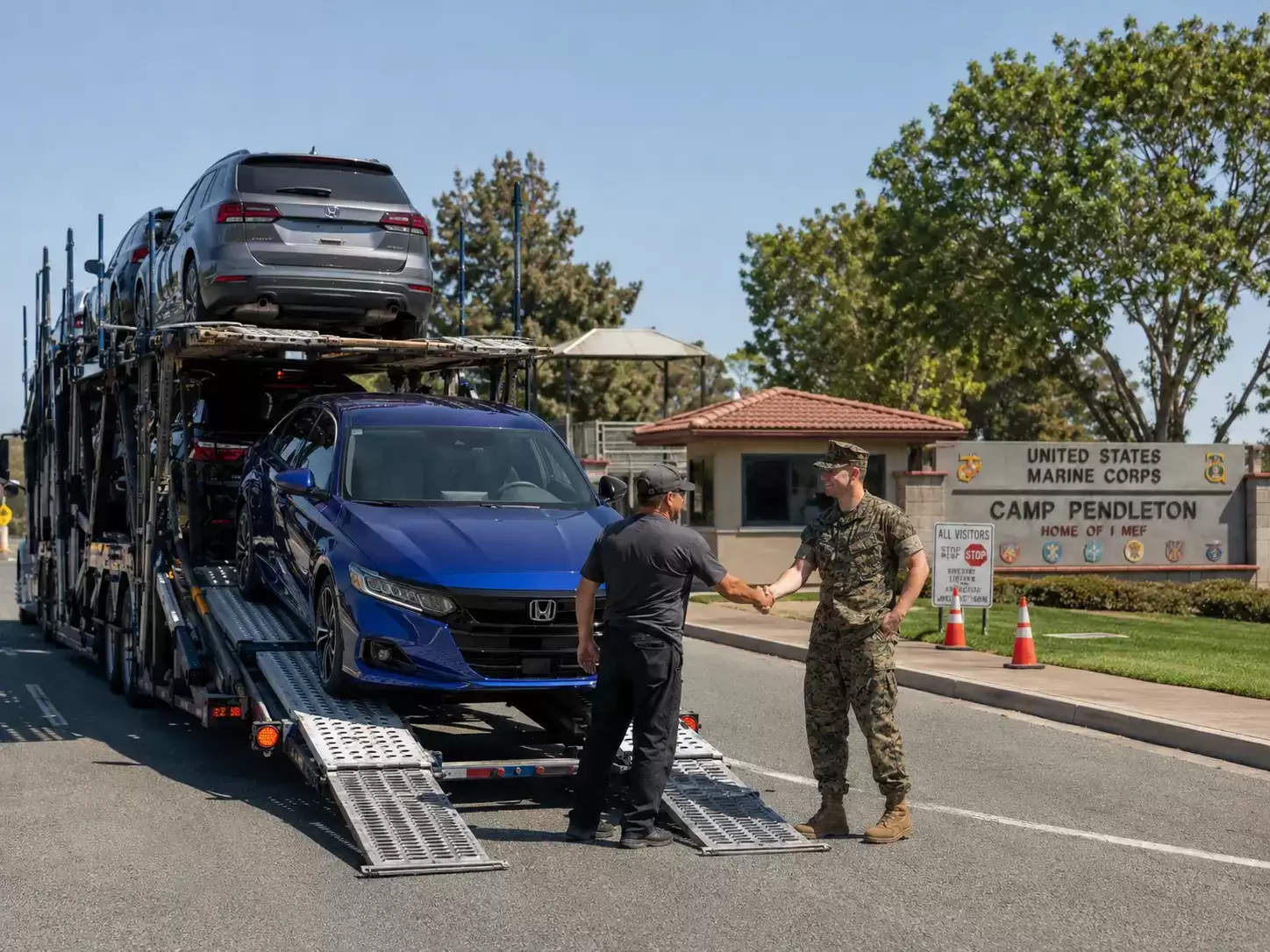
Naval Submarine Base New London — Groton (I-95 / CT-12 / CT-32): Located in Groton on the Thames River, SUBASE New London is the Navy’s primary submarine base on the East Coast and home to the Naval Submarine School. The base generates a steady and year-round PCS vehicle shipping market. I-95 access in the New London/Groton area is good, and the I-395 north connector provides additional carrier routing options. Standard tier is appropriate for most SUBASE New London PCS moves with sufficient lead time; allow 7–10 days lead time for Standard tier assignment. Expedited is recommended for tight report-date timelines or winter PCS orders when nor’easter delays are a risk. Gate access at SUBASE requires carrier pre-registration — our dispatch team handles this coordination directly.
Coast Guard Station New Haven and Coast Guard Sector Long Island Sound: Coast Guard installations in Connecticut are smaller than SUBASE but generate occasional PCS vehicle shipping moves. I-95 corridor access to the New Haven waterfront and the Thames River corridor makes these moves manageable on Standard tier with 5–7 business days lead time.
Bradley Air National Guard Base — Windsor Locks (I-91 / US-5): Located at Bradley International Airport in Windsor Locks, the Connecticut Air National Guard base generates occasional PCS and TDY vehicle moves. I-91 access is direct from the Bradley airport area, and Hartford metro Standard tier windows apply: 3–5 business days. Expedited is recommended for moves with firm report dates.
Southwest Connecticut and I-95 Coastal Corridor Auto Transport
Stamford is Connecticut’s second-largest city and the state’s most competitive carrier market, with Standard tier pickup windows that rival major metro areas due to proximity to the New York carrier market on I-95. The financial district and corporate campus concentrations in South Stamford drive year-round relocation shipping demand.
Greenwich is Connecticut’s southwestern anchor on I-95, 30 miles from Midtown Manhattan. Greenwich effectively operates as a New York metro market for auto transport, and Standard tier pickup windows are among the fastest in the state. Addresses off the Post Road accessible by commercial vehicles benefit from this advantage; addresses accessible only by the Merritt Parkway require I-95 staging coordination.
Norwalk sits on I-95 between Greenwich and Bridgeport and shares the southwestern Connecticut carrier advantage. Standard pickup windows average 2–4 business days. The SoNo (South Norwalk) waterfront area has commercial street access for carrier trucks via US-1 without requiring Merritt Parkway routing.
Bridgeport is Connecticut’s largest city and most active carrier hub, centered on I-95 midway between New York and New Haven. Standard tier produces pickup windows of 2–4 business days year-round. The CT-8 north connector gives carriers access to Trumbull, Shelton, and the Naugatuck Valley without returning to I-95 west.
Westport, Darien, New Canaan, and Wilton are Fairfield County communities primarily served by the Merritt Parkway, which commercial carriers cannot use. Shippers in these towns should plan to meet carriers at an I-95-accessible staging location — the Westport service plaza, a Trumbull commercial parking lot, or a similar meeting point. Our dispatch team identifies the best staging location for your specific address.
New Haven is the I-95/I-91 convergence city, Connecticut’s most important inland carrier junction, and the home of Yale University. The downtown New Haven commercial street grid is accessible by carrier trucks via I-91 exits. Standard tier produces pickup windows of 2–4 business days.
Hartford Metro and I-91/I-84 Corridor Vehicle Shipping
Hartford is the state capital and Connecticut’s most important inland carrier hub at the I-84/I-91 convergence. Standard tier pickup windows average 3–5 business days. The I-84 corridor west toward Waterbury and east toward the Massachusetts Turnpike gives Hartford carriers multi-directional access not available in coastal cities alone.
West Hartford is an adjacent suburb sharing Hartford’s carrier access. Standard tier works well; pickup windows match Hartford at 3–5 business days. The University of Hartford in West Hartford adds a student shipping component in August and May.
Waterbury sits at the CT-8/I-84 junction and benefits from two corridor connections. Standard pickup windows average 3–6 business days; Expedited is recommended for time-sensitive moves.
Danbury is on I-84 near the New York state line and has access to the I-684/New York carrier network to the southwest. Standard pickup windows average 3–5 business days, benefiting from western I-84 carrier volume.
Meriden and Wallingford are on I-91 between New Haven and Hartford and have good carrier access on the inland corridor. Standard tier produces pickup windows of 3–5 business days.
Eastern Connecticut and Shoreline Corridor
New London and Groton are southeastern Connecticut’s major carrier markets, anchored by SUBASE New London. I-95 access is direct, and SUBASE PCS shipping keeps carrier activity in this corridor year-round. Standard pickup windows average 3–5 business days; Expedited recommended for PCS with tight timelines.
Norwich is north of New London on I-395, with reasonable carrier access to the I-95 and I-91 networks. Standard pickup windows average 4–7 business days; Expedited is recommended for time-sensitive moves.
Middletown is on CT-9/CT-66 between Hartford and New Haven, with access to I-91 south via CT-9. Standard tier produces pickup windows of 4–6 business days. Wesleyan University’s student shipping cycle adds August and May demand spikes.
Eastern Connecticut rural communities including Willimantic, Putnam, Danielson, Storrs (UConn campus), and Vernon are the least carrier-accessible areas of the state. I-384, US-6, and I-395 provide some access, but carrier depth is limited. Expedited tier is strongly recommended for eastern Connecticut addresses, and Standard tier pickup windows can extend to 10–14 business days in rural Windham and Tolland counties. UConn Storrs shippers note: August and May generate a large student shipping demand that temporarily increases carrier interest in the Storrs corridor, but also increases competition for available carrier slots.
Connecticut vehicle shipping: official government resources
- Connecticut DMV — Department of Motor Vehicles — Connecticut title transfers, vehicle registration, and driver licensing services.
- Connecticut Department of Consumer Protection — File complaints about deceptive auto transport practices or moving fraud in Connecticut.
- FMCSA SAFER System — Verify any car carrier’s DOT number, insurance, and active operating authority before booking.
- FMCSA — Protect Your Move — Federal guidance on avoiding auto transport fraud and understanding your rights as a shipper.
- Connecticut 511 — CT Travel Smart — Real-time Connecticut road conditions, closures, and traffic information including I-95, I-91, and I-84 corridor updates.

Popular Long Distance Routes From Connecticut
Auto Transport from Connecticut to Florida
Connecticut to Florida is among the most popular snowbird corridors in New England. I-95 south from New Haven or Hartford through New York, Philadelphia, Baltimore, and Richmond into Florida. Hartford to Tampa: $1,000–$1,200; to Miami: $1,050–$1,250; to West Palm Beach: $1,000–$1,200. October and November are peak southbound months. Standard tier available with 10–14 day lead time; Expedited for specific dates.
Vehicle Shipping from Connecticut to New York
I-95 south from Bridgeport and Greenwich into New York City is a 45–90 minute drive depending on traffic. I-91 south from Hartford to I-95 west to New York is the Hartford routing. Hartford to New York City: $400–$500; transit 1 day. This is one of the most frequently served carrier routes in Connecticut — loads move daily in both directions.
Car Transport from Connecticut to Georgia
I-95 south from Hartford/New Haven through New York, Baltimore, and Richmond into Atlanta. Hartford to Atlanta: $900–$1,100; transit 2–3 days. Atlanta’s Southeast hub role creates strong backhaul availability for northbound return loads from Georgia to Connecticut — bidirectional carrier frequency is consistent year-round.
Auto Shipping from Connecticut to North Carolina
I-95 south from New Haven/Hartford through New York and Philadelphia into Charlotte and Raleigh. Hartford to Charlotte: $750–$900; to Raleigh: $700–$875. Transit 2–3 days. North Carolina is a strong mid-haul destination from Connecticut on the high-frequency I-95 corridor.
Vehicle Transport from Connecticut to California
I-84 west from Hartford to I-90 west through Albany, Buffalo, Cleveland, and Chicago, then I-80 west to San Francisco or I-40 west to Los Angeles. Hartford to Los Angeles: $1,600–$1,950; to San Francisco: $1,650–$2,000. Transit 6–8 days. Expedited recommended for California moves to ensure pickup within your preferred window.
Car Shipping from Connecticut to Illinois
I-84 west from Hartford to I-90 west through upstate New York and across Ohio into Chicago. Hartford to Chicago: $900–$1,100; transit 2–3 days. Chicago-bound loads from New England are well-matched with westbound I-90 carrier traffic from the Boston and New York markets.
Auto Transport from Connecticut to Texas
I-95 south to New York then I-78 west to I-81 south to I-40 west into Dallas, or I-95 south through Baltimore and Richmond then I-85 to I-20 west to Dallas. Hartford to Dallas: $1,200–$1,450; to Houston: $1,250–$1,500. Transit 3–5 days. Texas-bound loads from the Northeast are consistent year-round.
Vehicle Shipping from Connecticut to Massachusetts
I-91 north from Hartford to Springfield and Northampton, or I-95 north from New Haven/Groton into Rhode Island then Massachusetts. Hartford to Boston: $300–$400; transit 1–2 days. Boston is Connecticut’s closest major metropolitan carrier neighbor to the north — loads move daily in both directions.
Car Transport from Connecticut to Virginia
I-95 south from Hartford/New Haven through New York, Philadelphia, and Baltimore into Northern Virginia, Richmond, or Virginia Beach. Hartford to Northern Virginia: $550–$700; to Richmond: $600–$750; to Virginia Beach: $700–$875. Transit 2–3 days. I-95 carrier frequency is high in both directions on this route.
Auto Shipping from Connecticut to Tennessee
I-95 south to I-85 south to Charlotte then I-40 west to Nashville and Knoxville, or I-95 to I-81 south through the Shenandoah Valley. Hartford to Nashville: $850–$1,050; to Knoxville: $800–$1,000. Transit 2–3 days. Tennessee is a popular relocation and snowbird destination from Connecticut.
Vehicle Transport from Connecticut to Ohio
I-84 west from Hartford to I-90 west through upstate New York into Cleveland, Columbus, or Cincinnati. Hartford to Cleveland: $650–$800; to Columbus: $700–$875; to Cincinnati: $750–$950. Transit 2–3 days. Ohio is a mid-haul destination that standard-tier handles reliably via the northern I-90 corridor.
Car Shipping from Connecticut to Maine
I-95 north from Hartford through Boston and Portsmouth into Portland and beyond. Hartford to Portland, ME: $400–$550; to Bangor: $500–$650; transit 1–2 days. Maine is a natural seasonal move destination for Connecticut residents with lake or coastal properties. Summer and fall are the highest-demand windows for Connecticut-to-Maine moves.

Nearby States for Connecticut Auto Transport
Auto Transport to New York from Connecticut
New York shares Connecticut’s western border — I-95 crosses into New York at Greenwich, and I-84 crosses at Brewster. New York City is approximately 75 miles from Hartford. The I-95 New York-to-Connecticut corridor is one of the most active short-haul carrier routes in the Northeast.
Vehicle Shipping to Massachusetts from Connecticut
Massachusetts shares Connecticut’s northern border. I-91 north crosses at Springfield; I-95 north crosses at Pawcatuck into Rhode Island then continues into Massachusetts. Hartford to Springfield is 27 miles — one of the shortest inter-state city-pair routes in New England.
Car Transport to Rhode Island from Connecticut
Rhode Island shares Connecticut’s eastern border. I-95 east crosses from Pawcatuck, CT into Westerly, RI. New Haven to Providence is approximately 100 miles. Strong bidirectional I-95 carrier traffic makes Rhode Island moves from Connecticut fast and reliable.
Auto Shipping to New Jersey from Connecticut
New Jersey is directly south of Connecticut across the New York metro. I-95 south from Greenwich/Stamford into the George Washington Bridge and New Jersey Turnpike. Hartford to Newark is approximately 115 miles. The NYC carrier interchange makes Connecticut-to-New Jersey moves among the most frequently served short-hauls in the region.
Vehicle Transport to Pennsylvania from Connecticut
Pennsylvania is southwest of Connecticut via New York. I-95 south from New Haven through New York and the Delaware Memorial Bridge into Pennsylvania, or I-84 west from Hartford into New York then south. Hartford to Philadelphia: $500–$650; transit 1–2 days. Solid Standard-tier service in both directions via I-95.
Car Shipping to Vermont from Connecticut
Vermont is northwest of Connecticut via I-91. I-91 north from Hartford through Springfield and Northampton then into Brattleboro, VT and on to White River Junction and Burlington. Hartford to Burlington: $350–$500. Carrier frequency on I-91 north is moderate — Expedited recommended for specific pickup dates to Vermont.

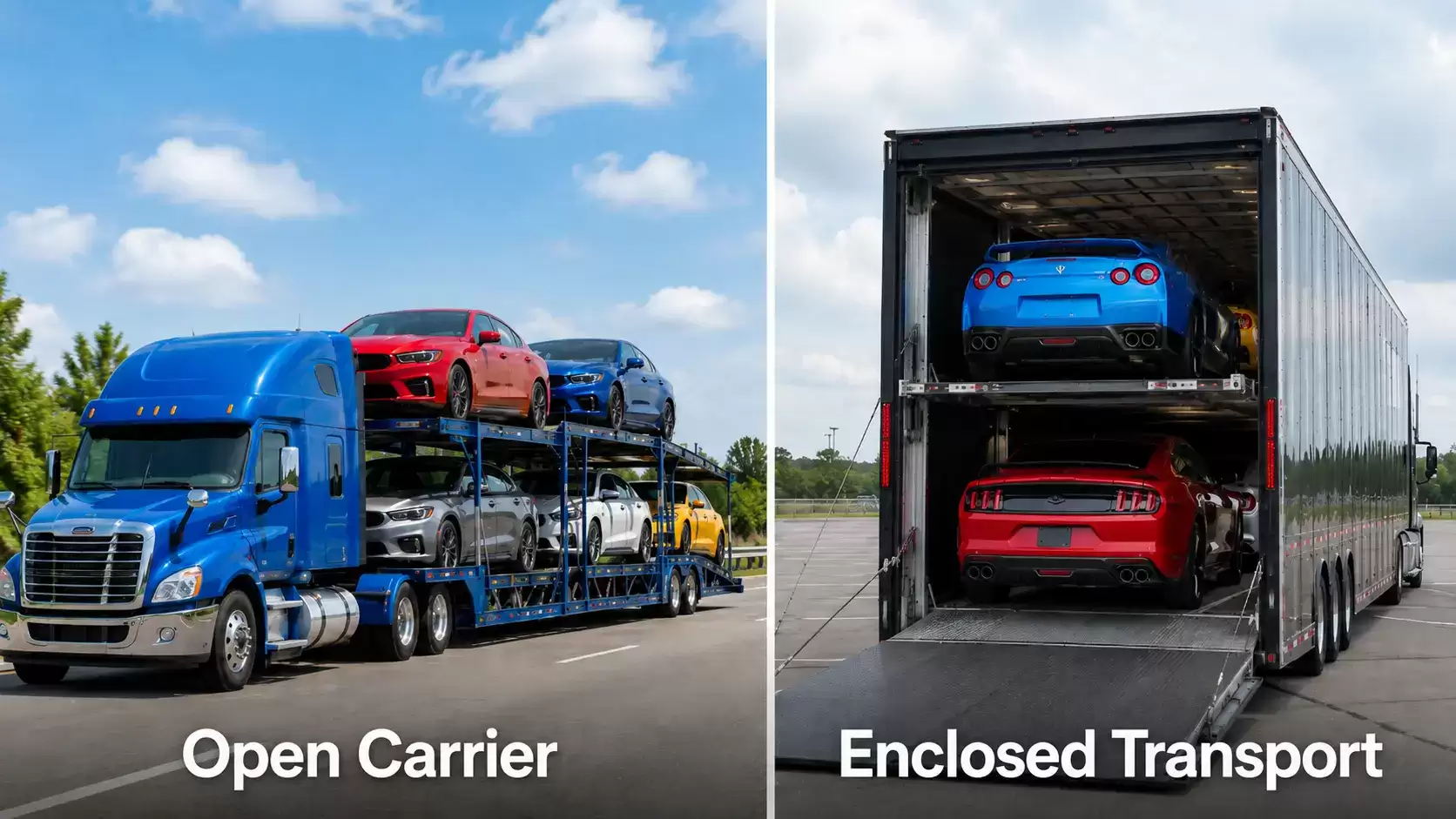
Ready to ship your car to or from Connecticut?
Join hundreds of thousands of customers — Snowbirds, military families, tech relocators, students, and families moving across the country — who have trusted Direct Express Auto Transport with their Connecticut vehicle shipments since 2004. Get your instant, no-obligation quote now. It takes 30 seconds, requires no personal information, and there is no upfront payment required to hold your spot.
Instant quote — real-time pricing in under 5 seconds
No upfront payment — your card is charged only when a carrier is assigned
No risk to get a quote and book your order
BBB Accredited A+ since 2004
FMCSA licensed and fully bonded
4.6 stars across thousands of verified Google reviews